
<article>
  <h1>What Happens if the Appraisal Comes in Low Before Closing?</h1>
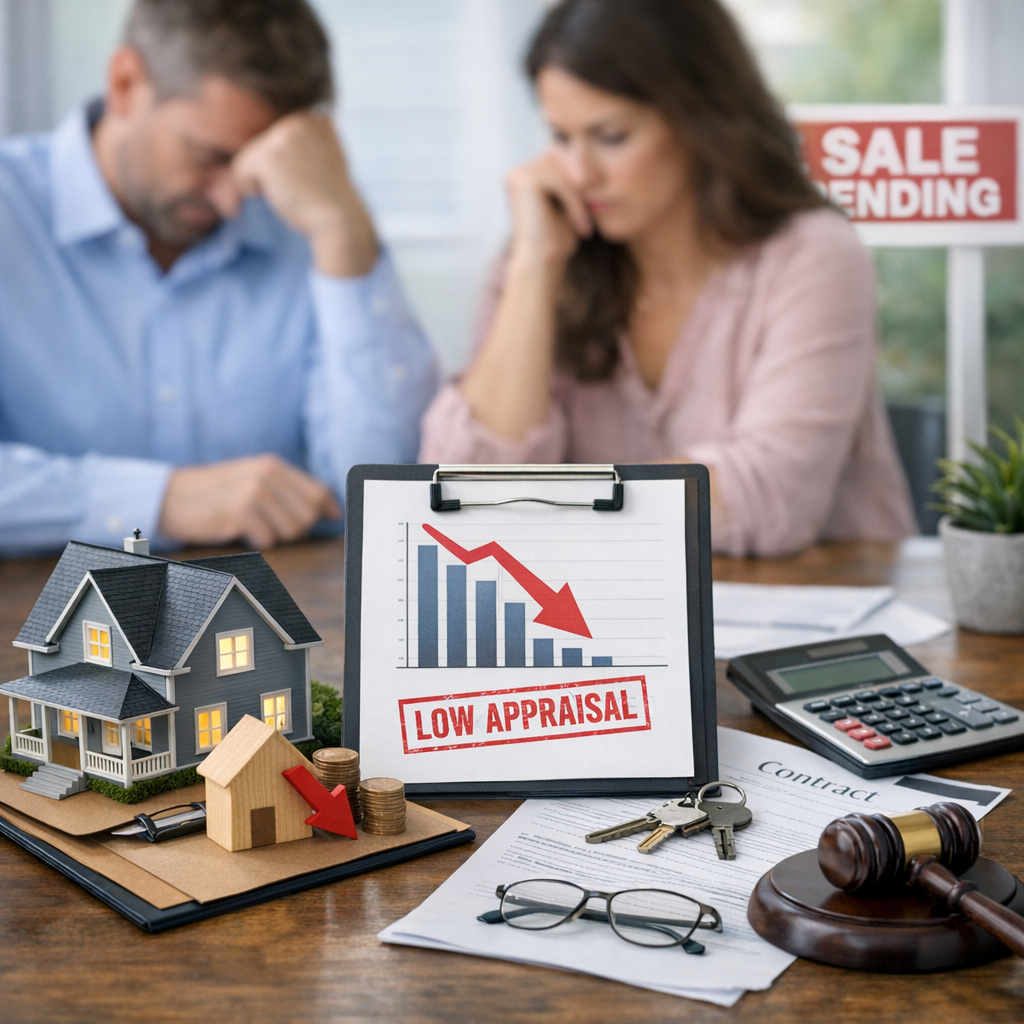
  <p>When buying a home, one of the most critical steps in the mortgage process is the appraisal. The appraisal determines the fair market value of the property and ensures that the lender is not lending more than the home is worth. However, sometimes the appraisal comes in lower than the agreed-upon purchase price. This situation can create challenges for both buyers and sellers, especially right before closing.</p>

  <h2>Understanding the Role of an Appraisal</h2>
  <p>An appraisal is an unbiased professional assessment of a property's value, typically conducted by a licensed appraiser. Lenders require appraisals to confirm that the loan amount does not exceed the property’s value. The appraiser evaluates factors such as the home’s condition, location, size, and comparable sales in the area.</p>

  <h2>Why a Low Appraisal Happens</h2>
  <p>Several factors can lead to a low appraisal, including:</p>
  <ul>
    <li><strong>Market fluctuations:</strong> Rapid changes in the housing market can cause discrepancies between the agreed price and current market value.</li>
    <li><strong>Overpricing:</strong> The seller may have listed the home above its true market value.</li>
    <li><strong>Limited comparable sales:</strong> If few similar homes have sold recently, the appraiser may have difficulty finding accurate comparisons.</li>
    <li><strong>Property condition:</strong> Needed repairs or poor maintenance can reduce the appraised value.</li>
  </ul>

  <h2>Implications of a Low Appraisal</h2>
  <p>When the appraisal comes in lower than the purchase price, the lender will base the loan amount on the appraised value, not the contract price. This means the buyer may face a shortfall between the loan amount and the agreed purchase price. For example, if a home is under contract for $400,000 but appraises for $380,000, the lender will finance based on $380,000, leaving a $20,000 gap.</p>

  <h2>Options for Buyers and Sellers</h2>
  <p>Fortunately, there are several ways to address a low appraisal before closing:</p>
  <ul>
    <li><strong>Renegotiate the purchase price:</strong> The buyer and seller can agree to lower the price to match the appraised value.</li>
    <li><strong>Increase the down payment:</strong> The buyer can choose to pay the difference out of pocket to maintain the original purchase price.</li>
    <li><strong>Request a reconsideration of value:</strong> If there are errors or missing comparable sales, the buyer’s agent can ask the lender to review the appraisal.</li>
    <li><strong>Switch lenders or order a new appraisal:</strong> In some cases, obtaining a second opinion may yield a different result, though this can delay closing.</li>
    <li><strong>Cancel the contract:</strong> If the purchase agreement includes an appraisal contingency, the buyer may be able to walk away without penalty.</li>
  </ul>

  <h2>Preventing Appraisal Issues</h2>
  <p>To minimize the risk of a low appraisal, buyers and sellers can take proactive steps:</p>
  <ul>
    <li>Ensure the home is in good condition and make necessary repairs before the appraisal.</li>
    <li>Provide the appraiser with a list of recent comparable sales and upgrades.</li>
    <li>Work with experienced real estate professionals who understand local market trends.</li>
  </ul>

  <h2>Conclusion</h2>
  <p>A low appraisal before closing can be stressful, but it doesn’t have to derail the transaction. By understanding the reasons behind a low valuation and exploring available options, both buyers and sellers can find a solution that keeps the deal moving forward. Open communication, flexibility, and professional guidance are key to navigating this common real estate challenge successfully.</p>
</article>
Discover more from My-Rebo Your One-Stop Real Estate Marketplace
Subscribe to get the latest posts sent to your email.
Leave a Reply