
1. Plan Before You Plant
Before buying plants or materials, take time to plan your landscape design. Sketch out your yard, noting areas that receive sun or shade, and decide on focal points. Planning helps you avoid impulse purchases and ensures that every element fits harmoniously within your space.
2. Use Native and Low-Maintenance Plants
Native plants are not only budget-friendly but also easier to maintain. They thrive in your local climate, requiring less water, fertilizer, and care. Visit local nurseries or community plant sales to find affordable options suited to your region.
3. Repurpose and Reuse Materials
Get creative with what you already have. Old bricks, stones, or wood can be repurposed into garden borders, pathways, or raised beds. Check online marketplaces or community groups for free or low-cost materials that others are giving away.
4. Start Small and Grow Over Time
Landscaping doesn’t have to be completed all at once. Start with one section of your yard and expand gradually as your budget allows. This approach spreads out costs and gives you time to refine your design as you go.
5. DIY Garden Features
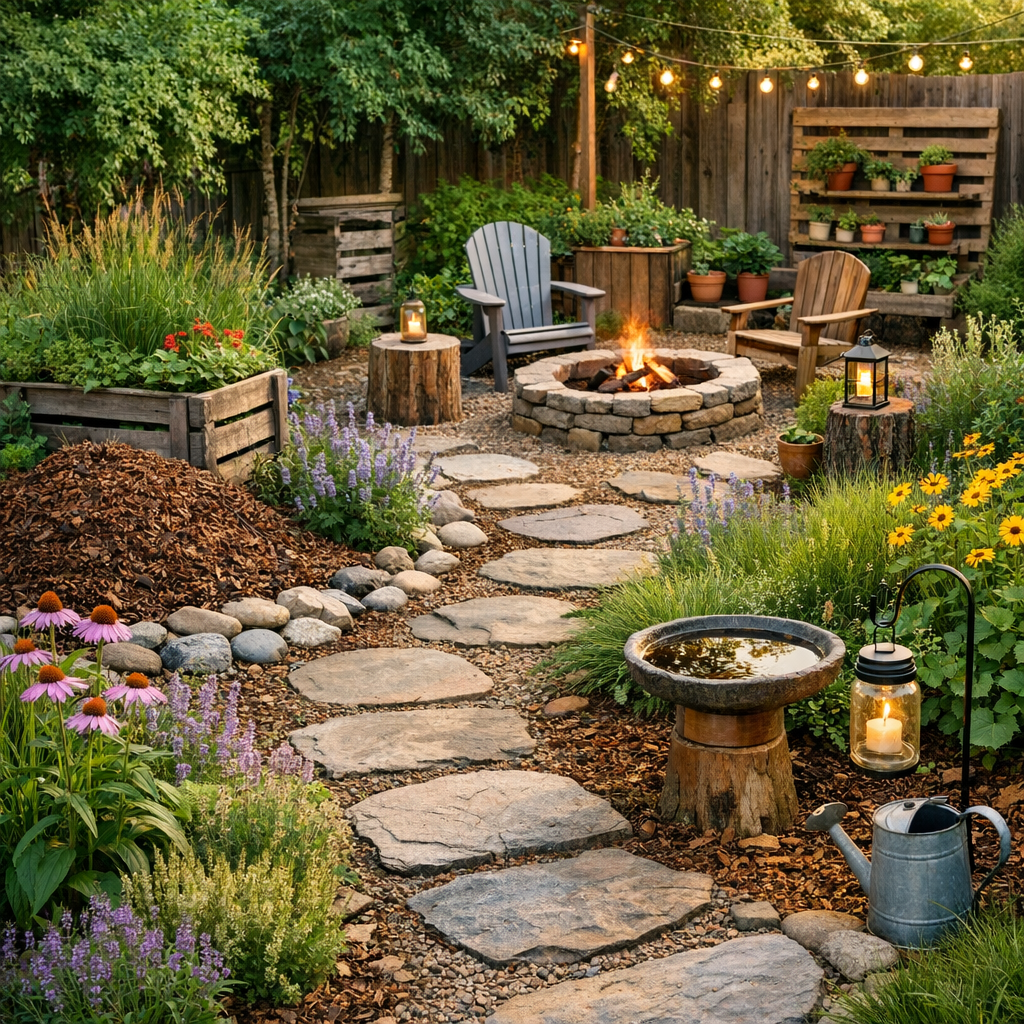
Instead of purchasing expensive garden décor, consider making your own. Build a simple fire pit with stones, create a birdbath from an old bowl, or craft planters from recycled containers. DIY projects add personality and charm while saving money.
6. Mulch and Compost for Free
Mulch helps retain moisture, suppress weeds, and improve soil health. Many municipalities offer free mulch or compost to residents. You can also create your own compost using kitchen scraps and yard waste, reducing the need for store-bought fertilizers.
7. Incorporate Hardscaping Wisely
Hardscaping elements like patios, walkways, and edging can elevate your landscape design. Choose cost-effective materials such as gravel or reclaimed pavers. Simple designs often look elegant and are easier to maintain.
8. Add Lighting for Ambiance
Outdoor lighting enhances both safety and beauty. Solar-powered lights are an affordable and energy-efficient option. Place them along pathways, near seating areas, or around garden beds to create a warm, inviting glow at night.
9. Maintain Regularly
Consistent maintenance prevents small issues from becoming costly repairs. Regularly trim plants, remove weeds, and check irrigation systems. A little effort each week keeps your landscape looking fresh and healthy.
10. Get Inspired by Community Resources
Attend local gardening workshops, visit public gardens, or join online forums for inspiration and advice. Many communities offer free resources, including seed exchanges and landscaping classes, to help residents beautify their spaces affordably.
Conclusion
Landscaping on a budget is all about creativity, patience, and smart choices. By planning carefully, reusing materials, and focusing on low-cost improvements, you can create an outdoor space that’s both beautiful and economical. With a little effort and imagination, your yard can become a welcoming oasis that reflects your personal style—without breaking the bank.
Leave a Reply