
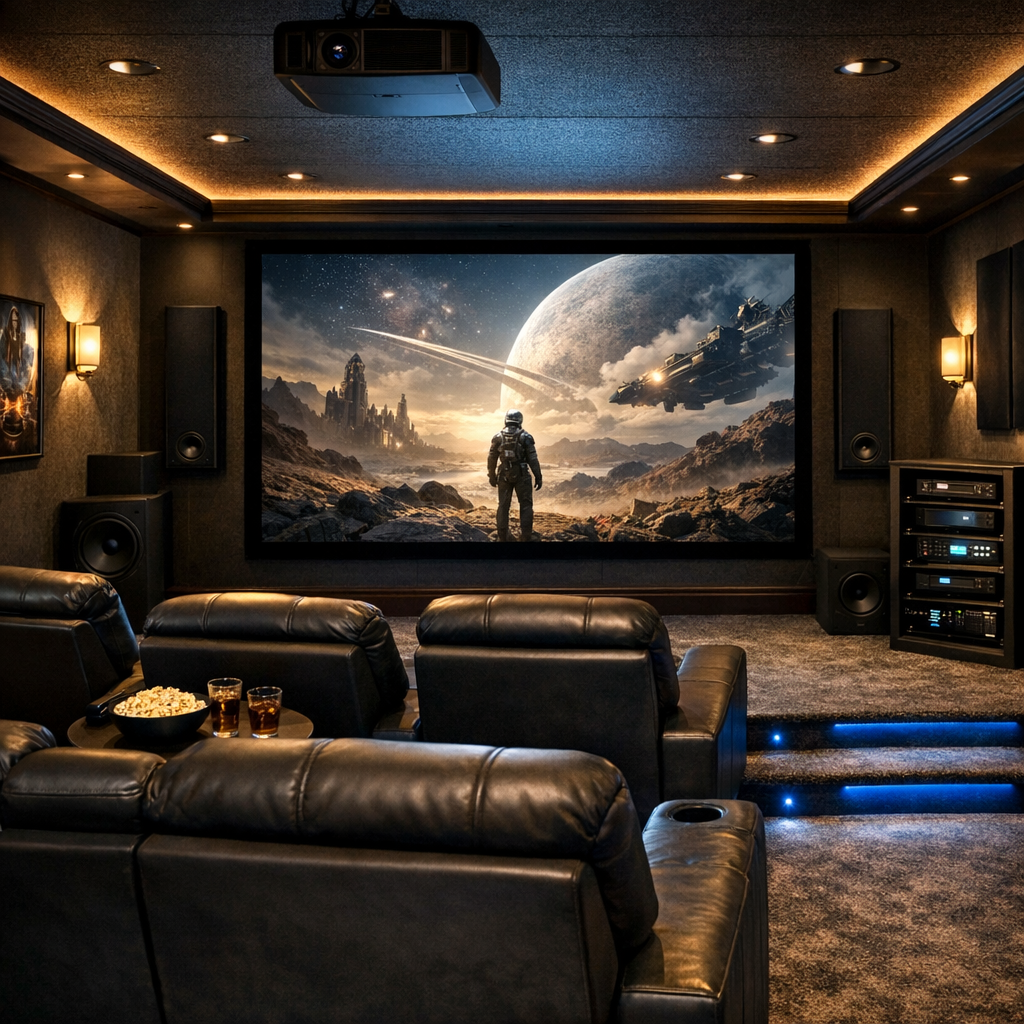
1. Choosing the Right Room
The first step in installing a home theater is selecting the ideal location. A dedicated room with minimal natural light and good acoustics is best. Basements often work well because they are naturally darker and quieter. If a separate room isn’t available, consider using blackout curtains and acoustic panels to improve the environment.
2. Display Options: Projector vs. Television
Deciding between a large-screen television and a projector depends on your space, budget, and viewing preferences. Projectors offer a true cinematic feel with screen sizes exceeding 100 inches, but they require controlled lighting and proper mounting. High-definition or 4K televisions, on the other hand, provide bright, sharp images and are easier to install and maintain.
3. Sound System and Acoustics
Sound quality is just as important as picture quality. A surround sound system with strategically placed speakers can create an immersive audio experience. Consider a 5.1 or 7.1 channel setup, or explore Dolby Atmos for a three-dimensional sound field. Acoustic treatments such as wall panels, carpets, and curtains help reduce echo and improve clarity.
4. Seating and Layout
Comfortable seating enhances the overall experience. Recliners or theater-style chairs arranged in rows provide the best viewing angles. Ensure that every seat has a clear line of sight to the screen, and maintain proper distance based on screen size. For example, the ideal viewing distance is typically 1.5 to 2.5 times the diagonal screen measurement.
5. Lighting Control
Lighting plays a crucial role in setting the mood. Install dimmable lights or LED strips that can be adjusted during viewing. Avoid direct light on the screen to prevent glare. Smart lighting systems can be integrated with your home theater controls for convenience and ambiance.
6. Wiring and Connectivity
Proper cable management ensures a clean and organized setup. Use high-quality HDMI cables for video and audio transmission, and consider in-wall wiring for a professional finish. Plan for future upgrades by including extra conduits or cable paths. Wireless options can also reduce clutter but may require a strong network connection.
7. Smart Integration and Control
Modern home theaters can be integrated with smart home systems for seamless control. Universal remotes, voice assistants, or mobile apps allow you to adjust lighting, sound, and playback with ease. Automation can also enhance convenience by setting up pre-programmed scenes for movie nights or gaming sessions.
8. Calibration and Testing
Once everything is installed, calibration ensures optimal performance. Adjust the display settings for brightness, contrast, and color accuracy. Fine-tune the audio system using a sound meter or built-in calibration tools. Proper calibration maximizes the potential of your equipment and delivers a balanced, immersive experience.
9. Maintenance and Upgrades
To keep your home theater performing at its best, regular maintenance is key. Clean projector lenses, dust speakers, and update firmware on connected devices. As technology evolves, consider upgrading components such as streaming devices, receivers, or display panels to stay current with the latest standards.
Conclusion
Installing a home theater requires thoughtful planning, quality equipment, and attention to detail. By focusing on room selection, audio-visual components, seating, and smart integration, you can create a space that rivals the cinema. With the right setup, every movie night becomes an unforgettable experience in the comfort of your own home.
Leave a Reply