
Choosing the Right Location
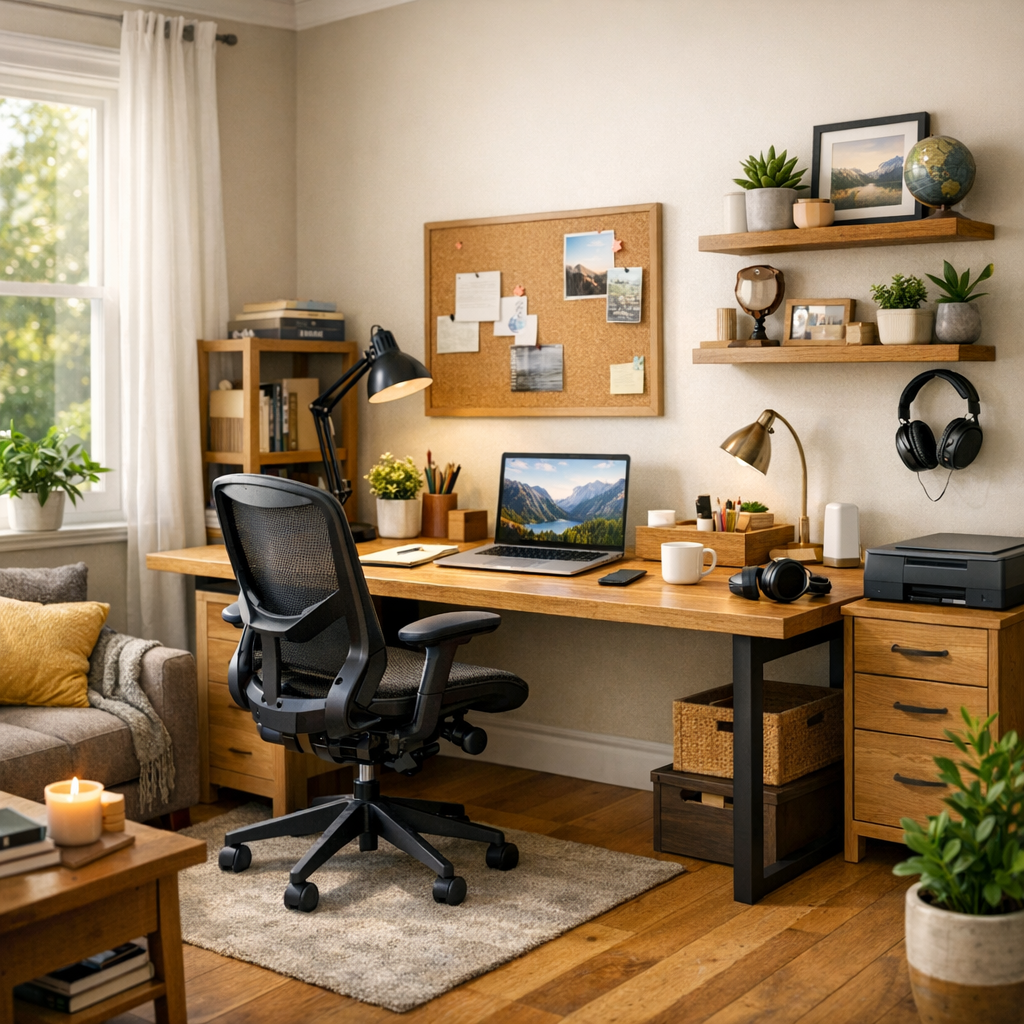
The first step in creating a productive home office is selecting the right location. Ideally, choose a quiet area with minimal distractions. Natural light is a major advantage, as it boosts mood and energy levels. If possible, position your desk near a window to take advantage of daylight and fresh air. For smaller homes, consider using a partition or room divider to separate your workspace from living areas.
Ergonomic Furniture and Layout
Comfort and ergonomics are key to maintaining productivity throughout the day. Invest in a high-quality chair that supports your posture and a desk that suits your height. The top of your computer screen should be at eye level to prevent neck strain. Keep essential items within arm’s reach to minimize unnecessary movement and maintain workflow efficiency.
Lighting and Ambience
Lighting plays a crucial role in setting the tone of your workspace. Combine natural light with layered artificial lighting, such as task lamps and ambient fixtures. Avoid harsh overhead lights that cause glare. Soft, warm lighting can create a calm atmosphere, while cooler tones can help maintain alertness during long work sessions.
Organization and Storage Solutions
A clutter-free workspace enhances concentration and reduces stress. Incorporate shelves, filing cabinets, and storage boxes to keep documents and supplies organized. Use cable management tools to keep cords tidy and out of sight. Minimalism in design not only looks appealing but also helps maintain a clear mind.
Personalization and Inspiration
Adding personal touches can make your home office more inviting. Decorate with artwork, plants, or motivational quotes that inspire creativity. Greenery improves air quality and adds a refreshing touch to the environment. However, avoid over-decorating, as too many visual elements can become distracting.
Technology and Connectivity
Reliable technology is the backbone of a productive home office. Ensure a strong internet connection and invest in quality peripherals such as a keyboard, mouse, and monitor. Consider noise-canceling headphones for better focus during calls or deep work sessions. Keep your devices updated and organized to prevent technical disruptions.
Maintaining Work-Life Balance
One of the challenges of working from home is separating professional and personal life. Establish clear boundaries by setting specific work hours and taking regular breaks. When the workday ends, step away from your desk to signal the transition to personal time. This practice helps prevent burnout and maintains overall well-being.
Conclusion
A thoughtfully designed home office can significantly impact your productivity, comfort, and job satisfaction. By focusing on ergonomics, organization, lighting, and personalization, you can create a workspace that supports both efficiency and creativity. With the right setup, your home office can become a place where you thrive professionally and personally.
Leave a Reply