
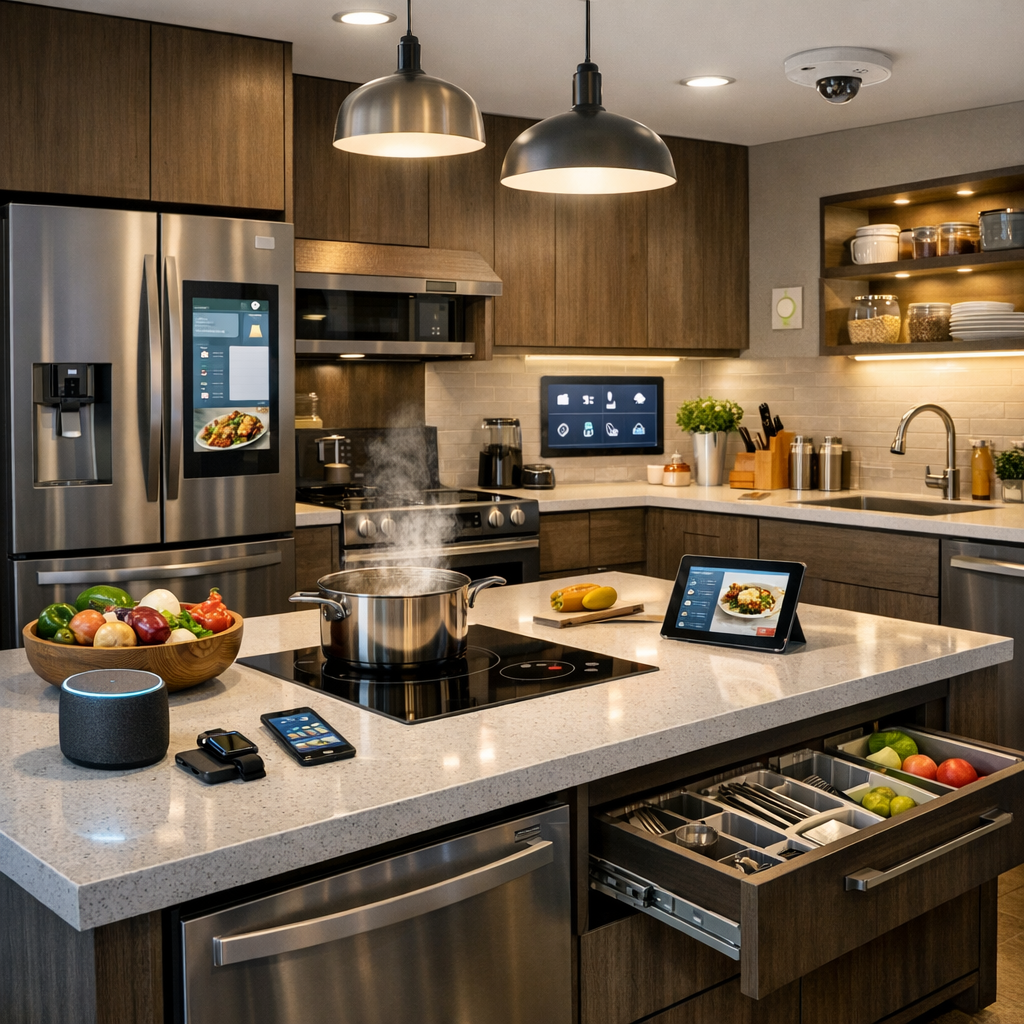
A smart kitchen integrates technology, convenience, and design to make cooking more efficient and enjoyable. By combining connected appliances, automation, and thoughtful organization, you can transform your kitchen into a space that saves time, reduces waste, and enhances your culinary experience.
1. Plan Your Smart Kitchen Layout
Before investing in smart devices, evaluate your kitchen layout. Consider how you move between the refrigerator, sink, and stove—the classic “kitchen work triangle.” Ensure that your smart appliances are positioned for easy access and connectivity. A well-planned layout minimizes unnecessary movement and maximizes efficiency.
2. Invest in Smart Appliances
Smart appliances are the foundation of a connected kitchen. Look for devices that can communicate with each other and be controlled via smartphone or voice assistant. Popular options include:
- Smart Refrigerators: These can track expiration dates, suggest recipes, and even display your grocery list.
- Smart Ovens: Preheat remotely, adjust cooking times automatically, and receive alerts when your meal is ready.
- Smart Dishwashers: Optimize water and energy use while allowing you to monitor cycles from your phone.
- Smart Coffee Makers: Schedule brewing times or start a fresh pot with a voice command.
3. Use Smart Lighting and Climate Control
Lighting and temperature play a major role in kitchen comfort and efficiency. Install smart bulbs that adjust brightness and color temperature based on the time of day or your activity. Smart thermostats can maintain an ideal cooking environment while conserving energy.
4. Integrate Voice Assistants and Automation
Voice assistants like Alexa, Google Assistant, or Siri can streamline your cooking process. Use them to set timers, convert measurements, or read recipes aloud while your hands are busy. You can also create automation routines—for example, turning on lights and preheating the oven with a single command.
5. Optimize Storage and Organization
Efficiency isn’t just about technology—it’s also about organization. Use smart storage solutions such as labeled containers, pull-out shelves, and digital inventory systems. Some apps can track pantry items and suggest recipes based on what you have, helping reduce food waste.
6. Enhance Safety with Smart Sensors
Smart sensors can detect smoke, gas leaks, or water leaks and send alerts to your phone. These devices provide peace of mind and help prevent accidents. Consider installing motion sensors that automatically turn on lights when you enter the kitchen at night.
7. Connect Everything Through a Central Hub
To make the most of your smart kitchen, connect all devices through a central hub or app. This allows you to monitor and control everything from one interface. Many systems also integrate with home automation platforms, enabling seamless coordination between your kitchen and other smart home features.
8. Maintain and Update Your Smart Devices
Regular maintenance ensures your smart kitchen continues to function efficiently. Keep firmware updated, clean appliances according to manufacturer guidelines, and periodically review your setup to incorporate new technologies or features.
Conclusion
Creating a smart kitchen is about more than just adding gadgets—it’s about designing a space that works intelligently for you. By combining connected appliances, automation, and efficient organization, you can enjoy a more convenient, sustainable, and enjoyable cooking experience every day.
Leave a Reply