
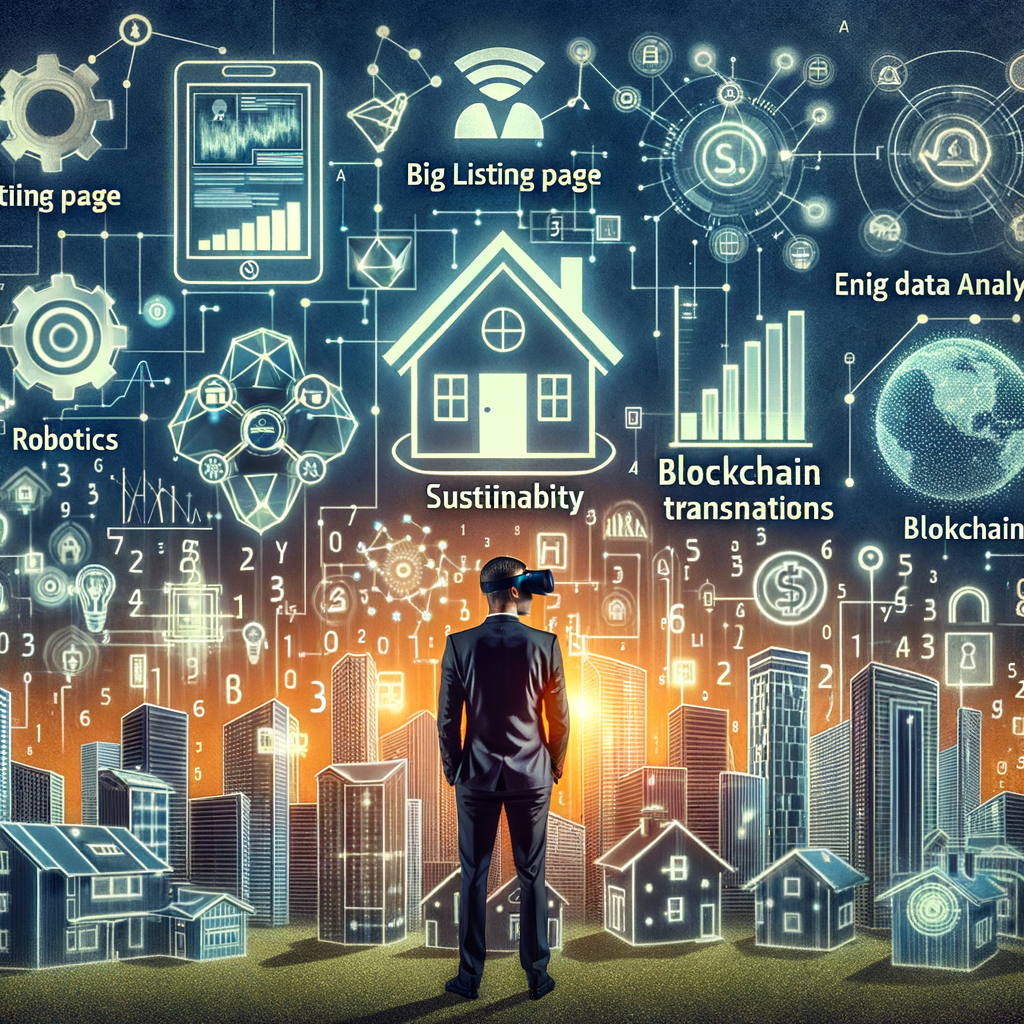
Digital Property Listings and Virtual Tours
Online property listings have become the cornerstone of modern real estate. Platforms equipped with high-resolution images, detailed descriptions, and interactive maps allow potential buyers to explore properties from the comfort of their homes. Virtual reality (VR) and augmented reality (AR) technologies take this experience further by offering immersive 3D tours, enabling clients to visualize spaces and layouts before visiting in person. This innovation saves time and broadens the reach of real estate marketing efforts.
Big Data and Predictive Analytics
Data analytics is revolutionizing how real estate professionals make decisions. By analyzing market trends, demographic information, and consumer behavior, predictive models can forecast property values and investment opportunities. Big data tools help agents and investors identify emerging neighborhoods, assess risk, and optimize pricing strategies. This data-driven approach leads to more informed decisions and minimizes uncertainty in a traditionally volatile market.
Artificial Intelligence and Automation
Artificial intelligence (AI) is streamlining various aspects of real estate operations. Chatbots and virtual assistants provide instant responses to client inquiries, improving customer service and engagement. AI-powered algorithms can match buyers with properties that meet their preferences, while automated valuation models (AVMs) estimate property values with remarkable accuracy. Additionally, automation tools simplify administrative tasks such as document management, scheduling, and lead tracking, allowing agents to focus on building relationships and closing deals.
Blockchain and Smart Contracts
Blockchain technology is introducing new levels of security and transparency to real estate transactions. By recording property ownership and transaction history on a decentralized ledger, blockchain reduces the risk of fraud and simplifies title verification. Smart contracts—self-executing agreements coded on the blockchain—automate processes such as payments and ownership transfers once predefined conditions are met. This innovation has the potential to make real estate transactions faster, more secure, and less reliant on intermediaries.
PropTech and the Rise of Smart Buildings
Property technology, or PropTech, encompasses a wide range of digital tools designed to improve property management and tenant experiences. Smart building systems equipped with Internet of Things (IoT) devices monitor energy usage, optimize climate control, and enhance security. These innovations not only reduce operational costs but also contribute to sustainability goals. For investors and developers, smart technologies increase property value and appeal to environmentally conscious tenants.
Remote Work and Changing Real Estate Demands
The rise of remote work, accelerated by technological advancements, has significantly influenced real estate trends. Homebuyers are prioritizing properties with dedicated office spaces and reliable internet connectivity. Commercial real estate is also adapting, with flexible workspaces and hybrid office models becoming more prevalent. Technology enables companies to manage distributed teams effectively, reshaping demand for both residential and commercial properties.
Conclusion
Technology continues to redefine the real estate landscape, making it more efficient, transparent, and customer-centric. From AI-driven analytics to blockchain-based transactions, these innovations are transforming how properties are bought, sold, and managed. As the industry embraces digital transformation, professionals who adapt to these changes will be best positioned to thrive in an increasingly tech-driven market.
Leave a Reply