
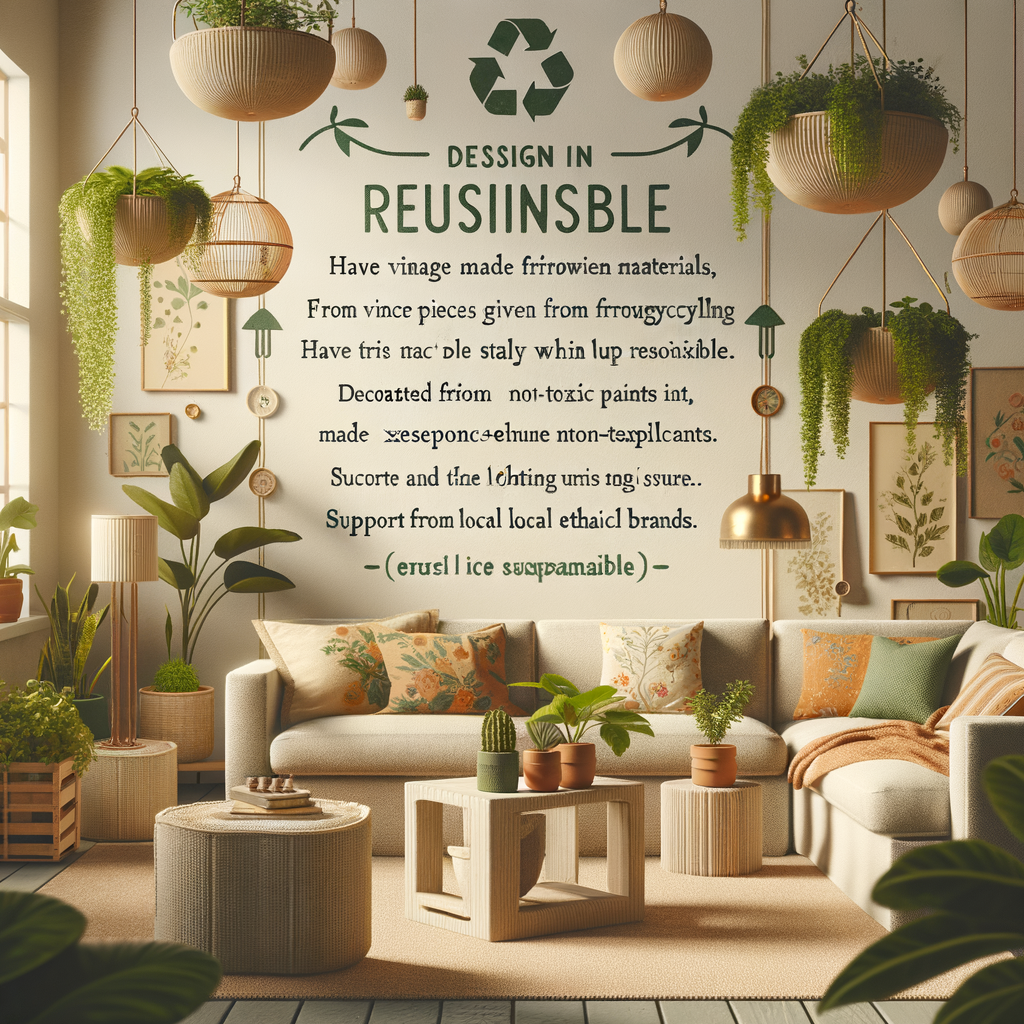
1. Choose Sustainable Materials
When selecting furniture and decor, opt for materials that are renewable, recycled, or responsibly sourced. Bamboo, reclaimed wood, cork, and rattan are excellent choices for furniture and flooring. These materials not only add natural warmth and texture to your home but also have a lower environmental impact compared to synthetic alternatives.
2. Embrace Upcycling and Vintage Finds
Upcycling and purchasing vintage pieces are great ways to reduce waste and give new life to existing items. Instead of buying new furniture, consider restoring or repurposing old pieces. A fresh coat of paint, new upholstery, or creative modifications can transform outdated items into unique statement pieces that tell a story.
3. Opt for Non-Toxic Paints and Finishes
Traditional paints and finishes often contain volatile organic compounds (VOCs) that can harm indoor air quality. Choose low-VOC or VOC-free paints, stains, and sealants to create a healthier environment for your family. These products are available in a wide range of colors and finishes, allowing you to achieve your desired aesthetic without compromising safety.
4. Incorporate Natural Textiles
Textiles play a major role in home decor, from curtains and rugs to bedding and upholstery. Select fabrics made from organic cotton, linen, hemp, or wool, which are biodegradable and produced with fewer chemicals. Look for certifications such as GOTS (Global Organic Textile Standard) to ensure your textiles meet environmental and ethical standards.
5. Energy-Efficient Lighting
Lighting can significantly impact both the ambiance and energy consumption of your home. Replace traditional bulbs with LED or CFL options, which use less electricity and last longer. Maximize natural light by using sheer curtains and strategically placing mirrors to reflect sunlight, reducing the need for artificial lighting during the day.
6. Bring Nature Indoors
Houseplants not only enhance your decor but also improve indoor air quality by filtering toxins and increasing oxygen levels. Choose low-maintenance plants such as snake plants, pothos, or peace lilies. Incorporating greenery into your home design fosters a calming atmosphere and strengthens your connection to nature.
7. Reduce, Reuse, and Recycle
Adopting the principles of reduce, reuse, and recycle can guide your decorating decisions. Before purchasing new items, assess what you already have and how it can be reused or repurposed. When you do need to buy, choose products made from recycled materials or those that can be easily recycled at the end of their life cycle.
8. Support Local and Ethical Brands
Buying from local artisans and sustainable brands helps reduce the carbon footprint associated with transportation and supports fair labor practices. Handcrafted decor items often have a unique charm and are made with care, ensuring quality and longevity.
Conclusion
Eco-friendly decor is about making conscious choices that benefit both your home and the planet. By prioritizing sustainability, you can create a space that is stylish, comfortable, and environmentally responsible. Every small change—from choosing natural materials to supporting ethical brands—contributes to a greener future and a more harmonious home.
Leave a Reply