
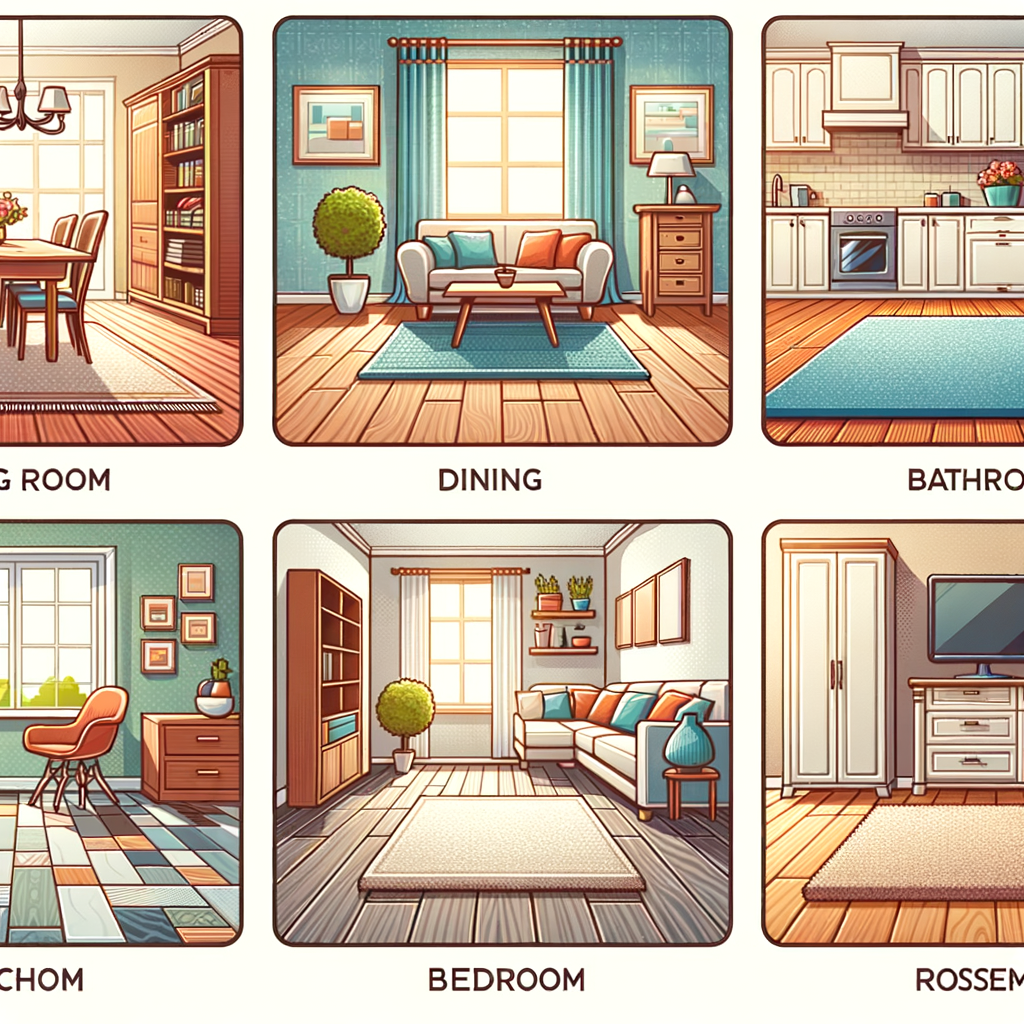
Living Room
The living room is often the centerpiece of a home, where family and guests gather. Hardwood flooring remains a popular choice due to its timeless beauty and durability. Engineered wood offers a similar appearance with added resistance to moisture and temperature changes. For a more budget-friendly option, consider luxury vinyl planks or laminate flooring that mimic the look of wood while being easier to maintain.
Kitchen
Kitchens experience heavy foot traffic, spills, and frequent cleaning. Therefore, flooring should be water-resistant and easy to maintain. Ceramic or porcelain tiles are excellent choices, offering durability and a wide range of design options. Vinyl flooring is another practical option, providing comfort underfoot and resistance to moisture. If you prefer a warmer look, consider waterproof laminate or engineered wood designed for kitchen use.
Bathroom
Bathrooms require flooring that can withstand high humidity and water exposure. Porcelain and ceramic tiles are ideal due to their water resistance and easy cleaning. For a modern touch, consider large-format tiles or textured finishes to prevent slipping. Vinyl flooring, especially luxury vinyl tiles, can also be a great choice for bathrooms, offering both style and practicality.
Bedroom
Comfort and warmth are key considerations for bedroom flooring. Carpet remains a popular option, providing softness and sound insulation. For a more contemporary look, hardwood or engineered wood flooring adds elegance and can be complemented with area rugs for added comfort. Cork flooring is another eco-friendly choice that offers warmth and cushioning underfoot.
Dining Room
The dining room benefits from flooring that balances style and durability. Hardwood flooring creates a sophisticated atmosphere and can handle occasional spills if properly sealed. Laminate and vinyl options can replicate the look of wood or stone while being easier to maintain. Area rugs can also be used to define the dining space and protect the flooring beneath.
Basement
Basements often have higher moisture levels, so moisture-resistant flooring is essential. Vinyl planks, tiles, or sealed concrete are excellent choices. Engineered wood can also work if the basement is properly insulated and moisture-controlled. Avoid solid hardwood, as it can warp or swell in damp conditions.
Home Office
For a home office, flooring should provide comfort and a professional appearance. Hardwood, laminate, or vinyl flooring offers a sleek and easy-to-clean surface. If you spend long hours at your desk, consider adding an area rug for warmth and noise reduction. Carpet tiles can also be a practical choice, allowing easy replacement of damaged sections.
Conclusion
Choosing the right flooring for each room involves balancing aesthetics, functionality, and budget. Consider the specific needs of each space—such as moisture levels, foot traffic, and comfort—to make an informed decision. With the wide range of materials available today, you can find flooring options that enhance both the beauty and practicality of your home.
Leave a Reply