
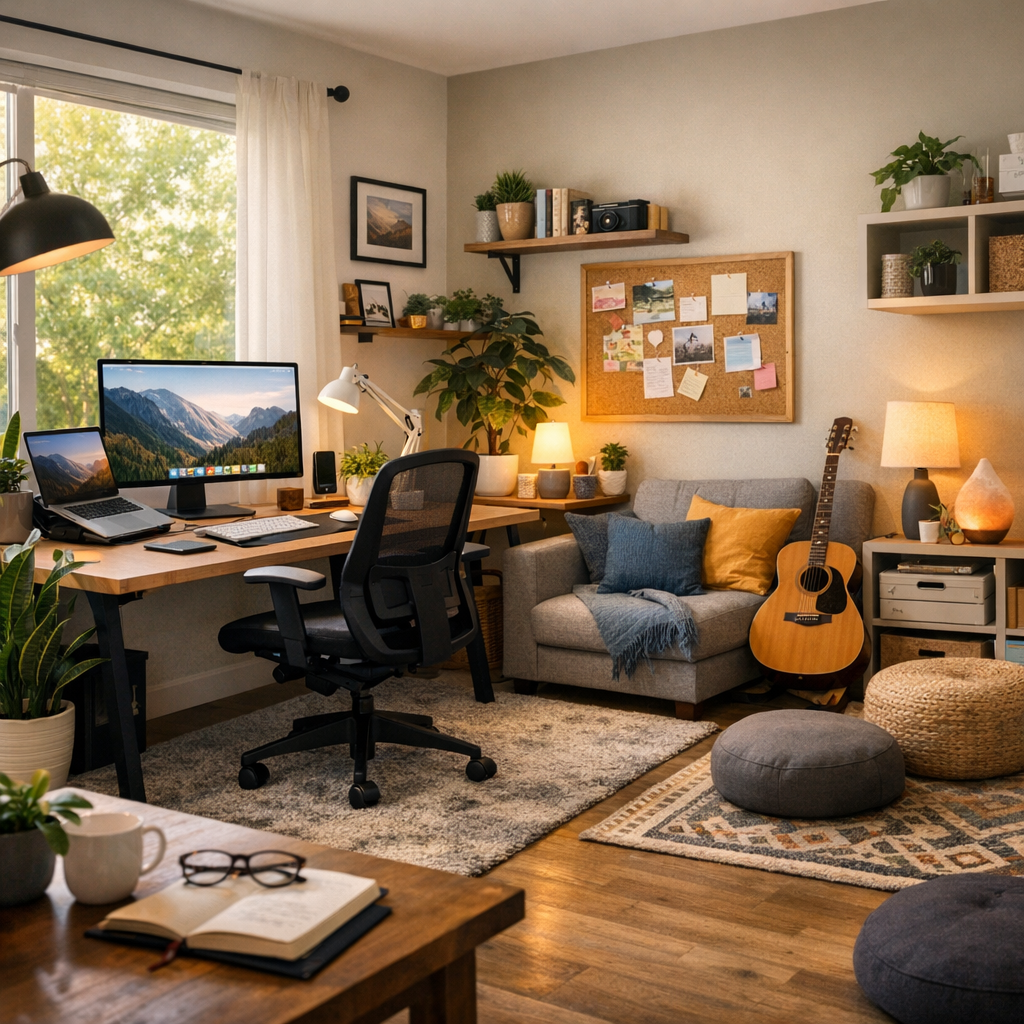
1. Choose the Right Location
The first step in creating a home office is selecting the ideal location. Look for a quiet area with minimal distractions and good natural light. If possible, choose a space with a door to separate work from home life. Even a small nook can work well if it’s thoughtfully arranged and free from household interruptions.
2. Invest in Ergonomic Furniture
Comfort is key to maintaining productivity throughout the day. Invest in an ergonomic chair that supports your posture and a desk at the correct height for your body. Adjustable desks that allow you to alternate between sitting and standing can also improve circulation and reduce fatigue.
3. Optimize Lighting
Lighting plays a crucial role in both comfort and efficiency. Natural light boosts mood and energy, so position your desk near a window if possible. Supplement with task lighting, such as a desk lamp with adjustable brightness, to reduce eye strain during evening hours.
4. Organize for Efficiency
A clutter-free workspace promotes clear thinking. Use shelves, drawers, and organizers to keep supplies neatly stored. Cable management tools can help reduce visual clutter from cords and chargers. Consider a minimalist approach—only keep items on your desk that you use daily.
5. Incorporate Personal Touches
While functionality is important, your home office should also reflect your personality. Add artwork, plants, or decorative objects that inspire you. Greenery not only enhances aesthetics but also improves air quality and reduces stress levels.
6. Manage Technology Effectively
Ensure your workspace is equipped with reliable technology. A fast internet connection, quality monitor, and noise-canceling headphones can make a significant difference in productivity. Keep cords organized and consider wireless devices to maintain a clean, streamlined look.
7. Create Zones for Different Tasks
If space allows, designate specific areas for different activities. For example, have a main desk for computer work, a reading chair for brainstorming or reviewing documents, and a small table for creative projects. This zoning helps your mind transition between tasks more effectively.
8. Prioritize Comfort and Well-Being
Comfort extends beyond furniture. Maintain a comfortable room temperature, ensure good ventilation, and take regular breaks to stretch. Consider adding a small diffuser with calming scents or playing soft background music to create a pleasant atmosphere.
9. Keep Flexibility in Mind
Your needs may evolve over time, so design your office with flexibility. Choose modular furniture that can be rearranged easily and storage solutions that can adapt as your work changes. This adaptability ensures your workspace remains functional and inspiring for years to come.
Conclusion
Creating a home office that fosters productivity and comfort is about more than just aesthetics—it’s about designing a space that supports your goals and well-being. With thoughtful planning, ergonomic choices, and personal touches, your home office can become a place where you feel motivated, focused, and at ease every day.
Leave a Reply