
Category: Market Trends
Stay ahead of the curve with ‘Market Trends.’ This subsection provides up-to-date information on the latest real estate market developments, helping you make informed decisions when buying a home.
-

Downsizing to a Smaller Home: Financing and Adjusting
Downsizing to a smaller home can simplify life and improve finances by reducing costs like mortgage, taxes, and utilities. This guide helps plan the transition, covering financial strategies, timing of sales and purchases, and setting up a comfortable new space. It emphasizes clear budgeting, financing options, and emotional readiness for a smoother move.
-

Rent vs. Buy: Financial Considerations
Rent vs buy hinges on time horizon, price-to-rent, rates, and your investing discipline. Include all ownership costs, taxes, and transaction fees. Use the rent-to-price and 5% rules. Short stays favor renting; longer horizons can reward buying. Run scenarios and invest the difference.
-

The Benefits of a Mortgage Broker Over a Bank
Mortgage brokers shop multiple lenders to tailor rates, fees, and underwriting, often lowering costs and speeding closings—especially for complex profiles. Banks fit strong relationship pricing or niche products. Compare same-day Loan Estimates and choose best total value.
-

The Financial Impacts of Homeownership on Your Taxes
Homeownership reshapes taxes: itemize vs standard; limits on mortgage interest, HELOCs and SALT; points/refi rules; credits for energy upgrades; basis tracking; $250k/$500k home sale exclusion; special rules for home office/rentals; state relief. Plan timing and keep records.
-

Why Mortgage Prepayment Penalties Exist
Guide to mortgage prepayment penalties: what they are, how they’re triggered, and common structures; why lenders use them; how they affect rates and loan choices; key federal/state limits; and tactics to avoid or reduce fees by timing, partial prepayments, or negotiating.
-

Subprime Mortgages: Understanding the Risks
Explains subprime mortgages: who’s considered high risk; how ARMs, higher rates/fees, and penalties can trigger payment shock; predatory red flags; safer options (FHA, VA, USDA, assistance); and steps to compare, document, budget, and plan before borrowing.
-

How Inflation Affects Mortgage Rates
Guide to how inflation shapes mortgage rates via Treasury yields, MBS, and Fed expectations. Covers fixed vs ARMs, spreads, key data (CPI/PCE, jobs, 10-yr), and strategies: time your rate lock, use points, strengthen credit, pick terms, and consider no/low-cost refis.
-

How to Save for a Home While Renting
Save for a home while renting with a clear target and timeline, safe savings accounts, a rent-friendly budget, automation, and sinking funds. Cut housing/bills, boost income, build credit, explore low-down-payment/assistance, and practice future payments to get mortgage-ready.
-

The Environmental Impact of Your Mortgage
Your mortgage shapes climate outcomes. Choose lenders with strong climate policies and green mortgages, value efficient, location-smart homes, and finance upgrades (heat pumps, insulation, solar). Go paperless, document features, and track savings to boost value and cut emissions.
-

How Job Changes Affect Mortgage Approval
Changing jobs doesn’t automatically derail a mortgage. Lenders want stable, well-documented income. Same-field moves or salaried roles are fine; shifts to 1099, new industries, or heavy variable pay add scrutiny. Time changes, provide offer letters/pay stubs, keep DTI low.
-
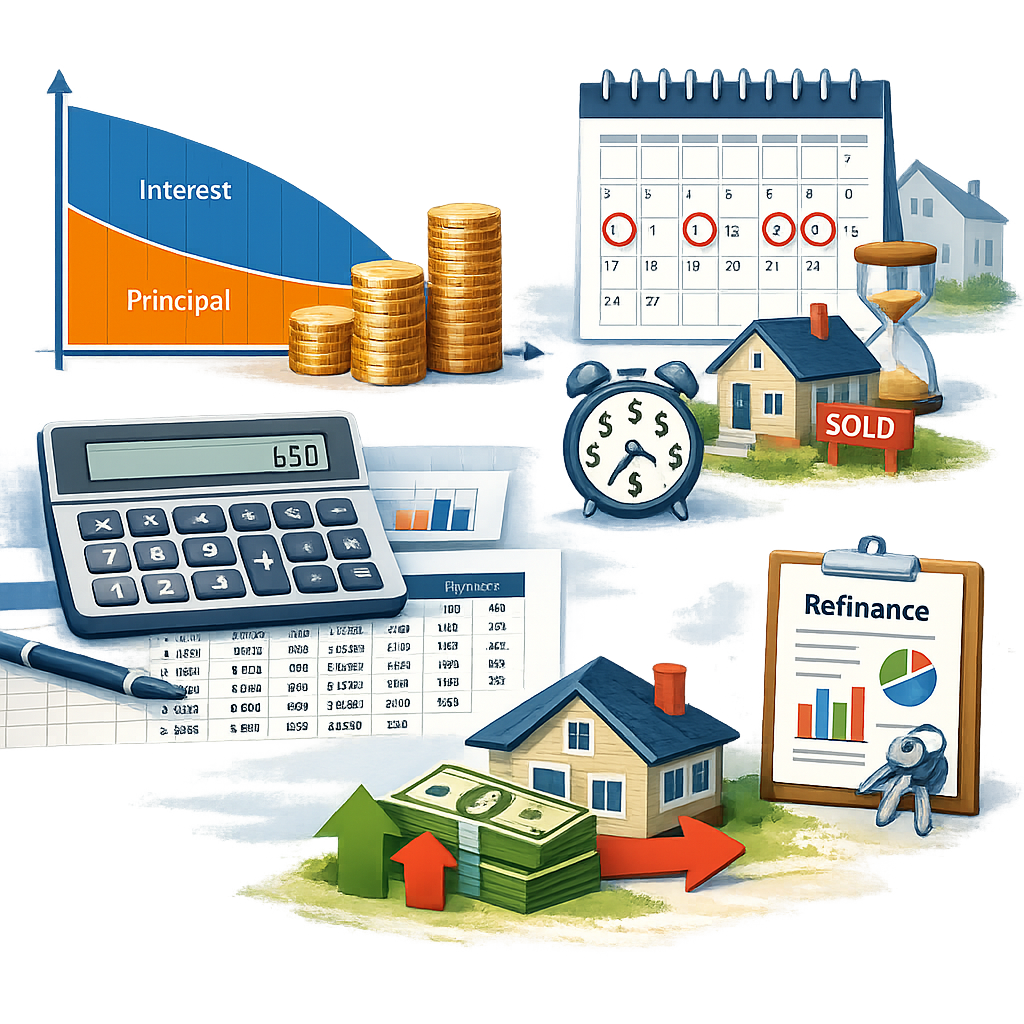
The Basics of Mortgage Amortization
Amortization is how mortgage payments gradually reduce principal: early payments are mostly interest, later mostly principal. Use schedules and calculators to track and model. Extra or biweekly payments, shorter terms, refinancing/recasting speed payoff, build equity, cut interest.
-

How We Bought a Home Without a Traditional Job
Buying a home without a traditional job is possible with preparation and strategy. We used a bank statement mortgage, showing consistent freelance and business income, a strong paper trail, and a larger down payment. Key steps included managing finances, reducing debt, and documenting income stability. Alternatives like seller financing or portfolio loans can also work.
-

Assumable Mortgages: An Overlooked Path to Homeownership
Assumable mortgages let qualified buyers take over a seller’s low-rate loan, cutting payments and sometimes fees. Common with FHA/VA/USDA, not most conventional. Buyers must qualify and bridge equity gaps. Verify terms, timelines, and seller’s release to avoid pitfalls.
-

The Impact of Mortgage Rate Locks on Your Home Buying Process
A mortgage rate lock secures your interest rate during processing, shielding you from market swings. Choose the right lock length, know fees, extensions and float-downs, and align with contract, appraisal and closing. Compare lenders and get terms in writing.
-

The Ins and Outs of Land Loans: Financing Your Piece of Earth
Land loans fund vacant parcels but cost more than mortgages: higher rates, bigger down payments, shorter terms. Risk varies by raw vs. improved land. Shop banks, credit unions, Farm Credit, or seller financing. Strong plans, due diligence, and docs help approval.