
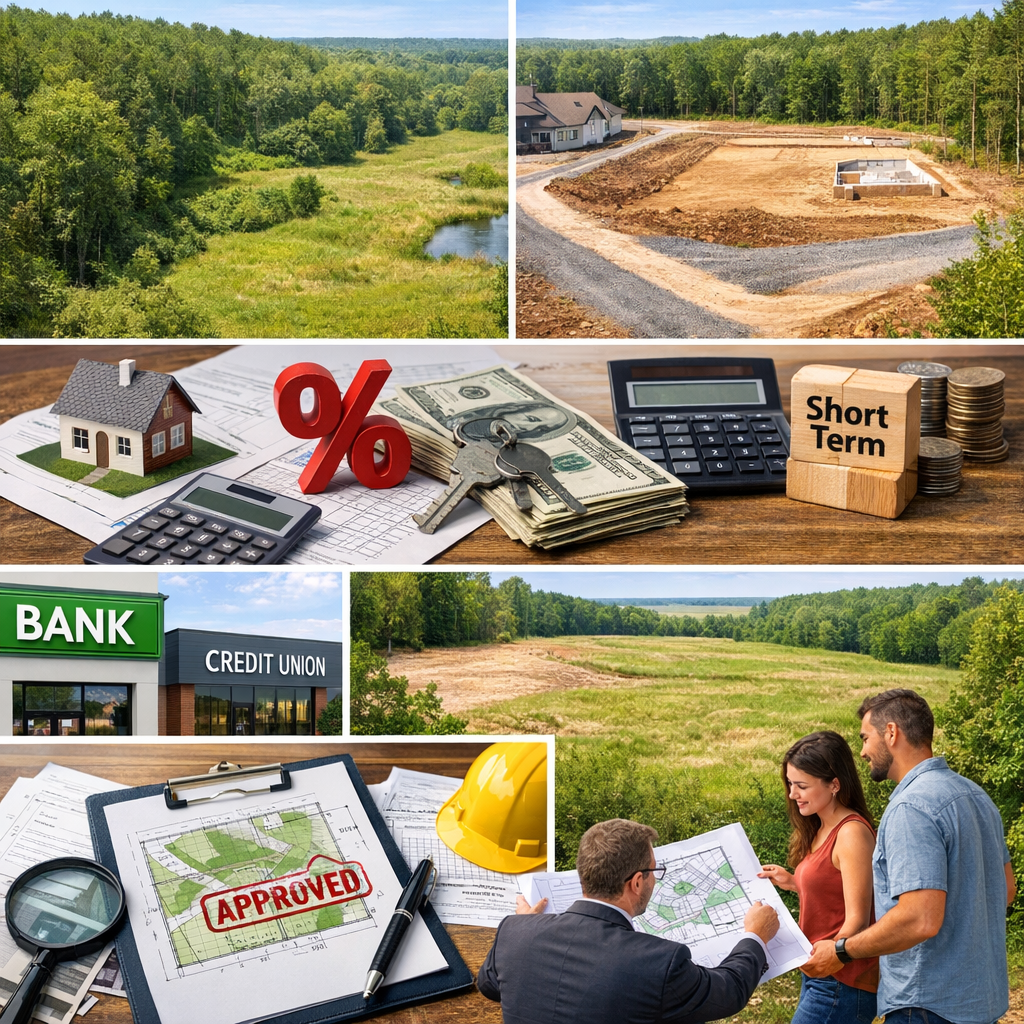
Buying a piece of land can be the first step toward a custom home, a future business site, a hobby farm, or a long-term investment. Financing that land is a different process than getting a typical mortgage, though. Lenders view vacant ground as higher risk, which affects rates, down payments, and requirements. With the right plan and clear expectations, a land loan can be a straightforward path to owning your piece of earth.
What a Land Loan Is and How It Differs From a Mortgage
A land loan is financing used to buy a parcel that does not already have a habitable structure. Some lenders call these lot loans when the parcel has road access and utilities nearby. Because there is no home to occupy or rent, lenders cannot rely on standard mortgage risk models. As a result, they usually require larger down payments, shorter terms, and more documentation about the parcel’s buildability and value.
Use cases vary. You might plan to build a primary home in two years, purchase acreage for recreational use, split and resell parcels, or hold land as an inflation hedge. Each use points lenders to a different product and underwriting path.
Types of Land and How Lenders View Risk
Lenders group land into categories. The more finished and buildable the parcel, the easier it is to finance and the lower the rate tends to be.
Raw Land
Raw land has no utilities, no road access, and no site improvements. It is the hardest to finance because the path to use is uncertain. Expect higher down payments and tighter terms. A clear plan for access, utilities, and permits can help, but many buyers of raw land either pay cash or use specialized rural lenders.
Unimproved or Partially Improved Land
These parcels may have a graded driveway or nearby utilities but not full hookups. They are often outside dense urban cores. Financing is more available than for raw land, though lenders still want proof of access, soil viability, and zoning that aligns with your intended use.
Improved Lots or Build-Ready Parcels
Improved lots have legal road access, utility connections or stubs at the lot line, and a recorded plat. These are common in subdivisions and planned communities. They are the easiest type of land to finance and may qualify for lower down payments and longer amortization.
Where to Get Financing for a Land Purchase
Not all lenders offer land loans. Shop among several sources and match the parcel type to the lender’s expertise.
Banks and Credit Unions
Many community banks and credit unions offer lot loans for improved parcels. They prefer borrowers who plan to build a primary residence within a set timeline, often 12 to 36 months. Some offer a construction-to-permanent loan that pays off the lot loan when you break ground.
Farm Credit and Rural Lenders
Farm Credit System institutions and rural-focused lenders specialize in acreage, agricultural use, and recreational properties. They often understand soil, water rights, fencing, barns, and outbuildings. Terms can be friendlier for large tracts or mixed-use parcels than what you may see at big banks.
Portfolio and Community Lenders
Smaller banks that keep loans on their own books can be flexible on unique parcels. They may accept nonstandard collateral or creative structures, such as cross-collateralizing with another property you own.
Seller Financing and Land Contracts
Some sellers will finance the purchase with a note and deed of trust or a land contract. This route can help if bank financing is limited, but read the fine print. Confirm how interest accrues, whether there is a balloon payment, and what happens if you pay off early. Always record the agreement and secure title insurance.
Alternative Routes
- Home equity line of credit or cash-out refinance on your current home.
- Construction-to-permanent loan that includes the lot purchase and build costs in one closing.
- Personal loan for small, inexpensive parcels, though rates may be higher and terms shorter.
Typical Land Loan Terms, Rates, and Down Payments
Because risk is higher than on a mortgage, land loan rates are usually higher and down payment requirements are steeper. Actual terms vary by lender and market conditions, but these ranges are common:
- Down payment: 20 to 30 percent for improved lots, 30 to 50 percent for unimproved or raw land.
- Loan-to-value limits: 50 to 70 percent on raw land, up to 80 percent on build-ready lots.
- Amortization: 10 to 20 years is common, sometimes with a 3 to 10 year balloon.
- Structure: Fixed-rate, adjustable-rate, or interest-only during a short term before a balloon payoff.
Lenders often price land loans 1 to 4 percentage points above standard 30-year mortgage rates. For example, if mortgages are near 6 percent, a land loan might fall in the 7 to 10 percent range depending on parcel type, credit, and down payment. Shorter amortization, stronger credit, and larger equity can help narrow that spread.
Eligibility and Documentation: What Lenders Want to See
Underwriting focuses on both you and the dirt. You will provide personal financials and proof that the parcel is usable as intended.
Borrower Profile
- Credit: Many lenders look for mid-600s scores or above for land loans. Stronger credit can reduce the rate and down payment.
- Debt-to-income: Targets often fall under 43 percent, though portfolio lenders may allow higher for strong files.
- Reserves: Expect to document several months of cash reserves, taxes, and insurance, especially if you plan to build later.
- Income and assets: W-2s or tax returns, bank statements, and a summary of liquid funds for closing and contingency.
Property File
- Purchase agreement, legal description, and preliminary title report.
- Survey or plat map, including easements and rights-of-way.
- Appraisal by a land-competent appraiser who understands local comps.
- Zoning verification letter and any covenants, conditions, and restrictions.
- Proof of legal road access and utility availability or connection points.
- Septic perc test or sewer availability confirmation, as applicable.
- Flood zone determination and any wetlands or environmental reports.
Due Diligence: Investigate Before You Commit
Strong due diligence protects your wallet and speeds approval. Lenders appreciate borrowers who demonstrate that the parcel can be used as planned.
Buildability and Access
- Confirm legal ingress and egress. Avoid parcels with no recorded access.
- Check slope, setbacks, height limits, and lot coverage rules that affect building footprint.
- Order a boundary survey to locate corners, encroachments, and easements.
Utilities and Septic
- Get written utility letters for electricity, water, gas, and telecom. Note distance and connection fees.
- For rural sites, verify well feasibility and water quality standards.
- Schedule a perc test and soil analysis for septic system design and cost planning.
Environmental and Flood Risk
- Pull a flood zone map. Factor in elevated foundation or insurance costs if in a high-risk zone.
- Screen for wetlands or protected species habitats that may limit development.
- For commercial or previously used sites, consider a Phase I environmental site assessment.
Title and Restrictions
- Review covenants, HOA rules, mineral rights, and any use restrictions.
- Confirm that subdividing, short-term rentals, or agricultural operations are allowed if part of your plan.
- Purchase an owner’s title policy to protect against undiscovered liens or boundary errors.
Planning to Build Soon? Construction-Focused Financing Paths
If you intend to build within one to three years, align your land loan with your build strategy.
Construction-to-Permanent Loans
A single-close construction-to-permanent loan can fund the lot purchase and construction, then convert to a long-term mortgage after completion. This structure saves on closing costs and reduces interest rate risk. Some programs require a licensed general contractor and a fixed budget with contingency funds.
Lot Loan Plus Separate Construction Loan
Another approach is to buy the lot with a short-term land loan, then refinance into a construction loan once plans and permits are ready. Your lot equity can count toward the required construction down payment. Time the construction loan before any balloon date on the land loan.
Owner-Builder Considerations
Loans for owner-builders are less common. Expect higher reserves, documented experience, and detailed plans. In many cases, hiring a licensed builder improves approval odds and pricing.
Ways to Improve Approval Odds and Reduce Costs
Small adjustments in your strategy can pay off in rate, fees, and speed.
- Increase the down payment to lower risk and interest costs.
- Choose a lender that specializes in your land type, such as Farm Credit for acreage.
- Present a clear plan with zoning confirmation, utility letters, survey, and timeline to build.
- Lock a shorter term if your build or resale is near. Shorter terms often price better.
- Consolidate accounts with a community bank that offers relationship pricing.
- Ask about autopay or account balance discounts.
- Negotiate the purchase price based on due diligence findings, such as utility distances or soil limitations.
A Step-by-Step Timeline From Offer to Closing
This framework helps you manage tasks and keep financing on track.
- Prequalify with two to three lenders. Share parcel type and intended use.
- Write an offer with financing, survey, perc, and title contingencies.
- Open escrow and order due diligence: survey, perc test, utility confirmations, and a flood check.
- Submit your full loan application with personal financials and property documents.
- Coordinate the appraisal. Provide comps or context on unique parcels if allowed.
- Clear underwriting conditions. Address access, permits-in-process, and any environmental notes.
- Review the closing disclosure, wire funds, and sign loan and title paperwork.
- After closing, calendar tax due dates, maintain access, and secure the site to preserve value.
Common Pitfalls to Avoid With Raw Land Financing
Many land-purchase headaches are preventable. Keep these risks in view.
- Buying property with no recorded road access or disputed easements.
- Skipping a perc test on sites that require septic systems.
- Assuming utilities are available without written confirmation.
- Ignoring floodplain or wetlands, which can block or reshape your build plan.
- Relying on a balloon payoff without a clear path to refinance or sell.
- Underestimating site work costs like grading, culverts, and rock excavation.
- Overlooking title issues such as old liens, boundary overlaps, or mineral reservations.
Your Path to Land Ownership With Confidence
Financing land is different from financing a home, but it does not have to be complicated. Define your intended use, match it with the right lender, and build a tight due diligence file. Aim for a strong down payment, confirm access and utilities in writing, and plan ahead for construction or exit. Take these steps and your land loan becomes a practical tool to move from idea to acreage, with fewer surprises and a smoother path to the ground you want to call yours.
Leave a Reply