
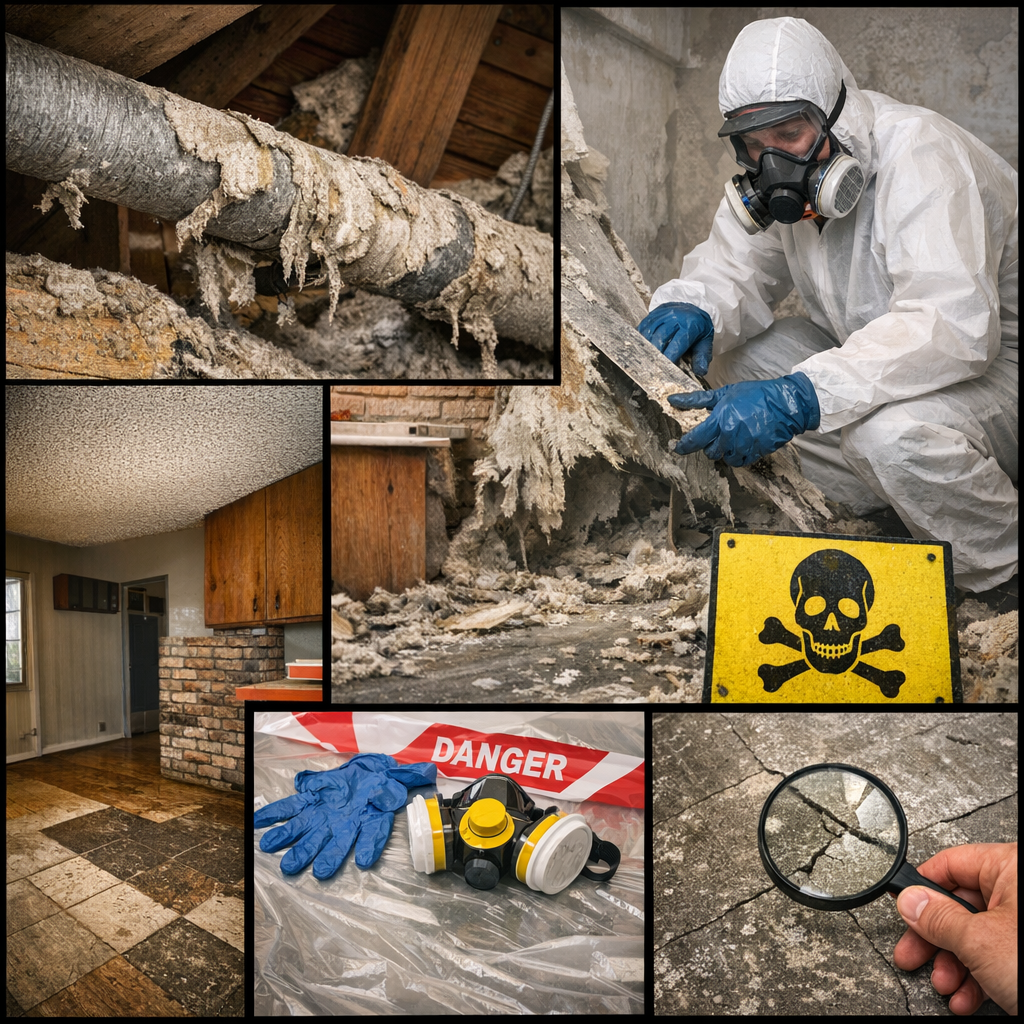
What Is Asbestos?
Asbestos refers to a group of six naturally occurring silicate minerals that are composed of thin, fibrous crystals. These fibers are resistant to heat, fire, and chemicals, making them ideal for use in insulation, roofing, flooring, and other building materials. Unfortunately, when asbestos-containing materials (ACMs) are disturbed, they can release microscopic fibers into the air, which can lead to serious health conditions such as asbestosis, lung cancer, and mesothelioma.
Where Asbestos May Be Found in Homes
Homes built before the 1980s are more likely to contain asbestos materials. Common areas where asbestos may be found include:
- Insulation around pipes, boilers, and ducts
- Vinyl floor tiles and the adhesive used to install them
- Roofing shingles and siding
- Textured paints and patching compounds on walls and ceilings
- Cement sheets and panels used in walls or ceilings
- Old furnace insulation and gaskets
How to Identify Asbestos
It is nearly impossible to identify asbestos by sight alone. Materials that contain asbestos often look identical to those that do not. The only reliable way to confirm the presence of asbestos is through laboratory testing. If you suspect that a material in your home contains asbestos, do not disturb it. Contact a certified asbestos inspector or environmental professional to collect samples safely and have them analyzed.
Safe Handling and Removal
Asbestos should never be handled or removed by untrained individuals. Improper handling can release dangerous fibers into the air. If asbestos-containing materials are in good condition and undisturbed, they may not pose an immediate risk. In such cases, it is often safer to leave them in place and monitor their condition.
If removal is necessary, hire a licensed asbestos abatement contractor. These professionals follow strict safety protocols, including sealing off work areas, using specialized equipment, and properly disposing of asbestos waste in accordance with local regulations.
Preventing Exposure
To minimize the risk of asbestos exposure in your home:
- Avoid drilling, sanding, or cutting materials that may contain asbestos.
- Regularly inspect older materials for signs of damage or deterioration.
- Seal or encapsulate asbestos materials if they are in good condition but at risk of disturbance.
- Ensure that any renovation or demolition work is preceded by an asbestos inspection.
Health Risks of Asbestos Exposure
Asbestos exposure can cause serious health problems, often developing years after initial contact. The most common asbestos-related diseases include:
- Asbestosis: A chronic lung disease caused by inhaling asbestos fibers, leading to scarring of lung tissue.
- Mesothelioma: A rare and aggressive cancer that affects the lining of the lungs, abdomen, or heart.
- Lung Cancer: Increased risk among individuals exposed to asbestos, especially smokers.
Conclusion
Asbestos remains a hidden hazard in many older homes. While it can be safely managed when left undisturbed, improper handling can lead to serious health consequences. Homeowners should always seek professional assistance when dealing with suspected asbestos materials. By understanding where asbestos may be found and how to handle it safely, you can protect yourself and your family from potential exposure.
Leave a Reply