
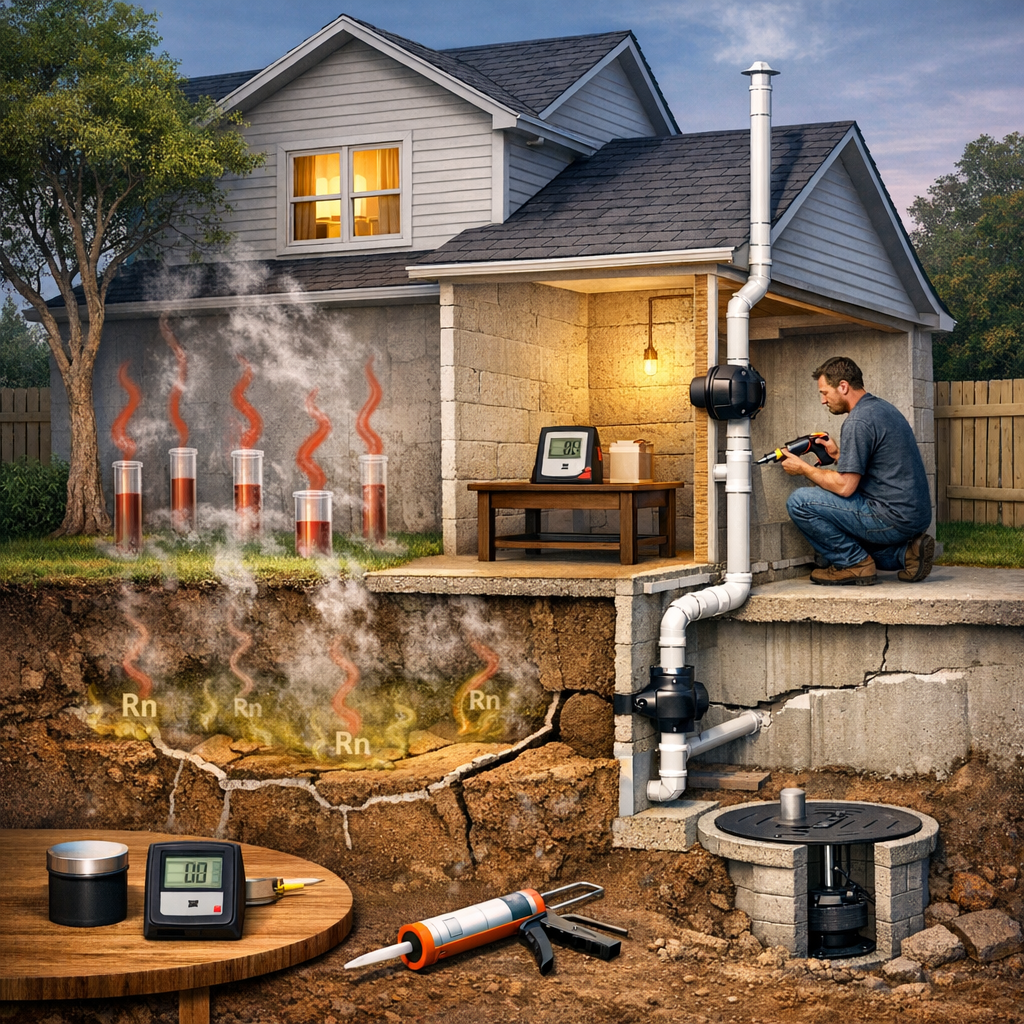
Understanding the Health Risks of Radon
Exposure to elevated levels of radon is the second leading cause of lung cancer after smoking. The gas releases radioactive particles that can damage lung tissue when inhaled over time. The risk increases with prolonged exposure and higher concentrations of radon in indoor air. Smokers exposed to radon face an even greater risk of developing lung cancer compared to non-smokers.
How Radon Enters Your Home
Radon typically enters homes through:
- Cracks in concrete floors and walls
- Gaps around service pipes and wiring
- Openings in sump pumps or floor drains
- Construction joints and foundation gaps
Because radon originates from the ground, homes with basements or crawl spaces are particularly vulnerable. However, radon can infiltrate any type of building, regardless of age or design.
Testing for Radon
Testing is the only way to determine if your home has elevated radon levels. There are two main types of tests:
- Short-term tests: These typically last from two to seven days and provide a quick snapshot of radon levels.
- Long-term tests: These measure radon concentrations over a period of three months or more, offering a more accurate average reading.
Test kits are available at hardware stores, online, or through certified radon professionals. If results show radon levels at or above 4 picocuries per liter (pCi/L), remediation is strongly recommended.
Radon Remediation Techniques
Reducing radon levels in your home can be achieved through several mitigation methods. The most common approach is sub-slab depressurization, which involves installing a vent pipe and fan system to draw radon from beneath the foundation and expel it safely outside. Other techniques include:
- Sealing cracks and openings in the foundation
- Improving ventilation in crawl spaces
- Installing a radon sump system in homes with high concentrations
Professional radon mitigation contractors can assess your home and recommend the most effective solution based on its structure and radon levels.
Preventive Measures and Maintenance
Even after remediation, it is important to retest your home periodically to ensure radon levels remain low. Homeowners should also maintain mitigation systems by checking fans and vent pipes regularly. When building a new home, incorporating radon-resistant construction techniques can prevent future problems and reduce costs associated with retrofitting.
Conclusion
Radon is a serious but manageable health risk. By understanding how it enters your home, testing regularly, and taking appropriate remediation steps, you can protect your family from its harmful effects. Awareness and proactive action are key to maintaining a safe and healthy indoor environment.
Leave a Reply