
<article>
  <h1>The Role of Social Media in Shaping Real Estate Trends</h1>
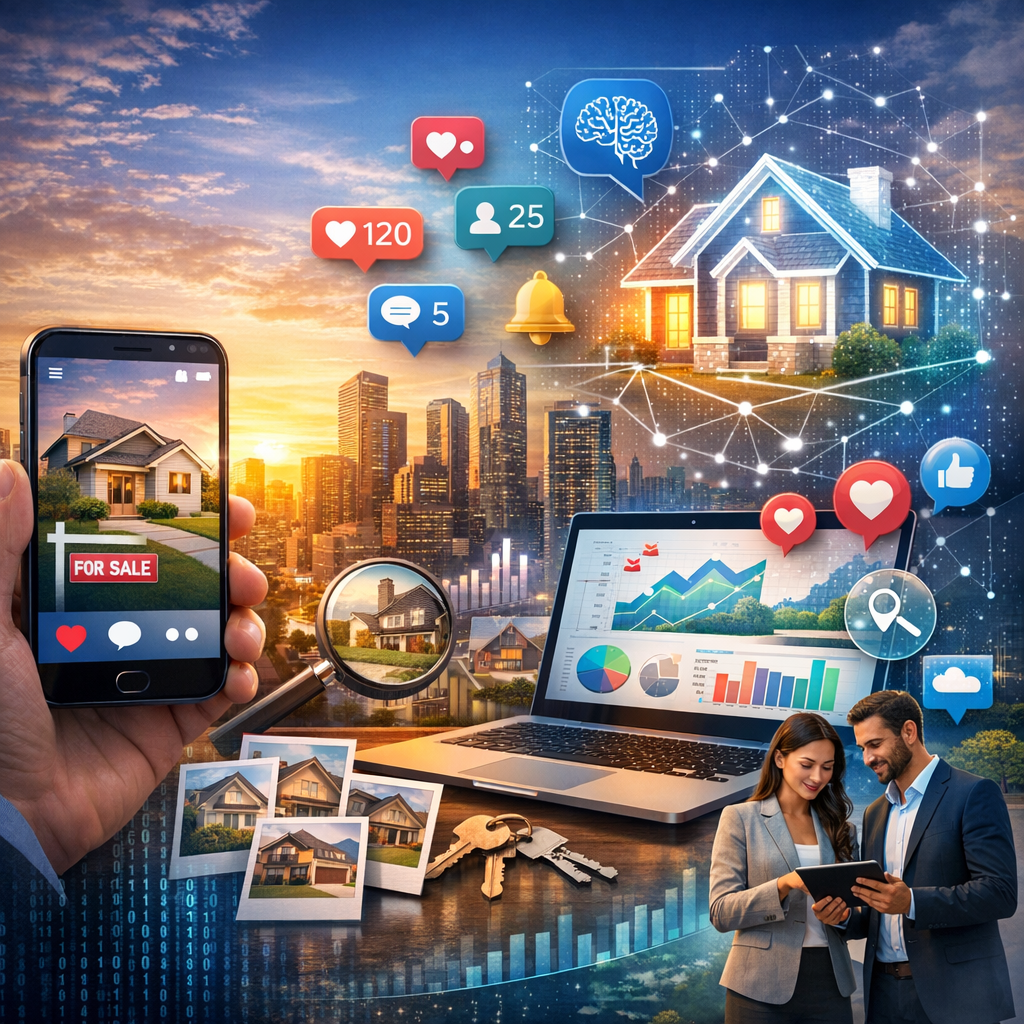
  <p>Social media has become a transformative force across industries, and real estate is no exception. The platforms that once served primarily for personal connections and entertainment have evolved into powerful tools for marketing, networking, and consumer engagement. In the real estate sector, social media plays a pivotal role in shaping market trends, influencing buyer behavior, and redefining how properties are promoted and sold.</p>

  <h2>Enhancing Property Visibility</h2>
  <p>One of the most significant impacts of social media on real estate is the ability to showcase properties to a vast audience. Platforms such as Instagram, Facebook, and TikTok allow real estate professionals to share high-quality images, virtual tours, and live videos that highlight a property’s best features. This visual storytelling approach not only attracts potential buyers but also helps agents build a recognizable brand identity.</p>

  <h2>Influencing Buyer Behavior</h2>
  <p>Modern buyers often begin their property search online, and social media has become a key part of this process. Through targeted advertising and algorithm-driven recommendations, users are exposed to listings that match their preferences and budget. Additionally, social proof—such as reviews, testimonials, and influencer endorsements—plays a crucial role in shaping perceptions and decisions. Buyers are more likely to trust agents and developers with a strong, authentic online presence.</p>

  <h2>Market Insights and Trend Analysis</h2>
  <p>Social media platforms provide valuable data that can be analyzed to understand market trends and consumer sentiment. Real estate professionals can monitor engagement metrics, hashtags, and discussions to identify emerging neighborhoods, design preferences, and investment opportunities. This real-time feedback loop enables agents and developers to adapt their strategies quickly and stay ahead of market shifts.</p>

  <h2>Networking and Professional Growth</h2>
  <p>Beyond marketing, social media fosters professional networking within the real estate community. Platforms like LinkedIn and X (formerly Twitter) allow agents, investors, and developers to share insights, discuss industry challenges, and collaborate on projects. These interactions contribute to knowledge sharing and the development of innovative practices that drive the industry forward.</p>

  <h2>Challenges and Ethical Considerations</h2>
  <p>While social media offers numerous advantages, it also presents challenges. The pressure to maintain a constant online presence can lead to burnout, and misinformation or exaggerated claims can damage credibility. Privacy concerns also arise when sharing client information or property details. Therefore, ethical use of social media is essential to maintain trust and professionalism in the industry.</p>

  <h2>The Future of Real Estate Marketing</h2>
  <p>As technology continues to evolve, the integration of artificial intelligence, augmented reality, and data analytics will further enhance how real estate professionals use social media. Virtual property tours, predictive marketing, and personalized content will become standard tools for engaging clients and closing deals. The future of real estate marketing lies in leveraging these digital innovations to create meaningful, transparent, and efficient interactions between buyers, sellers, and agents.</p>

  <p>In conclusion, social media has redefined the landscape of real estate by bridging the gap between technology and human connection. Its influence extends beyond marketing, shaping how people perceive value, make decisions, and interact with the property market. As the digital world continues to expand, those who adapt and harness the power of social media will remain at the forefront of real estate innovation.</p>
</article>
Discover more from My-Rebo Your One-Stop Real Estate Marketplace
Subscribe to get the latest posts sent to your email.
Leave a Reply