
The Evolution of Wallpaper
Wallpaper has evolved significantly from its traditional roots. Historically, it was used to display wealth and sophistication, featuring intricate hand-painted designs and expensive materials. Over time, mass production made wallpaper more accessible, but it eventually fell out of favor as paint became the simpler, more affordable option. Now, with digital printing and eco-friendly materials, wallpaper has re-emerged as a stylish and sustainable choice for modern interiors.
Modern Materials and Technology
Today’s wallpapers are designed for durability and ease of installation. Vinyl-coated papers, peel-and-stick options, and washable finishes make them practical for high-traffic areas such as kitchens and bathrooms. Digital printing allows for high-resolution images, custom designs, and even textured effects that mimic natural materials like wood, stone, or fabric. These innovations have expanded the creative possibilities for homeowners and designers alike.
Popular Trends in Wallpaper Design
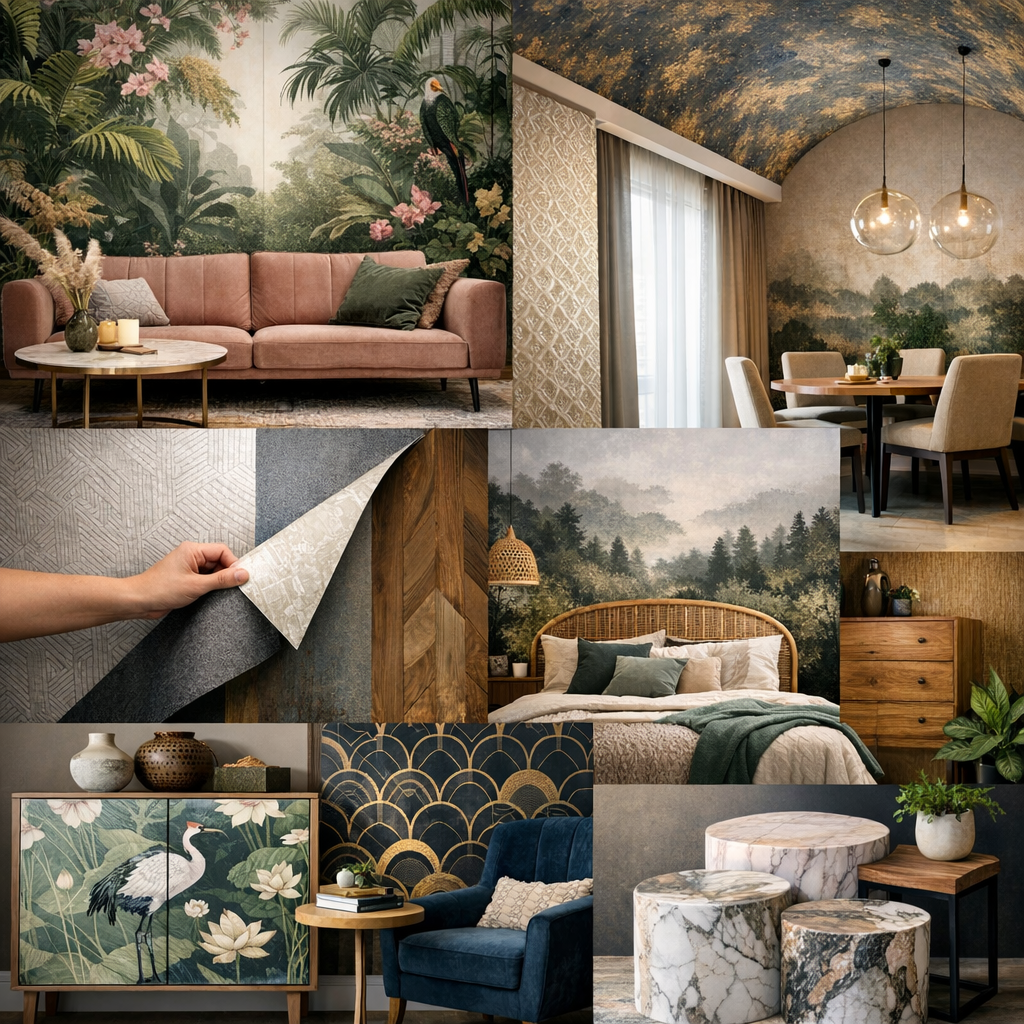
- Bold Patterns and Colors: Large-scale florals, geometric shapes, and abstract art are dominating modern interiors, adding personality and drama to walls.
- Nature-Inspired Themes: Botanical prints, tropical motifs, and scenic landscapes bring a sense of calm and connection to nature indoors.
- Textured and 3D Effects: Wallpapers that mimic natural materials or feature raised patterns add depth and tactile interest to a room.
- Metallic and Reflective Finishes: Subtle metallic accents and reflective surfaces create a sense of luxury and enhance lighting effects.
- Custom and Mural Designs: Personalized murals and bespoke prints allow homeowners to express individuality and create unique focal points.
Applications Beyond Walls
Modern wallpaper is not confined to walls alone. Designers are using it creatively on ceilings, furniture, and even stair risers to add unexpected visual interest. In small spaces, wallpaper can define zones or create the illusion of depth. For renters, removable wallpaper offers a temporary yet impactful way to personalize a space without permanent changes.
Sustainability and Eco-Friendly Options
As environmental awareness grows, many manufacturers are producing wallpapers made from recycled materials, water-based inks, and sustainable fibers. These eco-friendly options not only reduce environmental impact but also promote healthier indoor air quality. This shift aligns with the broader movement toward sustainable living and conscious design choices.
Conclusion
The resurgence of wallpaper reflects a broader trend toward personalization and creativity in interior design. With its wide range of materials, patterns, and applications, wallpaper offers endless possibilities for transforming spaces. Whether used as a bold statement or a subtle backdrop, it continues to prove that what was once old can become new again—beautifully reimagined for the modern home.
Leave a Reply