
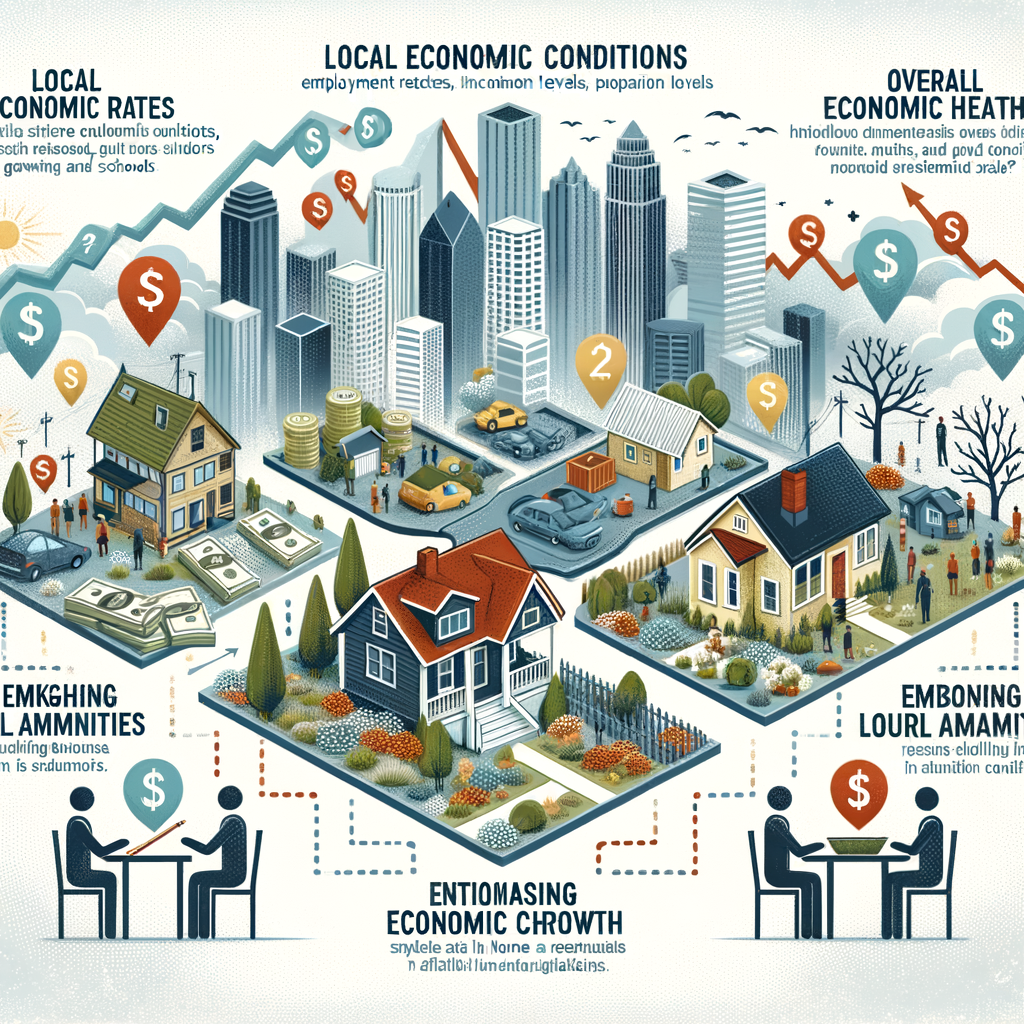
Selling a home is a significant financial transaction that can be influenced by a myriad of factors. Among these, local economic conditions play a crucial role in determining how quickly and at what price a home will sell. Understanding these conditions can help homeowners make informed decisions and optimize their selling strategy.
Understanding Local Economic Conditions
Local economic conditions refer to the economic factors that affect a specific geographic area. These can include employment rates, income levels, population growth, and the overall economic health of the region. These factors can directly impact the real estate market by influencing demand and supply dynamics.
Employment Rates
Employment rates are a key indicator of economic health. High employment rates often lead to increased demand for housing as more people have the financial stability to purchase homes. Conversely, high unemployment can lead to decreased demand, as potential buyers may be hesitant to make large financial commitments.
Income Levels
Income levels in a region can affect the affordability of homes. Higher average incomes can lead to increased purchasing power, allowing buyers to afford more expensive homes. This can drive up home prices and benefit sellers. On the other hand, lower income levels can limit the pool of potential buyers, potentially slowing down the sale process.
Population Growth
Population growth is another critical factor. Areas experiencing rapid population growth often see increased demand for housing, which can lead to higher home prices and quicker sales. In contrast, areas with stagnant or declining populations may face an oversupply of homes, leading to longer selling times and potentially lower prices.
Economic Health
The overall economic health of a region, including factors such as business growth, infrastructure development, and government policies, can also impact the real estate market. A thriving local economy can attract new residents and businesses, boosting demand for housing. Conversely, economic downturns can deter potential buyers and slow down the market.
Strategies for Selling in Various Economic Conditions
Understanding local economic conditions can help sellers tailor their strategies to maximize their chances of a successful sale.
In a Strong Economy
- Price Competitively: In a strong economy, demand is often high. Pricing your home competitively can attract multiple offers and potentially drive up the final sale price.
- Highlight Local Amenities: Emphasize the benefits of living in a thriving area, such as access to jobs, schools, and recreational facilities.
In a Weak Economy
- Enhance Curb Appeal: Make your home stand out by improving its exterior appearance. This can attract buyers even in a sluggish market.
- Be Flexible with Negotiations: Be prepared to negotiate on price and terms to accommodate potential buyers who may be more cautious with their spending.
Conclusion
The impact of local economic conditions on home sales cannot be overstated. By staying informed about these factors and adjusting your selling strategy accordingly, you can improve your chances of a successful home sale. Whether in a booming or struggling economy, understanding the local market dynamics is key to making the most of your real estate transaction.
Leave a Reply