
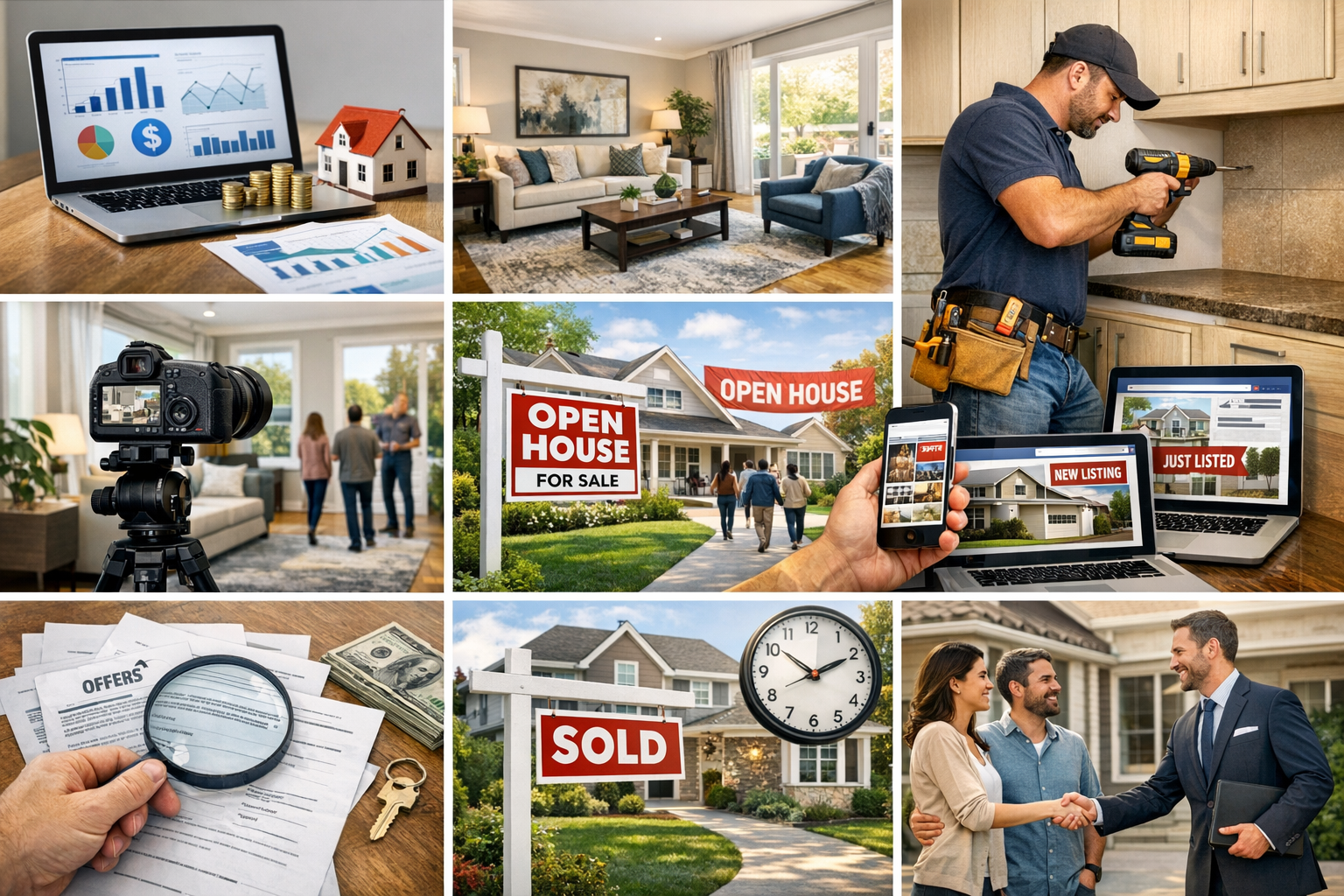
Competing against similar listings, price-sensitive buyers, and tight timelines demands a clear plan. Selling a home in a competitive market is not about doing everything. It is about doing the right things in the right order, then measuring results and adjusting quickly. The following strategies show how to position your property, create demand, and convert interest into a clean, high-confidence closing.
Price Strategy That Attracts Qualified Buyers
Smart pricing does not mean going low or aiming unrealistically high. It means aligning your list price with buyer behavior, search filters, and current supply so your home earns immediate attention and credible offers.
Use local data that matters
Start with a comparative market analysis that includes solds from the last 60 to 90 days, active competition, and pending contracts. Focus on:
- Absorption rate and months of inventory to gauge speed.
- Average and median days on market to set expectations.
- Price bands where buyers set search filters, such as 399,000 vs 405,000.
- Condition-adjusted comps that match your home’s features and updates.
Set price bands and a reduction plan
Position the home just inside a common filter threshold so your listing appears in more searches. If activity is soft in the first 10 to 14 days, pre-plan a modest price improvement to the next logical band. Pre-committing to a timeline prevents hesitation if metrics show you missed the sweet spot.
Monitor real-time feedback
Track showings-to-inquiry ratio, online saves, open house traffic, and the number of second showings. If buyers praise the home but balk at price, tighten the gap. If they cite specific objections, fix those before adjusting price. In a fast-moving market, the first two weeks often set the trajectory for the rest of the listing.
Preparation That Wins First Impressions
Condition and presentation are the quickest levers for outshining competing homes. A focused preparation plan can elevate perceived value without chasing low-ROI projects.
Staging to highlight space and light
Staging is not decoration. It is merchandising. Aim for neutral backdrops, fewer but larger pieces, clear traffic flow, and consistent color temperature in lighting. Remove most personal photos and bulky furniture so rooms read larger. Stage outdoor areas to suggest actual use, such as a bistro set on a small patio or a reading chair by a bright window.
High-impact fixes on a tight budget
Prioritize improvements that buyers notice within 10 seconds or that influence inspection outcomes. Strong returns often come from:
- Fresh interior paint in a light, neutral palette.
- Updated lighting and higher lumen bulbs at a consistent color temperature.
- New cabinet hardware, door handles, and fresh caulk in kitchens and baths.
- Deep cleaning, grout whitening, and carpet stretching or replacement where worn.
- Minor handyman items that telegraph good maintenance.
Curb appeal that sets the tone
Buyers form opinions before they step out of the car. Simple exterior upgrades punch above their weight:
- Paint or refinish the front door and update house numbers and mailbox.
- Mulch, edge, and add seasonal color in planters.
- Pressure-wash walkways, siding, and drive.
- Repair loose railings, trim, and screens.
- Add warm landscape lighting for late showings.
Marketing That Reaches and Converts
Buyers shop online first. Your marketing plan must capture attention quickly, communicate value, and guide people from interest to showing without friction.
Visuals that stop the scroll
- Professional photography with balanced exposure and clear window views.
- Twilight hero shot to elevate curb appeal in listing thumbnails.
- Detailed floor plan with measurements for spatial context.
- 3D virtual tour for out-of-town buyers and quick re-visits.
- Drone photos when lot size, privacy, or views are selling points.
- Video walk-through that mirrors the actual showing sequence.
Listing copy that ranks and resonates
Use a clean, benefit-led listing description with natural keywords. Lead with top value drivers, then stack proof:
- Highlight recent upgrades, energy-efficient systems, storage, and layout advantages.
- Call out school zones, commute times, nearby parks, and retail.
- Use specific phrases buyers search, such as home office, first-floor primary, fenced yard, or EV-ready garage.
- Close with a clear call to action that emphasizes limited availability or a scheduled offer review date.
Distribution and promotion that multiplies reach
- Full MLS syndication plus a dedicated property site with domain.
- Targeted social and search ads aimed at likely movers and geo-fenced audiences.
- Email blasts to local agents and buyer lists before and after going live.
- Neighbor preview to activate word-of-mouth referrals.
Showings and open houses that convert interest
- Maximize availability in the first 10 days to compress demand.
- Provide feature sheets, utility data, and upgrade lists at the property.
- Use shoe covers, scent-neutral cleaning, and consistent temperature for comfort.
- Offer a virtual open house or live video tour for remote buyers.
Structure the Sale for Strong, Clean Offers
A competitive market rewards sellers who reduce buyer uncertainty and set clear rules for submitting offers. The goal is to attract well-prepared buyers who can close on time with limited risk.
Pre-listing inspection and full disclosures
A pre-listing inspection, along with receipts for major repairs, helps cue confidence and can reduce renegotiation. Disclose material facts, service history, and warranty coverage. When buyers feel informed, they write cleaner offers with fewer contingencies.
Offer guidelines and deadlines
Publish instructions that include your preferred closing window, possession timing, what personal property conveys, and how to handle escalation clauses. Setting an offer review date can consolidate demand. If the market is fast, allow pre-emptive offers but require proof of funds or a strong pre-approval.
Negotiate beyond price
Compare offers on total value and risk:
- Financing strength and appraisal gap coverage.
- Inspection terms, repair caps, or inspection waivers with data-backed rationales.
- Earnest money size and whether it is nonrefundable after certain milestones.
- Closing timeline, rent-back, and inclusion of key personal property to reduce move costs.
Managing Multiple Offers Without Drama
Multiple offers are an opportunity and a responsibility. Use a clear framework to keep the process fair, organized, and defensible.
Use a scoring matrix
Score each offer on price, net proceeds after concessions, financing type, appraisal terms, inspection terms, closing timeline, and contingencies. A simple 1 to 5 rating in each category helps you select the best risk-adjusted offer, not just the highest number.
Keep momentum through escrow
After acceptance, maintain rhythm. Confirm earnest money receipt, schedule appraisal and inspections early, and track contingency deadlines. Daily updates in the first week prevent small items from turning into last-minute delays. If an appraisal challenge arises, provide the appraiser with a comp package and list of upgrades with costs and dates.
Choose a Real Estate Agent Who Can Execute
An experienced agent brings pricing finesse, marketing reach, and transaction management that protect your net. Vet for demonstrated results in your micro-market, not just general experience.
Questions to ask during interviews
- What is your average days on market and list-to-sale price ratio compared with the area?
- Show me three similar listings you sold and how your pricing strategy worked.
- What pre-list improvements would you prioritize for my home and why?
- Walk me through your 7 to 14 day launch plan and advertising budget.
- How do you handle multiple offers and escalation clauses?
What a serious marketing plan includes
- Professional media package with photos, floor plan, video, and 3D tour.
- Property website, email campaign, and paid promotion calendar.
- Agent-to-agent outreach and proactive follow-up after every showing.
- Weekly reporting on traffic, inquiries, feedback, and recommended adjustments.
Timing and Local Market Nuances
Even in a hot market, micro-seasonality and neighborhood patterns shape results. Launching at the right moment can widen your buyer pool and increase your odds of multiple offers.
Pick the right week to list
In many areas, Thursday launches maximize weekend traffic, with professional media posted before the listing goes live. Avoid major holiday weekends unless inventory is very tight. Consider school calendars, weather, and large local events that can suppress showings.
Watch supply spikes and adjust quickly
If three similar homes hit the market the same week, emphasize differentiators and consider a slight price or concession advantage. If yours is the only active in a sought-after price bracket, push for an offer review date and build urgency through targeted outreach.
The Smart Seller’s Final Checklist for a Competitive Market
Winning in a crowded field comes down to clarity and execution. Before you go live, confirm that you have:
- A data-backed price positioned within a key search band.
- Staging, repairs, and curb appeal dialed for first impressions.
- Pro-level photos, floor plan, video, and a 3D tour ready.
- A persuasive listing description with buyer-focused benefits.
- A distribution plan across MLS, portals, social ads, email, and local agent networks.
- Offer guidelines, an optional review date, and a negotiation framework.
- A pre-listing inspection or strong disclosures to reduce risk.
- A daily follow-up system for leads and a schedule that prioritizes early showings.
When pricing, presentation, and promotion align, you create competition among buyers instead of competing against other listings. That is how sellers secure stronger terms, fewer contingencies, and a smooth path to closing in a competitive market.
Leave a Reply