
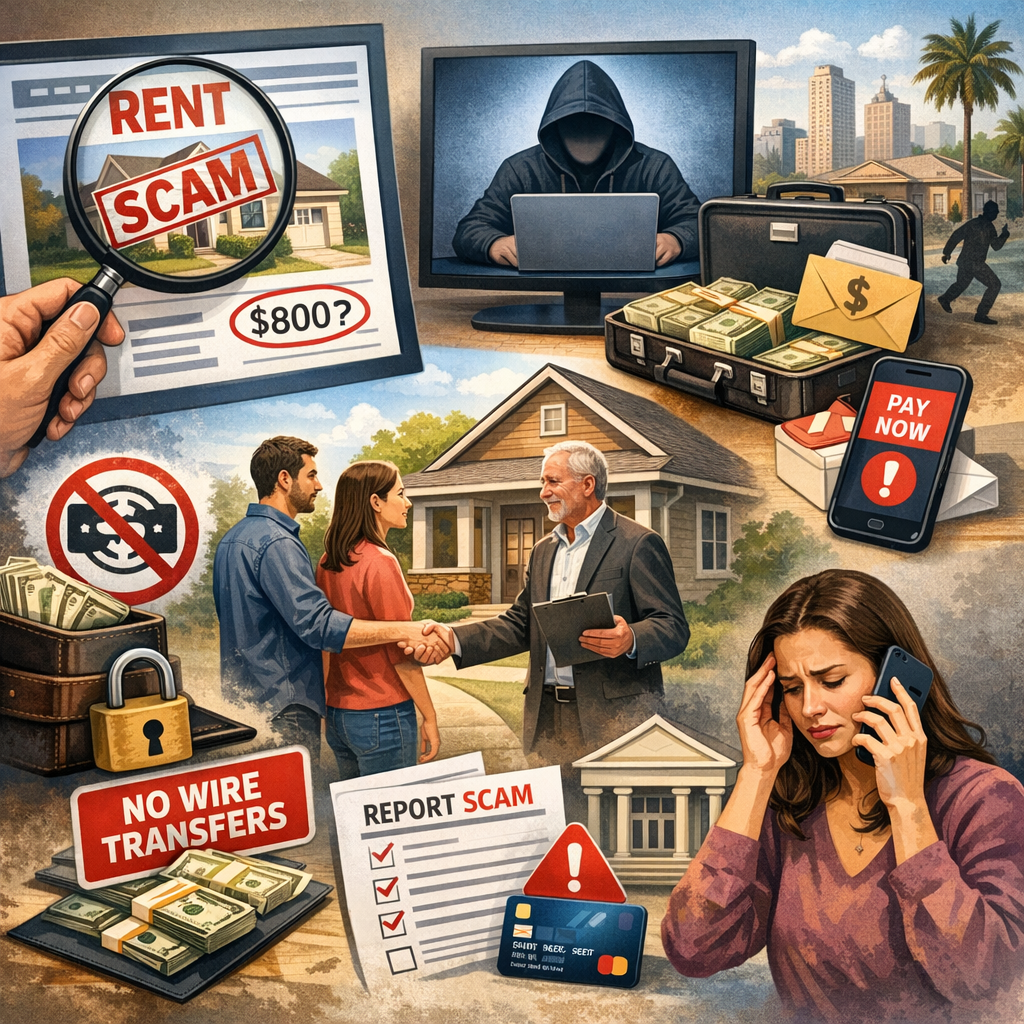
Common Types of Rental Scams
- Fake Listings: Scammers copy photos and descriptions from legitimate rental ads and repost them at lower prices to attract victims.
- Phantom Rentals: The property advertised doesn’t exist or isn’t actually available for rent.
- Hijacked Ads: Fraudsters take over real listings and change the contact information so that payments go to them instead of the real landlord.
- Advance Fee Scams: The scammer asks for a deposit or application fee before you’ve seen the property or signed a lease.
Warning Signs of a Rental Scam
- Unusually Low Rent: If the price seems too good to be true, it probably is.
- Pressure to Act Quickly: Scammers often create a sense of urgency to prevent you from doing proper research.
- Requests for Upfront Payments: Never send money before viewing the property or signing a legitimate lease.
- Unverifiable Landlord or Agent: Be cautious if the person refuses to meet in person or provide identification.
- Suspicious Communication: Poor grammar, vague responses, or requests to communicate outside official platforms can be red flags.
How to Protect Yourself
- Research the Property: Verify the address, check public records, and confirm that the property is actually for rent.
- Meet in Person: Always visit the property and meet the landlord or agent before making any payments.
- Use Trusted Platforms: Stick to reputable rental websites that have verification processes and secure payment systems.
- Never Wire Money: Avoid sending funds through wire transfers, gift cards, or cryptocurrency. Use traceable payment methods.
- Get Everything in Writing: Ensure that all terms, conditions, and agreements are documented in a signed lease.
What to Do If You’ve Been Scammed
If you suspect you’ve fallen victim to a rental scam, act quickly. Contact your bank or payment provider to try to stop the transaction. Report the incident to local law enforcement, the Federal Trade Commission (FTC), and the rental platform where you found the listing. Keep all correspondence and payment records as evidence.
Conclusion
Rental scams can happen to anyone, but awareness and caution are your best defenses. By recognizing the warning signs, verifying information, and avoiding risky payment methods, you can significantly reduce your chances of becoming a victim. Always trust your instincts—if something feels off, take the time to investigate before committing to a rental agreement.
Leave a Reply