
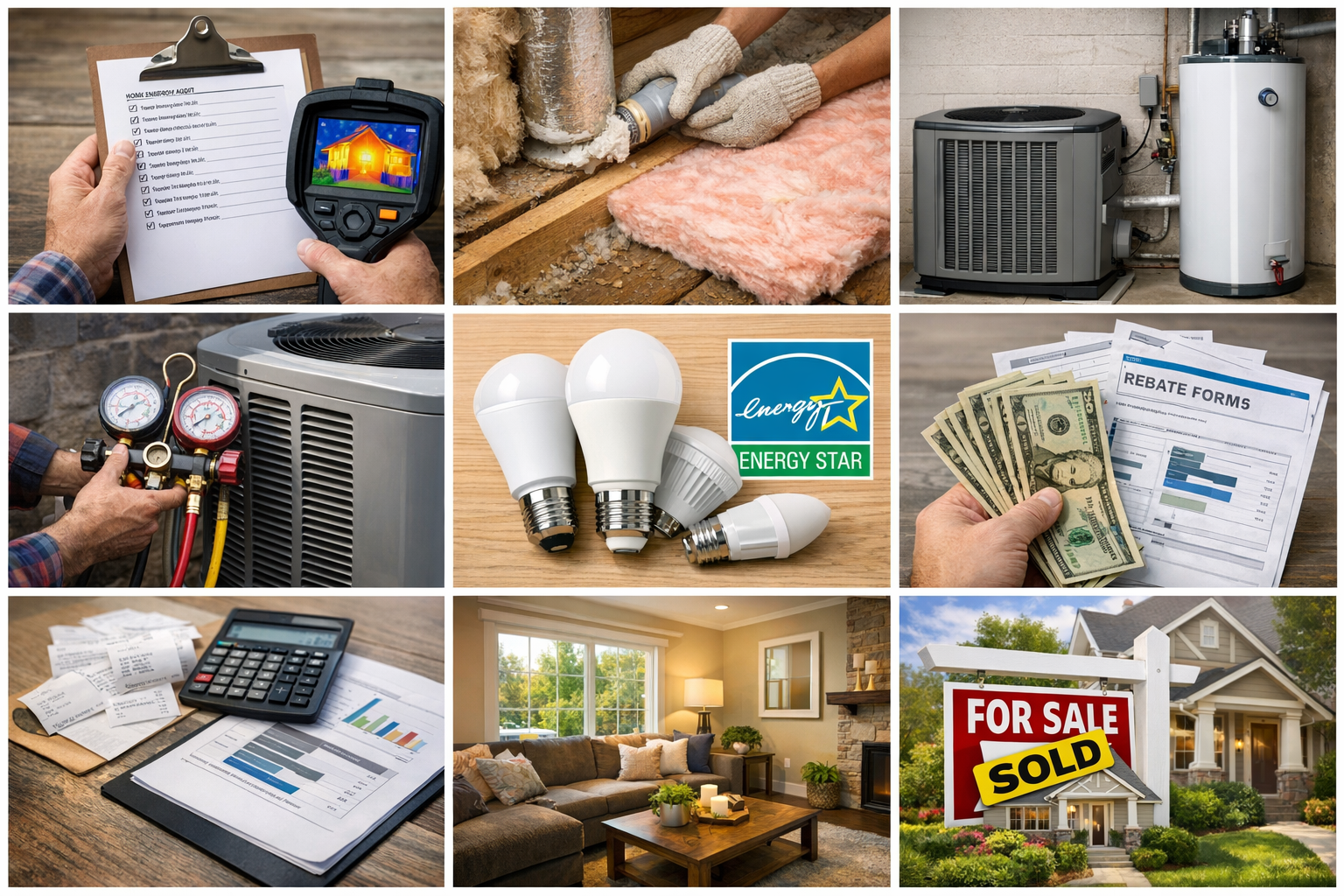
Energy-efficient homes sell faster and for better prices because buyers see immediate value in lower utility bills, improved comfort, and modern features. Preparing your property with targeted efficiency upgrades can set your listing apart and help your agent market a compelling story. The best part: many improvements are affordable, quick to complete, and come with rebates or tax credits that reduce out-of-pocket cost.
This guide walks through a practical plan to improve energy performance before you list, from a fast DIY assessment to high-impact upgrades buyers will notice on day one. Use it to focus your budget where it brings the highest return and to present your home as a well-maintained, move-in-ready property.
Why Energy Efficiency Helps Homes Sell
Buyers compare monthly costs as closely as they compare countertop finishes. A house that looks great and costs less to operate is easier to justify at a stronger price. Energy upgrades also signal diligent ownership: insulation, HVAC maintenance, and air sealing suggest the rest of the home has been cared for as well.
Appraisers and lenders are paying more attention to energy features, and many buyers ask for utility history during negotiations. When you can show improved energy performance with bills, audits, and warranties, you reduce uncertainty and build trust.
Start With a Quick Energy Assessment
A little pre-listing detective work helps you target projects that matter most. Begin with a basic check, then decide if a professional audit makes sense for your market and price point.
DIY Checklist to Spot Easy Wins
- Look for gaps around doors, windows, plumbing penetrations, and attic hatches. Feel for drafts on a breezy day.
- Check attic insulation depth. If rafters are visible or coverage is uneven, you likely need more.
- Inspect weatherstripping on exterior doors and the door to the garage or attic.
- Review HVAC filters and ductwork. Dirty filters and disconnected or leaky ducts waste energy.
- Test faucets and showers. Long hot-water waits or inconsistent temperatures point to inefficiency.
- Note lighting. Incandescent or old CFL bulbs should be replaced with LEDs.
- Scan appliances for Energy Star labels. Prioritize visible items like the refrigerator and dishwasher.
Professional Audit and Ratings
An energy audit with a blower door test and thermal imaging pinpoints leaks and insulation gaps that a visual check will miss. In many regions you can request a HERS Index or similar rating. Having a third-party report can elevate your listing and justify your upgrades. Ask your utility about discounted audits.
Prioritize Return on Investment
As a rule of thumb, start with the building envelope and low-cost fixes that cut drafts, then address big-ticket items that buyers notice. If a system is near the end of its expected life, replacement can both reduce energy use and remove an objection during inspection.
Seal and Insulate the Building Envelope
Air sealing and insulation often deliver the best dollar-for-dollar comfort and efficiency gains. They are also improvements buyers can feel during a showing.
Attic Insulation First
Heat loss and gain are most severe at the top of the house. Adding blown-in cellulose or fiberglass to reach region-appropriate levels can trim energy use and stabilize room temperatures. While you are there, seal around light fixtures, plumbing stacks, and top plates with foam or caulk before adding insulation.
Walls, Floors, and Basements
Uninsulated crawl spaces, rim joists, and basement walls can be major energy drains. Rigid foam or spray foam at the rim joist, plus proper moisture control, improves comfort on the main level. If your market values finished basements, insulation upgrades in these areas can support your listing narrative.
Stop Drafts at the Source
Use foam backer rod and caulk around window and trim gaps, and install quality weatherstripping on exterior doors. Add a sweep or threshold at the bottom of doors. Seal HVAC duct joints with mastic, not duct tape. Small materials, big perceived improvement.
High-Impact Upgrades Buyers Notice
Some improvements are visible and persuasive during showings. When done strategically, they help your photos, your agent’s remarks, and the appraiser’s notes.
Windows and Doors
Full window replacement can be costly and may not always yield the best pre-list ROI. If your frames are sound, consider targeted replacements for the worst performers, or add low-profile interior storm panels. At minimum, repair seals, lubricate hardware, and confirm smooth operation so buyers get a tight, rattle-free feel during tours.
HVAC Tune-Up or Replacement
A certified tune-up improves efficiency, reduces noise, and catches issues before inspection. If your unit is near end of life or uses outdated refrigerant, consider a high-efficiency heat pump or furnace and AC with strong ratings. Pair the system with a smart thermostat and document the expected savings and warranty.
Efficient Water Heating
Water heaters over 10 years old raise concerns. A heat pump water heater, tankless unit, or high-efficiency tank model can cut energy use. Add pipe insulation on the first 6 to 10 feet from the tank and install a water-saving showerhead with a solid feel and finish.
Lighting and Appliances
Swap every bulb for a warm LED and choose Energy Star appliances in visible areas. Quiet dishwashers and fridges with clear efficiency labels both photograph well and signal lower operating costs. Buyers like what they can see and hear.
Low-Cost Projects With Outsized Perceived Value
If you are working with a smaller budget or tight timeline, these improvements still make an impression.
Smart, Simple Controls
Install a smart thermostat and program it to a comfortable showing schedule. Add occupancy sensors in utility spaces and a smart power strip for the media center. These are affordable upgrades that feel modern and relatable.
Quiet, Clean Air
Replace HVAC filters, clean supply and return grilles, and consider sealing accessible ducts. A quieter system and fresher air help buyers associate your home with comfort and care.
Landscaping for Passive Efficiency
Trim vegetation to increase daylight and airflow at windows. If your timeframe allows, plant a shade tree on the sunniest side of the house and add mulch to reduce soil heat radiation near patios. Even small changes can lower indoor heat gain and make outdoor spaces more pleasant during showings.
Use Incentives and Timing to Stretch Your Budget
Many efficiency projects qualify for rebates, tax credits, or low-interest financing. A little research can lower your costs and speed up decisions.
Find Rebates and Credits
Check your state energy office, local utility, and federal programs for incentives on insulation, heat pumps, water heaters, windows, and smart thermostats. Keep approval emails and receipts so buyers can see that installations were done to program standards.
Schedule for the Season
Plan draft sealing and insulation before the coldest or hottest months so you can capture lower utility bills to show buyers. Schedule HVAC work and window repairs well ahead of peak contractor demand.
Budget Wisely
Allocate funds in order of visible impact and payback: air sealing, attic insulation, HVAC tune-up, water heater fixes, lighting and controls, then selective replacements for end-of-life systems or poor-performing windows and doors.
Document Improvements and Market the Results
Energy upgrades are only as valuable as your ability to prove them. Package your work into an easy-to-read file for your agent and prospective buyers.
What to Gather
- Utility bills for the last 12 to 24 months with a brief note on major changes, such as new insulation or HVAC service dates.
- Invoices, warranties, model numbers, and efficiency ratings for installed equipment and appliances.
- Energy audit reports, blower door results, or ratings like HERS if available.
- Rebate approvals, completion certificates, and inspection sign-offs.
How to Tell the Story in Your Listing
Ask your agent to include specific phrases buyers search for, such as insulated attic, sealed ducts, high-efficiency heat pump, smart thermostat, and Energy Star appliances. A short feature sheet at showings can outline upgrades with estimated savings and comfort benefits in plain language.
Show the Comfort, Not Just the Numbers
Set the thermostat to a steady, comfortable temperature before showings. Eliminate drafts near entries, and ensure windows operate smoothly. Quiet operation and consistent room temperatures help buyers feel the difference your upgrades made.
Health, Comfort, and Inspection Readiness
Efficiency should never come at the expense of indoor air quality or code compliance. Address both so your improvements stand up to scrutiny.
Ventilation and Moisture Control
After air sealing, verify adequate ventilation. Install a quiet, efficient bath fan on a timer or humidity sensor and make sure kitchen ventilation exhausts outdoors. Check that gutters and grading move water away from the foundation to prevent dampness that undermines insulation performance.
Pre-Inspection Touchpoints
Label breaker panels and shutoff valves, confirm smoke and carbon monoxide alarms, and provide service records. A smooth inspection reinforces buyer confidence in your efficiency claims and reduces renegotiation risk.
Turn Efficiency Upgrades Into a Stronger Sale
You do not need a full gut renovation to present an efficient, market-ready home. Start with sealing and insulation, tune the systems you have, add targeted upgrades buyers can see and feel, and document everything. By pairing practical improvements with clear proof and smart listing language, you position your property as a lower-cost, higher-comfort option that stands out in search results and in person.
Pick two or three projects to complete this month, collect your paperwork, and align your listing timeline with your newly improved utility bills. The result is a home that shows beautifully, passes inspection with fewer surprises, and justifies stronger offers because it promises better living at a lower monthly cost.
Leave a Reply