
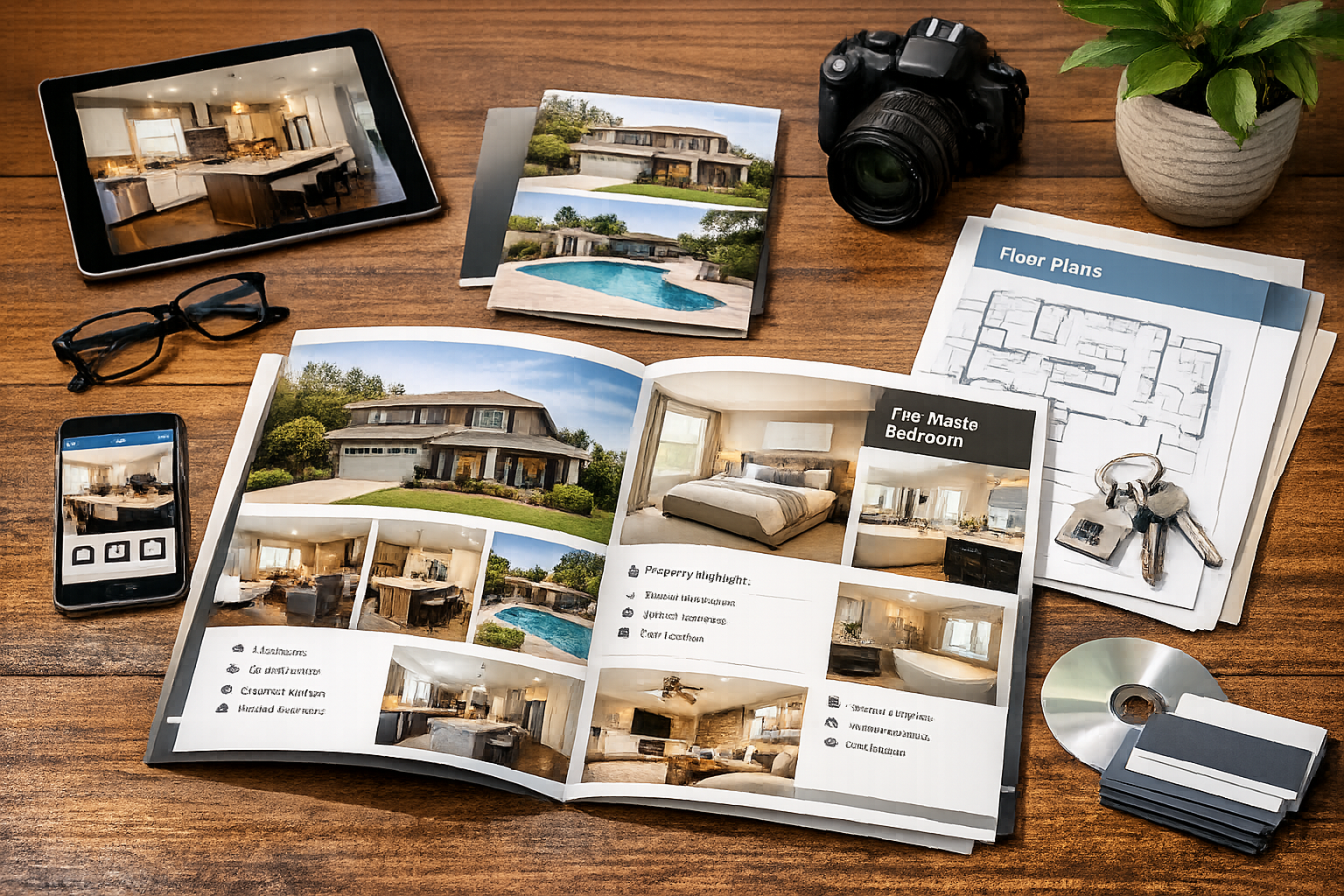
A well-crafted feature sheet is a quiet salesperson that keeps working after the showing ends. Buyers take it home, compare notes, and often make shortlists based on what they can remember and trust. When your property brochure is clear, attractive, and strategic, it frames the home’s value, answers common questions, and points buyers to the next step.
This guide shows how to plan, write, design, and distribute a feature sheet that stands out at open houses and in inboxes. The goal is simple: help serious buyers picture themselves living in the home, build confidence in the details, and make it easy to schedule a showing or submit an offer.
Set a Clear Strategy Before You Design
Start with the outcome in mind. A feature sheet that tries to be everything to everyone turns into clutter. Define the buyer, highlight the value story, and keep every element aligned with that plan.
Identify the primary buyer profile
Think about the most likely buyer, then choose details and photos that speak to that person’s priorities:
- First-time buyers: monthly costs, energy efficiency, recent upgrades, transit access.
- Move-up families: bedroom count, storage, backyard, school catchments, safety features.
- Downsizers: single-level living, low-maintenance finishes, proximity to amenities, HOA coverage.
Choose one core message with supporting proof
Pick a headline idea that positions the home, then back it up with three to five proof points. Example: “Sunlit corner lot with flexible work-from-home space” supported by south-facing windows, dedicated office, upgraded electrical, and high-speed internet availability.
Align with pricing and comps
Review nearby sold and active listings. If your price is premium, the brochure must show why: superior lot, better finishes, or a renovation timeline. If the price is a value play, emphasize ROI and cost-saving features.
Content That Converts Browsers Into Showings
Good copy is specific, benefit-focused, and easy to skim. Lead with facts buyers will ask about, then translate features into everyday advantages.
Must-have facts that reduce friction
- Full address and neighborhood name
- Price or “Contact for price” if required by brokerage policy
- Beds, baths, interior square footage, and lot size (note measurement source)
- Parking details and any EV charging
- Year built and major updates with years completed
- Heating and cooling type, average utility costs if available
- Roof, windows, and mechanicals with approximate age
- HOA or strata fees and what they include
- Property taxes and school catchments
- Inclusions and exclusions (appliances, window coverings, fixtures)
Use a consistent format so buyers can compare across homes, and include a brief measurement disclaimer.
Translate features into benefits
Buyers remember how a home solves daily problems. Convert specs into value:
- “New high-efficiency furnace (2022)” becomes “Lower monthly energy costs and quieter operation.”
- “South-facing yard” becomes “All-day light for gardening and play.”
- “Walk-out basement” becomes “Natural light for a rec room or private guest suite.”
Neighborhood and lifestyle highlights
Help buyers picture routines. Summarize access and amenities using real metrics:
- 5-minute walk to the park and off-leash area
- 7-minute drive to the grocery store and pharmacy
- Bus to downtown in 18 minutes during peak hours
- Nearby trails, gyms, community centers, and daycare options
Include a compact map or icons if space allows.
Make the call to action specific
Invite one clear next step and put it in two places: the front panel and the back panel. Examples:
- “Book a private tour: scan the QR code or text 555-123-4567.”
- “See the 3D tour and floor plan: yourhomeURL.com.”
- “Offer instructions and disclosures: request the package at agent@brokerage.com.”
Layout and Design That Buyers Will Keep
Strong design guides the eye, reduces fatigue, and makes your message memorable. Prioritize clarity over decoration.
Establish a visual hierarchy
- Front cover: one hero photo, a concise headline, and key stats in a small panel (beds, baths, square footage).
- Inside spread: photo-led story with captions that explain benefits.
- Back panel: floor plan preview, map or lifestyle icons, CTA, and brokerage details.
Typography and readability
- Headlines: 22 to 28 pt; body copy: 10.5 to 12 pt for print.
- Limit to two typefaces and 3 weight variations for consistency.
- Use short paragraphs and bullet lists to avoid walls of text.
- Keep line length near 55 to 75 characters for comfortable reading.
Color, branding, and white space
- Use brand colors sparingly to frame content, not overpower it.
- High contrast for legibility: dark text on light backgrounds.
- Generous margins and spacing around sections to reduce clutter.
Print specs that feel premium
- Paper: 100 to 130 lb cover for a sturdy hand-feel.
- Finish: matte for readability, soft-touch or satin for a refined feel.
- Images: export at 300 dpi with proper color profile.
- Bleeds and safe zones: avoid cutting off text or key visuals.
Accessibility and language
- Use plain-language headings and short sentences.
- For digital PDFs, add document tags, alt text for images, and clickable links.
- Consider a bilingual insert or QR code to a translated page if your market benefits from it.
Photos, Floor Plans, and Visuals That Tell the Story
Visuals do the heavy lifting. Choose images and diagrams that answer how the home lives, not just how it looks.
Select and sequence photos with purpose
- Lead with curb appeal or a sunlit main living area.
- Include context shots that show flow between rooms.
- Avoid near-duplicates; each image should add information.
- Caption key photos with value-based notes like “Morning light from east-facing windows.”
Use floor plans to reduce uncertainty
- Provide dimensions and total square footage by level.
- Label storage, utilities, and flexible spaces.
- Offer a furniture overlay for scale where possible.
- If space is tight, include a simplified plan in the brochure and link to the full plan via QR code.
Add simple, credible data visuals
- Upgrade timeline: a small, dated list or graphic that shows renovations by year.
- Energy costs: average monthly utilities if available.
- Area map: pinpoint the home with nearby amenities.
Accuracy, Compliance, and Trust Signals
Trust makes offers possible. Be precise, source your facts, and comply with regulations.
Disclosures and fair housing compliance
- Include a brief measurement and information disclaimer.
- Avoid prohibited language and claims that steer buyers.
- Add relevant equal housing and brokerage licensure details on the back panel.
Document upgrades and permits
List significant work with years and, when appropriate, permit numbers or contractor names. A small note like “Roof replaced 2020, transferable warranty” reduces doubt.
Third-party credibility
- Professional inspection summary or pre-listing report availability.
- Home warranty coverage and term.
- Awards or certifications such as Energy Star appliances.
Smart Distribution: Print and Digital Working Together
A great feature sheet reaches buyers in hand and on screen. Plan for both formats and track engagement.
Open house and private showings
- Place brochures near the exit so visitors leave with one.
- Keep extras in the kitchen island where people linger.
- Attach a business card or print contact details on the back panel.
QR codes and mobile-first PDFs
- Link to a mobile-friendly landing page with gallery, 3D tour, and documents.
- Use UTM parameters to track scans from the brochure.
- Keep PDF size under 10 MB and compress images for quick loading.
- Use a short, memorable URL as a backup for non-scanners.
Email, MLS, and social sharing
- Attach the PDF to MLS if allowed, or link to a hosted version.
- Email the brochure to showing agents and registered open house guests.
- Create social posts using the same headline and hero image for continuity.
Search-friendly file handling
- Name files descriptively: 123-Main-Street-Feature-Sheet.pdf.
- Fill PDF metadata fields: title, author, subject, and keywords.
- Host the PDF on a listing page with structured data for the property.
Measure Results and Improve With Each Listing
Small tests produce steady gains. Track a few simple metrics and adjust.
What to measure
- Take rate: how many brochures disappear per open house hour.
- QR scans and landing page views.
- Time on page and click-through to booking forms.
- Inquiries and second-showing requests attributed to the brochure.
Easy elements to A/B test
- Headline theme: lifestyle vs. value-focused.
- Hero photo: exterior vs. main living space.
- CTA placement and wording.
- Inclusion of energy cost data or school highlights.
Refresh timing
- After the first weekend if questions repeat or a detail confuses buyers.
- After a price change to reflect new positioning.
- Seasonal updates: new hero photo if curb appeal improves.
A Ready-to-Use Outline for a High-Impact Brochure
- Front Cover
- Hero photo with natural light
- Clear headline tied to the buyer’s priority
- Key stats panel: beds, baths, square footage, parking
- Inside Left
- Short intro paragraph that frames the home’s value story
- Three photo blocks with captions focused on benefits
- Inside Right
- Feature highlights: upgrades with dates, systems, energy notes
- Neighborhood snapshot: walk times, transit, map or icons
- Back Panel
- Floor plan preview and QR to full plan and 3D tour
- Call to action with phone, text, and URL
- Brokerage, licensure, and fair housing info
- Brief measurement and information disclaimer
Checklist: Build a Feature Sheet That Drives Offers
- Defined buyer profile and one-sentence positioning
- Accurate specs with measurement source
- Upgrade timeline with years and documents where available
- Neighborhood metrics that show real convenience
- Hero photo and clean visual hierarchy
- Readable type, high-contrast colors, and ample white space
- Quality paper and print settings for a premium feel
- Floor plan with dimensions and clear labels
- Visible CTA on the front and back panels
- QR code to a fast, mobile-first listing page with tracking
- Compliance, disclaimers, and brokerage details
- File naming and PDF metadata for search
- Plan to measure scans, inquiries, and take rate
Turn Handouts Into Serious Buyer Interest
A strong feature sheet does three things: it clarifies what makes the home valuable, it answers the questions buyers care about, and it points them to the next step without friction. When you plan the message, present details with precision, and pair print with digital tracking, your brochure stops being a formality and starts driving showings and offers. Build it once with the checklist above, refine it with simple metrics, and use the same high-standard template for every listing so your marketing keeps getting better.
Leave a Reply