
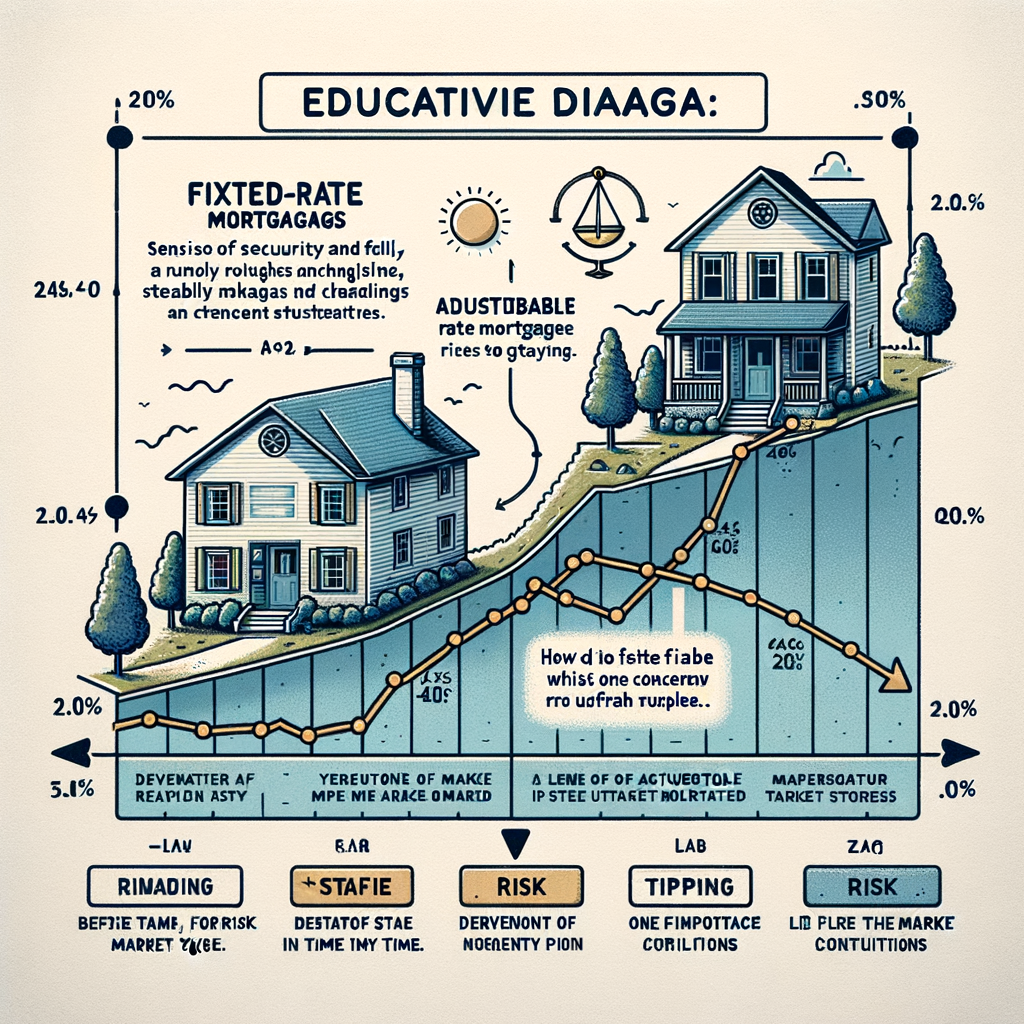
Understanding Fixed-Rate Mortgages
A fixed-rate mortgage offers a consistent interest rate for the entire term of the loan. This means your monthly principal and interest payments remain the same, regardless of changes in market interest rates. Fixed-rate loans are typically available in 15-, 20-, or 30-year terms.
Advantages of Fixed-Rate Mortgages
- Predictable Payments: Your monthly payments remain stable, making budgeting easier.
- Long-Term Stability: You’re protected from rising interest rates in the future.
- Peace of Mind: Ideal for homeowners who plan to stay in their home for many years.
Disadvantages of Fixed-Rate Mortgages
- Higher Initial Rates: Fixed-rate loans often start with higher interest rates compared to ARMs.
- Less Flexibility: If market rates drop, you’ll need to refinance to take advantage of lower rates.
Understanding Adjustable-Rate Mortgages (ARMs)
An adjustable-rate mortgage starts with a fixed interest rate for an initial period—commonly 3, 5, 7, or 10 years—after which the rate adjusts periodically based on a benchmark index plus a margin. This means your monthly payments can increase or decrease over time.
Advantages of Adjustable-Rate Mortgages
- Lower Initial Rates: ARMs typically offer lower starting interest rates, which can make them attractive to buyers seeking lower initial payments.
- Potential Savings: If interest rates remain stable or decline, you could pay less over the life of the loan.
- Short-Term Ownership Benefits: Ideal for buyers who plan to sell or refinance before the adjustment period begins.
Disadvantages of Adjustable-Rate Mortgages
- Payment Uncertainty: Your monthly payments can increase significantly if interest rates rise.
- Complex Terms: Understanding adjustment caps, margins, and indexes can be confusing for some borrowers.
- Financial Risk: If your income doesn’t increase along with your payments, you could face financial strain.
Key Factors to Consider
- How Long You Plan to Stay: If you expect to stay in your home long-term, a fixed-rate mortgage may be more suitable. For shorter stays, an ARM could save you money.
- Your Risk Tolerance: If you prefer stability and predictability, a fixed-rate loan is safer. If you’re comfortable with some uncertainty, an ARM might offer better initial savings.
- Market Conditions: When interest rates are low, locking in a fixed rate can be advantageous. When rates are high but expected to drop, an ARM might be worth considering.
Making the Right Choice
Choosing between a fixed-rate and adjustable-rate mortgage depends on your financial goals, risk tolerance, and how long you plan to own your home. A fixed-rate mortgage provides stability and peace of mind, while an ARM offers flexibility and potential savings in the short term.
Before making a decision, evaluate your long-term plans, consult with a mortgage professional, and compare loan offers from multiple lenders. With careful consideration, you can select the mortgage type that best aligns with your financial future.
Leave a Reply