
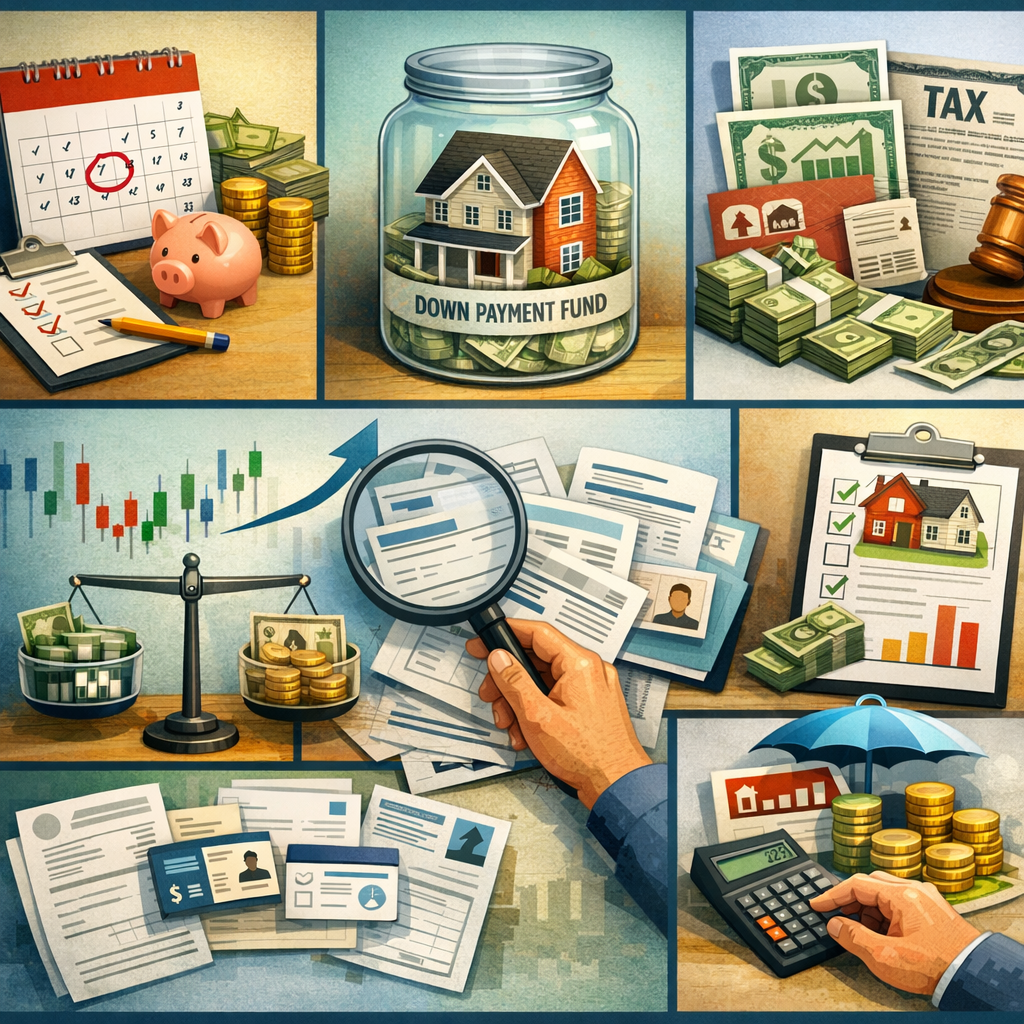
Buying a home is not only a lifestyle decision. It is a financial event that touches every part of your balance sheet. Before you tour listings or click preapproval, take time to evaluate your asset portfolio. A clear picture of liquidity, taxes, and risk can help you set the right budget, choose a smart funding plan for your down payment, and keep your long-term investments on track.
This guide walks you through a practical framework: define your cash need and timing, inventory your assets by liquidity and tax treatment, create a capital preservation bucket for the purchase, and prepare your portfolio for what lenders and markets will do next.
Set Your Home-Buying Horizon and Cash Needs
The right portfolio moves start with clarity about when you plan to buy and how much cash the transaction will actually require. If your timeline is short, your investment strategy should tilt toward capital preservation. If your timeline is longer, you may have room to stage liquidations and manage taxes carefully.
Estimate the Full Cash Requirement
Down payment planning is not complete until you add all the line items that show up before and right after closing. Build a target number using the following components:
- Down payment: often 3 percent to 20 percent or more of the purchase price, depending on loan type and competitiveness in your market.
- Closing costs: typically 2 percent to 5 percent of the purchase price, including lender fees, escrow, title insurance, and prepaid items such as taxes and insurance.
- Immediate expenses: inspections, appraisal, moving, repairs, new locks, initial furniture or appliances.
- Cash reserves: many lenders want to see 2 to 6 months of principal, interest, taxes, and insurance saved after closing, especially for higher loan amounts or investors.
- Emergency fund: 3 to 6 months of living expenses separate from your down payment so a home expense does not force a distressed sale of investments.
Put numbers on each category to create a clear target. For example, on a 500,000 dollar home with 10 percent down, plan for 50,000 dollars down payment, 12,000 to 20,000 dollars in closing costs and prepaid items, plus reserves and an emergency fund.
Choose a Realistic Timeline
Match your asset plan to your horizon:
- Under 6 months: prioritize cash and cash equivalents. Market risk has little time to recover.
- 6 to 18 months: stage liquidations and use low-volatility vehicles for funds you cannot afford to lose.
- Over 18 months: you may keep a growth allocation for nonessential assets, but start building a dedicated home fund now to avoid forced selling later.
Map Your Current Asset Portfolio
List every account and holding, then sort assets by liquidity, volatility, and tax impact. This helps you decide what to tap and what to leave alone.
Classify Assets by Liquidity and Volatility
- High-liquidity, low-volatility: checking, savings, money market funds, Treasury bills, short-term CDs.
- Moderate-liquidity, market risk: broad index funds, ETFs, mutual funds, individual stocks and bonds in taxable accounts.
- Restricted or penalty-prone: retirement accounts such as 401(k) or IRA before age 59.5, HSAs for nonmedical withdrawals, 529 plans for noneducation uses.
- Complex or timing-sensitive: RSUs and stock options, company stock plans with blackout periods, vested vs. unvested equity, crypto with exchange or price risk.
- Illiquid: business interests, private funds, collectibles, real estate other than your primary home.
Next, flag concentration risk. If a single stock, employer equity, or crypto position is more than 10 percent to 15 percent of your liquid net worth, consider trimming before you enter a period of higher cash needs.
Know the Tax and Rulebook for Each Account
- Taxable brokerage: sales create capital gains or losses. Gains depend on holding period. Short-term gains are taxed as ordinary income, while long-term gains have preferential rates.
- Retirement accounts: early withdrawals may face income tax and penalties. A 401(k) loan can create job risk and is not counted as liquid reserves by many lenders.
- RSUs and stock options: vesting and exercise events can trigger taxable income. Coordinate with your vesting calendar to avoid a surprise tax bill at closing.
- Crypto: sales are taxable, and transfer times can be unpredictable. Convert to cash well ahead of underwriting.
Build a Liquidity Plan That Protects Your Purchase
You need two things at once: money that will be there on closing day and an investment plan that keeps the rest of your portfolio working. Design a purchase bucket and a smart withdrawal sequence.
Create a Capital Preservation Bucket
Move your expected down payment, closing costs, and near-term reserves into safe, liquid holdings. Common choices include:
- High-yield savings or money market funds for daily liquidity.
- Treasury bills or short-term Treasury funds for safety and competitive yields.
- CD ladder maturing before your target closing window.
Keep this bucket separate from your investing accounts so market swings do not threaten your ability to close.
A Tax-Smart Order for Raising Cash
- Use existing cash and cash equivalents first.
- Harvest losses in taxable accounts to offset gains where suitable.
- Sell appreciated assets with long-term gains before short-term positions if possible.
- Deprioritize tapping retirement accounts due to taxes, penalties, and future growth tradeoffs.
- Avoid 401(k) loans for down payments unless you have evaluated job stability, repayment terms, and lender treatment of loan payments in DTI.
Coordinate sales across calendar years if you are close to higher tax brackets, phaseouts, or credits. Consider state tax impact as well.
Timing Sales and Reducing Market Whiplash
If you need to sell market assets, do it in stages. For example, raise one third of your target each month for three months. This reduces timing risk. Use specific-lot sales to manage taxes. Turn off dividend reinvestment on assets you plan to liquidate to avoid buying more shares you expect to sell soon.
Align Portfolio Risk and Rebalancing Before You Shop
Homeownership adds a new, often large, illiquid asset to your net worth. Adjust your portfolio so your total risk still fits your goals. Many buyers reduce equity exposure marginally before closing to protect the home fund and to reflect a higher fixed expense load ahead.
Trim Concentration and Sequence Risk
If a sizable part of your potential down payment sits in a single stock or volatile asset, consider selling a portion now and moving proceeds to your preservation bucket. This lowers the chance of a last-minute shortfall if markets drop.
Protect Your Credit Profile While Rebalancing
Avoid margin loans, new credit cards, buy-now-pay-later balances, or other short-term financing schemes to bridge the gap. Underwriters can view these as red flags. Pay down variable-rate debt where practical to improve cash flow and your debt-to-income ratio.
What Mortgage Underwriters Look For in Your Assets
Your assets help determine approval, rate, and loan size. Lenders care about source, stability, and sufficiency. Plan ahead so documentation is clean and funds are ready.
Seasoning, Paper Trails, and Gifts
- Seasoning: some lenders want funds to be in your account for 60 days or more. Avoid large unexplained deposits close to underwriting.
- Documentation: keep statements that show the path from sale to bank account. Screenshots are not enough. Download official PDFs.
- Gifts: follow gift letter rules, provide donor bank statements if required, and avoid cash gifts. Some loan types cap gift amounts or require borrower contributions.
Eligible Reserves and Red Flags
- Eligible reserves: cash, savings, money market funds, vested retirement accounts with documented access, and certain brokerage assets, often with a haircut.
- Red flags: unvested equity, unverifiable crypto wallets, margin balances, payday loans, and any funds that cannot be sourced to a legal origin.
Ask your loan officer how they treat RSUs, stock options, and retirement accounts for reserves, and what documentation they require.
Stress-Test the Budget You Think You Can Afford
A strong asset plan prevents regret by testing payment and savings capacity under different scenarios. Do not assume the listing price is the main variable. Taxes, insurance, and maintenance can move the needle more than expected.
Run the Full Payment Stack
- Principal and interest at conservative and optimistic interest rates.
- Property taxes, homeowner’s insurance, and mortgage insurance if applicable.
- HOA or condo dues, utilities, and average maintenance. A common rule of thumb is 1 percent of the home value per year for upkeep.
Model a rate that is 0.5 to 1 percentage point higher than today’s quotes. If the budget still works, your plan has margin for error.
Protect Post-Close Liquidity
Plan to keep at least 3 to 6 months of mortgage payments plus living expenses after closing. Investors or self-employed buyers may want more. This buffer prevents forced asset sales if income dips or a big repair shows up early.
Special Situations That Change the Asset Plan
Some buyers face extra variables that call for tailored steps.
RSUs, ESPPs, and Stock Options
Coordinate the purchase around vesting and blackout periods. If you rely on equity compensation for the down payment, sell vested shares early and move proceeds to cash. Avoid exercising options right before underwriting if it spikes taxable income you cannot document well.
Self-Employed and Business Owners
Underwriters will review business cash flow and may require more reserves. Keep business and personal funds separate. If you plan to take a distribution for the down payment, document it with corporate minutes or CPA statements and leave enough working capital in the business.
Second Homes or Investment Properties
Expect larger down payments and higher reserve requirements. Lenders often want 6 to 12 months of housing costs for all properties. Model vacancy or rent variability and keep more liquidity than a primary-home purchase would require.
A Practical Step-by-Step Asset Checklist
- Define your purchase budget and target date. Quantify down payment, closing costs, move-in needs, and reserves.
- Inventory all assets. Classify by liquidity, volatility, and tax treatment. Flag concentrated positions.
- Set up a separate purchase bucket in high-yield savings, T-bills, or short-term CDs.
- Plan a tax-aware liquidation schedule. Use loss harvesting and long-term gain lots first where appropriate.
- Reduce risky concentrations and rebalance to reflect a larger fixed housing cost ahead.
- Prepare documentation. Keep clean statements for all transfers and gift letters if needed.
- Run stress tests on your monthly payment with higher rates and realistic upkeep costs.
- Confirm lender requirements for reserves, seasoning, and treatment of special assets like RSUs.
Turn Your Portfolio Into a Home-Buying Launchpad
A home purchase should not derail your long-term plan. By defining cash needs and timing, classifying assets by liquidity and tax impact, creating a protected down payment bucket, and aligning risk before you shop, you can move forward with confidence. Lenders see well-prepared buyers as stronger applicants, and you get the peace of mind that your investments still serve your goals after the keys are in your hand. Build your plan early, document everything, and let your portfolio support the home you want rather than stand in its way.
Leave a Reply