
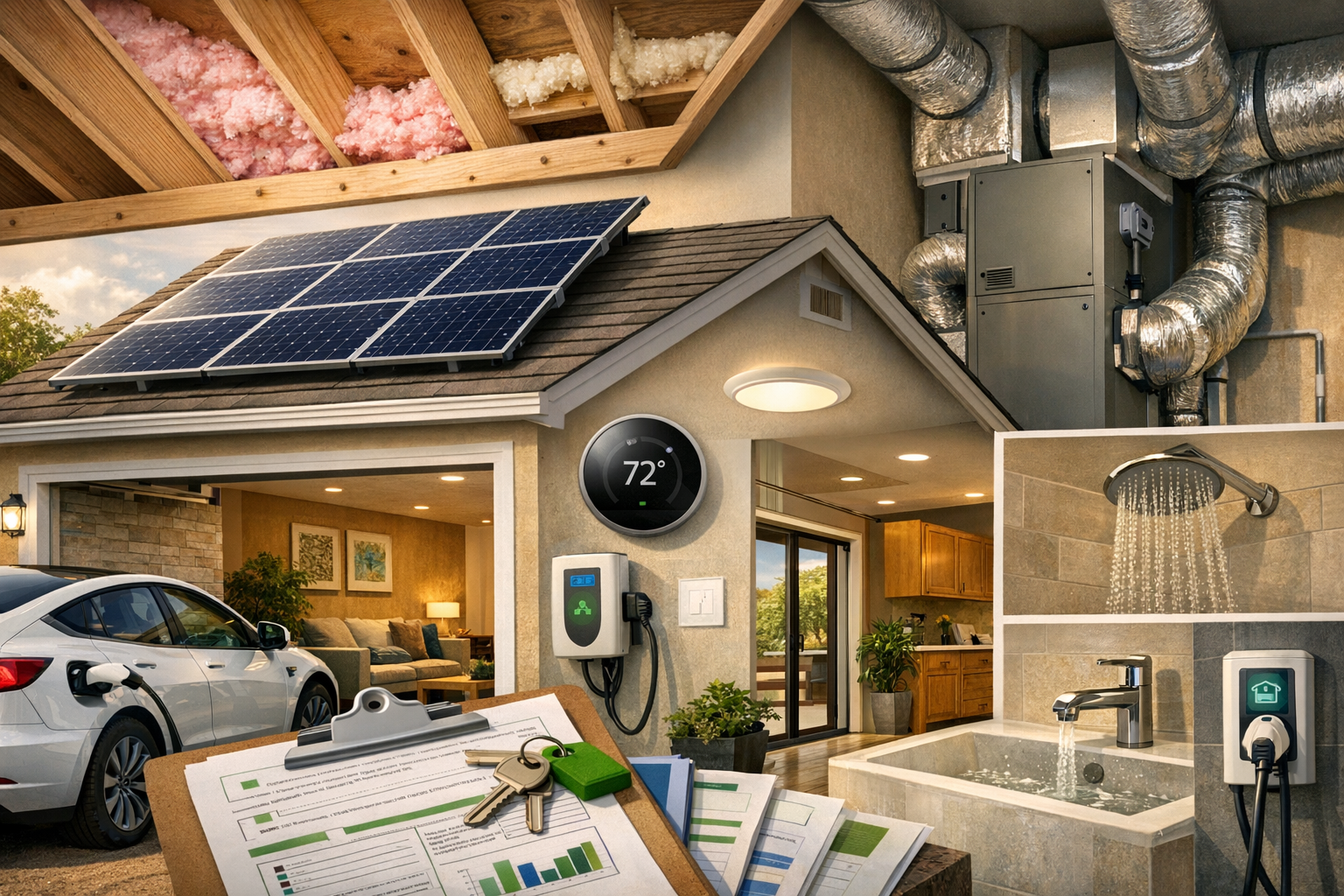
Eco-friendly upgrades are no longer niche features. Buyers compare homes by energy costs, comfort, indoor air quality, and long-term maintenance as much as by finishes. The right green improvements can shave utility bills, reduce upkeep, and make a property stand out in photos and at showings. With smart planning, you can boost resale value and shorten time on market while making your space healthier and more enjoyable.
Why sustainable features help homes sell
Green improvements appeal to both the head and the heart. They speak to lower monthly costs and a lighter environmental footprint, and they feel better to live with day to day.
- Lower operating costs: Efficient systems and smarter controls cut energy and water use, which buyers can see in your utility history.
- Comfort and quiet: Better insulation, tight windows, and variable-speed HVAC reduce drafts and noise.
- Healthier living: Low-VOC finishes and good ventilation improve indoor air quality.
- Future-ready: EV charging, induction-ready kitchens, and solar capacity signal a modern, resilient home.
- Marketability: Listings that showcase verified green features often earn more views and stronger offers.
High-ROI energy efficiency upgrades buyers notice
Energy efficiency remains the foundation of sustainable home improvements. Start with the building envelope, then update systems and controls.
Air sealing and insulation
Sealing gaps around rim joists, attic hatches, and penetrations reduces uncontrolled air leakage. Pair it with upgraded attic insulation and targeted wall or basement insulation. This relatively modest investment improves comfort in every season and makes any HVAC system perform better. Ask for photos and R-value documentation for your listing packet.
Windows and doors
Full window replacement can be costly, but strategic improvements still pay off. Consider:
- High-performance storm windows for older frames.
- New weatherstripping and exterior door sweeps to cut drafts.
- Low-e glass on sun-exposed rooms to reduce heat gain and furniture fading.
If you do replace windows, choose ENERGY STAR certified units and highlight the U-factor and SHGC ratings.
Heating and cooling upgrades
Heat pumps have become the preferred option in many markets because they heat and cool efficiently from one system. Ducted heat pumps or ductless mini-splits can replace aging furnaces and air conditioners while improving zoned comfort. Variable-speed compressors and right-sized equipment are worth noting in your listing. If a full replacement is not in scope, install a smart thermostat that learns schedules and provides energy reports buyers can review.
Lighting and appliances
LED lighting with warm color temperatures improves ambiance and cuts wattage. Swap old can lights for air-tight, IC-rated fixtures. In the kitchen and laundry, ENERGY STAR appliances reduce noise and usage; keep receipts and manuals in a labeled folder for showings.
Water-wise upgrades that enhance curb appeal and function
Water-saving features reduce bills and maintenance while improving how your home looks from the street.
Fixtures that save without sacrificing feel
Install WaterSense-labeled showerheads, faucets, and toilets. Modern fixtures deliver strong performance with less flow. For sellers, these are fast, affordable changes that appraisers and inspectors can verify.
Landscaping that thrives with less
Replace thirsty turf patches with native or climate-appropriate plantings. Use mulch to retain soil moisture and suppress weeds. Add drip irrigation with a smart controller that adjusts for weather. Permeable pavers reduce runoff and puddles, which buyers notice during rainy periods. A simple rain barrel with an overflow diverter shows stewardship and can be an attractive backyard feature.
Outdoor lighting and hardscapes
Low-voltage or solar path lights improve safety and nighttime charm with minimal energy. If you are resurfacing walkways or patios, choose light-colored or recycled-content materials that stay cooler in summer and photograph well.
Healthier materials and indoor air quality
Clean air and low-toxicity finishes are selling points for families, remote workers, and anyone with allergies.
Low-VOC paints, sealants, and flooring
Use zero-VOC or low-VOC paints and adhesives. If replacing floors, consider solid hardwood finished with low-VOC sealers, formaldehyde-free engineered wood, linoleum, or natural-fiber carpets with non-toxic pads. Keep product labels and spec sheets to display during open houses.
Ventilation and filtration
Effective ventilation manages moisture and pollutants. Upgrade bathroom fans to quiet, continuous-run models with timers. Ensure your kitchen range hood vents outside and has a capture area that fits the cooktop. For tight homes, an ERV or HRV provides balanced fresh air exchange. In ducted systems, a MERV 11 to MERV 13 filter balances filtration and airflow; show buyers where filters are located and how often to change them.
Moisture management
Address downspouts, grading, and crawlspace or basement humidity. A sealed crawlspace with a vapor barrier and dehumidifier is a meaningful value add in humid climates and speaks to durability.
Smart tech and electrification that signal a future-ready home
Modern buyers expect intelligent controls and the ability to plug in electric transportation and appliances.
Smart controls that reduce waste
Install a learning thermostat and smart occupancy sensors for key spaces. Add water-leak detectors near the water heater and under sinks. These small devices prevent surprises and show proactive ownership.
EV charging readiness
A Level 2 EV charger or a dedicated 240-volt circuit with a labeled outlet is a visible upgrade many buyers search for by keyword. If panel capacity is tight, a smart load-sharing device can make EV charging possible without a full service upgrade.
Induction-ready kitchens
Induction cooktops are efficient, responsive, and release fewer byproducts into indoor air. If you are not replacing the range, have an electrician run a 240-volt line to the kitchen and note it in the listing. Buyers appreciate the option.
Electrical panel and load management
Older homes often need a panel upgrade to support new HVAC, EV charging, or future solar. A modern panel with labeled circuits, AFCI and GFCI protection, and space for expansion reads well on inspection reports. Smart panels can shift loads to off-peak times, which matters for time-of-use utility rates.
Solar and backup power options buyers ask about
Renewable energy can set your listing apart when presented with clear documentation.
Rooftop solar ownership versus lease
Owned systems generally add more resale value than leased systems because buyers avoid a transfer process. If you have a lease, gather the transfer terms in advance to prevent delays. Provide a year of production data, the inverter warranty, and any monitoring app access to show reliability.
Battery storage and resilience
Home batteries support critical loads during outages and can reduce peak demand charges. Label the backed-up circuits and keep a simple one-page diagram in a kitchen drawer for showings. Even without a battery, a solar-ready conduit from attic to panel is worth mentioning.
Community solar and green power programs
If rooftop solar is not feasible, some utilities offer community solar subscriptions or green power plans. Buyers appreciate the flexibility and the option to enroll after closing.
Budget tiers: upgrades that fit your timeline
You can make progress at any price point. Choose a tier that matches your listing timeline.
Weekend wins
- Swap to LED bulbs and install a smart thermostat.
- Add door sweeps, weatherstripping, and outlet gaskets.
- Replace showerheads and faucet aerators with WaterSense models.
- Paint with low-VOC products and deep clean range hood filters.
Mid-range projects
- Attic air sealing and insulation; duct sealing if accessible.
- Heat pump water heater with a drain pan and leak sensor.
- Native front-yard bed with drip irrigation and mulch.
- EV charger or 240-volt circuits for future electrification.
Premium investments
- Whole-home heat pump system or ductless mini-splits with zoning.
- High-performance window replacements where needed.
- Owned solar array with monitoring; optional battery backup.
- Panel upgrade with smart load management for expansion.
How to market and document your green upgrades
Good features only help sell if buyers and appraisers can see and verify them. Package your improvements so they are easy to understand.
Create a simple green home dossier
Include product lists, installation dates, permits, warranties, spec sheets, and contractor contacts. Add 12 months of utility bills before and after major upgrades if available. Visuals help: before-and-after attic photos, labels on filters, and a one-page systems map.
Use keywords and badges in the listing
Call out Energy Star appliances, WaterSense fixtures, heat pump HVAC, EV charger, low-VOC finishes, and solar production in the description. If applicable, reference ratings and certifications such as HERS, Pearl Certification, LEED, or a local green MLS addendum. Feature energy and water savings in the first three bullet points so they show in mobile previews.
Stage for sustainability
Show the smart thermostat screen with energy reports. Place a tidy binder of documents on the kitchen counter. Highlight sunny rooms with low-e windows by scheduling photos when glare is minimal. If you have native landscaping, include a plant list and a map of the drip zones.
Leverage incentives and financing
Many regions offer rebates or tax credits for heat pumps, insulation, EV chargers, and solar. Add a short note about transferable warranties and current incentives that the buyer can claim for remaining projects. Agents can also request a green-friendly appraiser familiar with efficiency features.
Common mistakes that reduce impact
Avoid these pitfalls that dilute buyer confidence or waste budget.
Ignoring the envelope
Installing a new HVAC system without sealing and insulating first often leads to oversizing, noise, and disappointing savings. Start with air sealing and insulation so the system can be right-sized.
Overcustomizing technology
Complicated smart home stacks can confuse buyers. Favor simple, widely supported devices with clear instructions and a factory reset guide.
Skipping permits or documentation
Unpermitted electrical or structural work can scare off serious buyers. Pull required permits and keep inspection approvals in your dossier.
Underpowered electrical service
Adding an EV charger, induction range, and heat pump to a small panel can trip breakers. Consider a panel upgrade or a smart load controller and note the capacity in your listing.
Turn sustainability into a clear selling advantage
Eco-friendly upgrades do more than check a box. They create a quieter, healthier, and less expensive home to live in, which resonates with buyers scanning dozens of listings. Focus first on the building envelope, then efficient systems, water-wise curb appeal, and a few future-ready touches like EV charging and induction readiness. Package your work with clean documentation and the right keywords. Done well, green features help your home photograph better, show better, and appraise with confidence so you can secure the offer you want.
Leave a Reply