
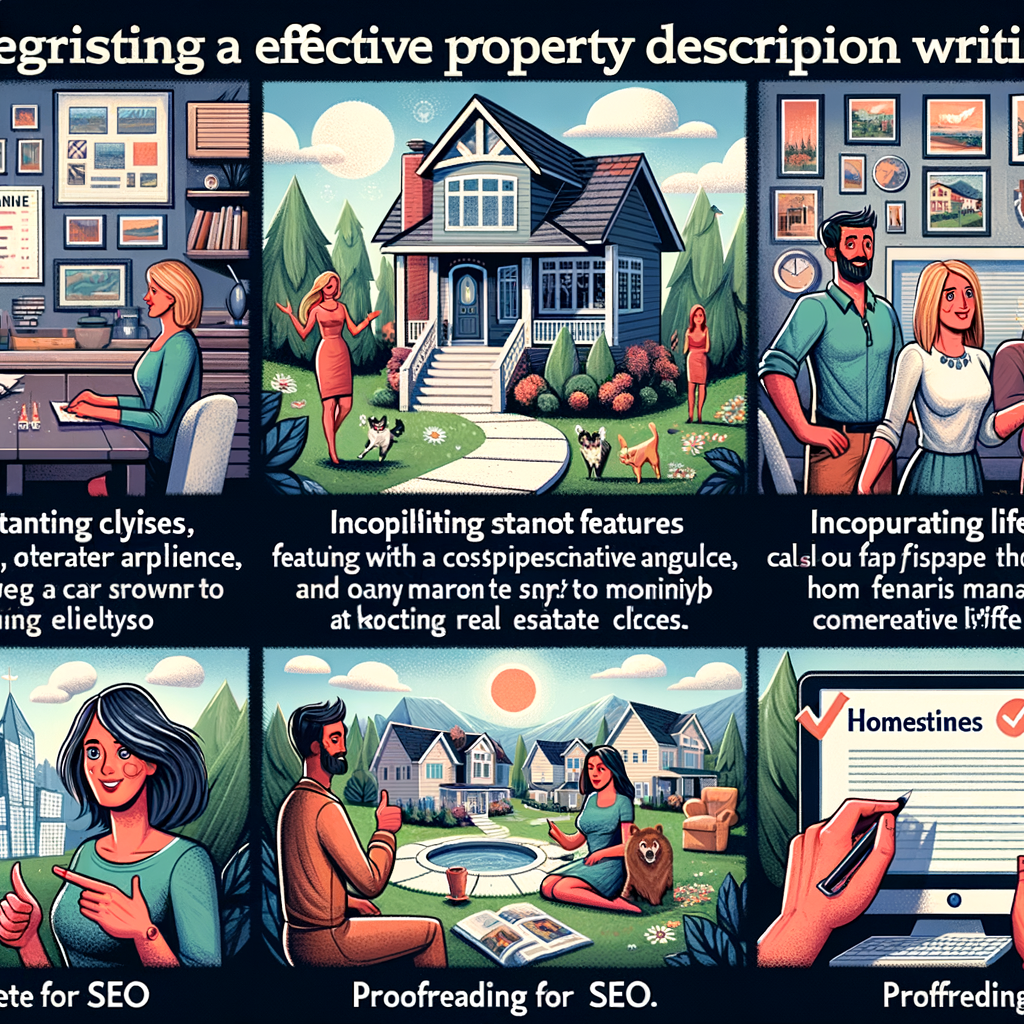
Crafting Compelling Property Descriptions That Sell
Creating an effective property description is more than just listing the features of a property; it’s about crafting a narrative that connects emotionally with potential buyers. This article explores key strategies to write property descriptions that not only attract attention but also drive sales.
Understand Your Audience
Before you begin writing, it’s crucial to understand who your potential buyers are. Are they young professionals, families, or retirees? Knowing your audience helps tailor your description to highlight aspects of the property that are most appealing to them.
Start with a Captivating Opening
The first sentence of your property description is critical. It should grab the reader’s attention and encourage them to read more. Consider starting with an intriguing statement or a compelling fact about the property or the neighborhood.
Highlight Key Features
Focus on the features that make your property stand out. Whether it’s a recently renovated kitchen, a backyard oasis, or proximity to coveted schools, make sure these features are prominently mentioned and described in a way that paints a vivid picture for the reader.
Use Descriptive Language
Utilize adjectives and vivid imagery to help potential buyers visualize living in the home. Instead of saying “big windows,” say “floor-to-ceiling windows that flood the room with natural light.” This type of language helps create an emotional connection with the property.
Include Lifestyle Elements
A property isn’t just a space; it’s a place where people will live their lives. Highlight elements that enhance lifestyle, such as a cozy fireplace for winter evenings, a spacious balcony for summer BBQs, or a home office for remote work.
Avoid Overused Phrases
Terms like “must-see” or “charming” are overused and can be off-putting to savvy buyers. Instead, be specific about what makes the property unique and desirable without resorting to clichés.
Be Honest
While it’s important to focus on the positives, honesty is key. Misrepresenting the property can lead to disappointed viewers and lost trust. If there are less desirable aspects, it’s better to address them cleverly in the description rather than omitting them entirely.
Optimize for Search Engines
Incorporate relevant keywords that potential buyers might use to search for properties online. This includes the type of property, the neighborhood, and unique features. However, make sure the text flows naturally and doesn’t feel stuffed with keywords.
Include a Call to Action
End your description with a compelling call to action. Encourage potential buyers to envision themselves in the home, and prompt them to act, whether it’s scheduling a viewing or contacting a realtor for more information.
Proofread and Edit
Finally, make sure to proofread your description. Grammatical errors or typos can undermine the professionalism of your listing. Consider having someone else read your description to catch any errors and to provide feedback on how effectively it conveys the appeal of the property.
By following these tips, you can craft property descriptions that not only capture the essence of the property but also engage and persuade potential buyers. Remember, a well-written property description is a crucial tool in your real estate marketing arsenal.
Leave a Reply