
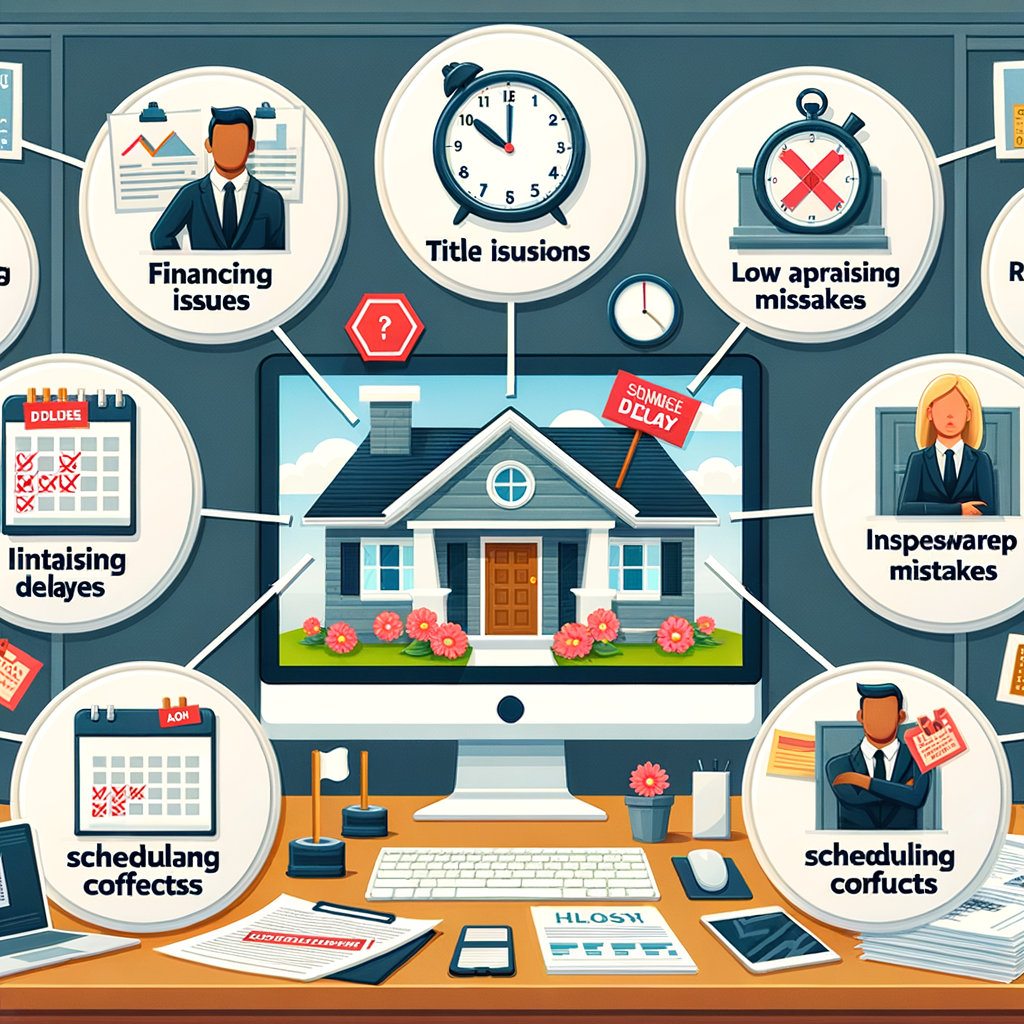
1. Financing Issues
One of the most frequent causes of closing delays is financing problems. Buyers may encounter last-minute issues with loan approval, appraisal discrepancies, or changes in financial circumstances that affect their eligibility.
How to Avoid It
- Get pre-approved for a mortgage before making an offer.
- Avoid making large purchases or changing jobs during the loan process.
- Provide all requested documentation to your lender promptly.
- Stay in close communication with your loan officer to address any potential issues early.
2. Title and Ownership Problems
Title issues such as liens, unpaid taxes, or disputes over property boundaries can delay closing until they are resolved. These problems often surface during the title search process.
How to Avoid It
- Work with a reputable title company to conduct a thorough title search early in the process.
- Ensure any outstanding liens or claims are cleared before closing.
- Purchase title insurance to protect against unforeseen ownership disputes.
3. Appraisal Discrepancies
If the property appraisal comes in lower than the agreed purchase price, lenders may refuse to finance the full amount, leading to delays while the buyer and seller renegotiate terms.
How to Avoid It
- Research comparable property values before making an offer.
- Be prepared to negotiate or provide additional funds if the appraisal is lower than expected.
- Work with an experienced real estate agent who understands local market trends.
4. Inspection-Related Delays
Home inspections can reveal issues that require repairs or further evaluation. Negotiating who will handle these repairs can extend the closing timeline.
How to Avoid It
- Schedule inspections as soon as possible after the offer is accepted.
- Be proactive in addressing repair requests and obtaining quotes quickly.
- Consider pre-listing inspections if you are the seller to identify and fix issues early.
5. Documentation Errors
Missing signatures, incorrect information, or incomplete paperwork can cause unnecessary delays on closing day. Even small mistakes can require reprocessing of documents.
How to Avoid It
- Review all documents carefully before signing.
- Ensure all parties have the correct and updated information.
- Work closely with your real estate agent, lender, and attorney to verify accuracy.
6. Scheduling Conflicts
Coordinating multiple parties—buyers, sellers, agents, lenders, and attorneys—can be challenging. If one party is unavailable, the closing date may need to be rescheduled.
How to Avoid It
- Confirm the closing date and time well in advance.
- Ensure all required participants are aware of their responsibilities and deadlines.
- Be flexible and responsive to communication from all parties involved.
Conclusion
Closing delays can be frustrating, but most are preventable with proper preparation and communication. By staying organized, responding promptly to requests, and working with experienced professionals, buyers and sellers can minimize the risk of setbacks and enjoy a smooth, successful closing process.
Leave a Reply