
<article>
  <h1>Childproofing Your Home: A Comprehensive Guide</h1>
  <p>Creating a safe environment for your child is one of the most important responsibilities of parenthood. As children grow and explore, their curiosity can lead them into potentially dangerous situations. Childproofing your home helps prevent accidents and ensures your little one can explore safely.</p>

  <h2>Understanding the Importance of Childproofing</h2>
  <p>Childproofing is more than just adding locks and gates; it’s about anticipating potential hazards and taking proactive steps to minimize risks. From electrical outlets to sharp corners, every room in your home presents unique challenges that require attention.</p>

  <h2>General Safety Tips</h2>
  <ul>
    <li><strong>Get down to your child’s level:</strong> Crawl around your home to see things from your child’s perspective. This helps identify hidden dangers.</li>
    <li><strong>Secure heavy furniture:</strong> Anchor bookshelves, dressers, and televisions to the wall to prevent tipping accidents.</li>
    <li><strong>Cover sharp edges:</strong> Use corner guards on tables and countertops to prevent injuries.</li>
    <li><strong>Install safety gates:</strong> Place gates at the top and bottom of stairs and in doorways to restrict access to unsafe areas.</li>
  </ul>

  <h2>Room-by-Room Childproofing</h2>

  <h3>Living Room</h3>
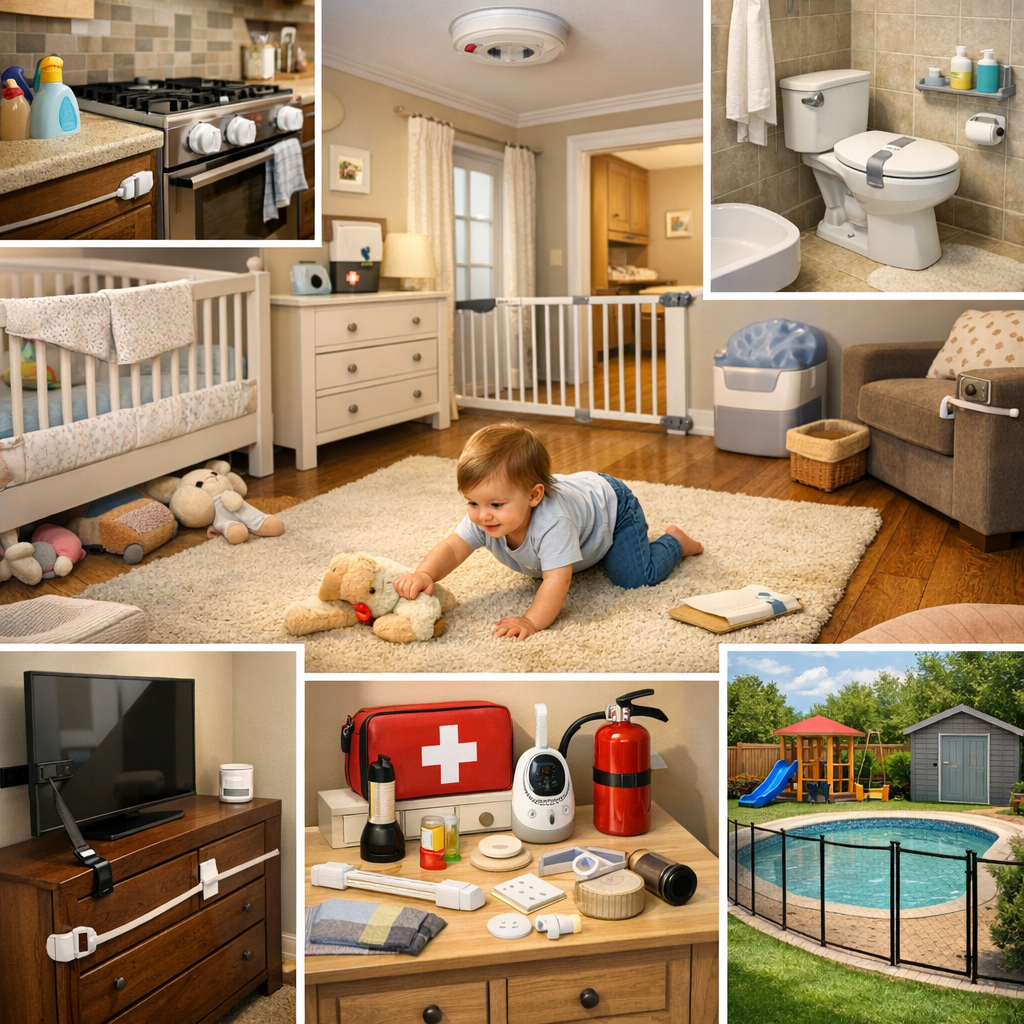
  <p>In the living room, focus on securing furniture and electronics. Keep cords out of reach, cover electrical outlets, and ensure that small decorative items are removed or placed high up. Avoid tablecloths that can be pulled down easily.</p>

  <h3>Kitchen</h3>
  <p>The kitchen is full of potential hazards. Use stove knob covers, keep knives and cleaning supplies locked away, and install latches on cabinets and drawers. Always turn pot handles inward while cooking and never leave hot food unattended.</p>

  <h3>Bathroom</h3>
  <p>Bathrooms can be slippery and contain harmful substances. Use non-slip mats, keep medications and toiletries in locked cabinets, and always supervise bath time. Consider installing a toilet lock to prevent accidental drowning.</p>

  <h3>Nursery</h3>
  <p>Ensure the crib meets current safety standards and avoid placing pillows, blankets, or stuffed animals inside. Keep cords from blinds or curtains out of reach, and use outlet covers to prevent electrical shocks.</p>

  <h3>Bedroom</h3>
  <p>In older children’s bedrooms, secure furniture and ensure that windows have safety locks or guards. Keep small toys and choking hazards away from younger siblings.</p>

  <h2>Outdoor Safety</h2>
  <p>Don’t forget to childproof outdoor areas. Install secure fencing around pools, lock gates, and ensure play equipment is sturdy and age-appropriate. Keep gardening tools and chemicals stored safely out of reach.</p>

  <h2>Emergency Preparedness</h2>
  <p>Even with precautions, accidents can happen. Keep emergency numbers easily accessible, learn basic first aid, and ensure smoke and carbon monoxide detectors are functioning properly. Regularly review your safety measures and update them as your child grows.</p>

  <h2>Conclusion</h2>
  <p>Childproofing your home is an ongoing process that evolves as your child develops new skills and abilities. By taking the time to identify and address potential hazards, you create a safer environment where your child can learn, play, and thrive with confidence.</p>
</article>
Discover more from My-Rebo Your One-Stop Real Estate Marketplace
Subscribe to get the latest posts sent to your email.
Leave a Reply