
Understanding ADA Requirements
The ADA sets forth specific guidelines for accessibility in public accommodations and commercial facilities. While private residential properties are generally exempt, rental properties that serve the public—such as leasing offices, common areas, or short-term rentals—must comply with ADA standards. These requirements cover a wide range of elements, including accessible routes, parking, entrances, restrooms, and communication features.
Key Areas of Compliance
1. Accessible Entrances and Routes
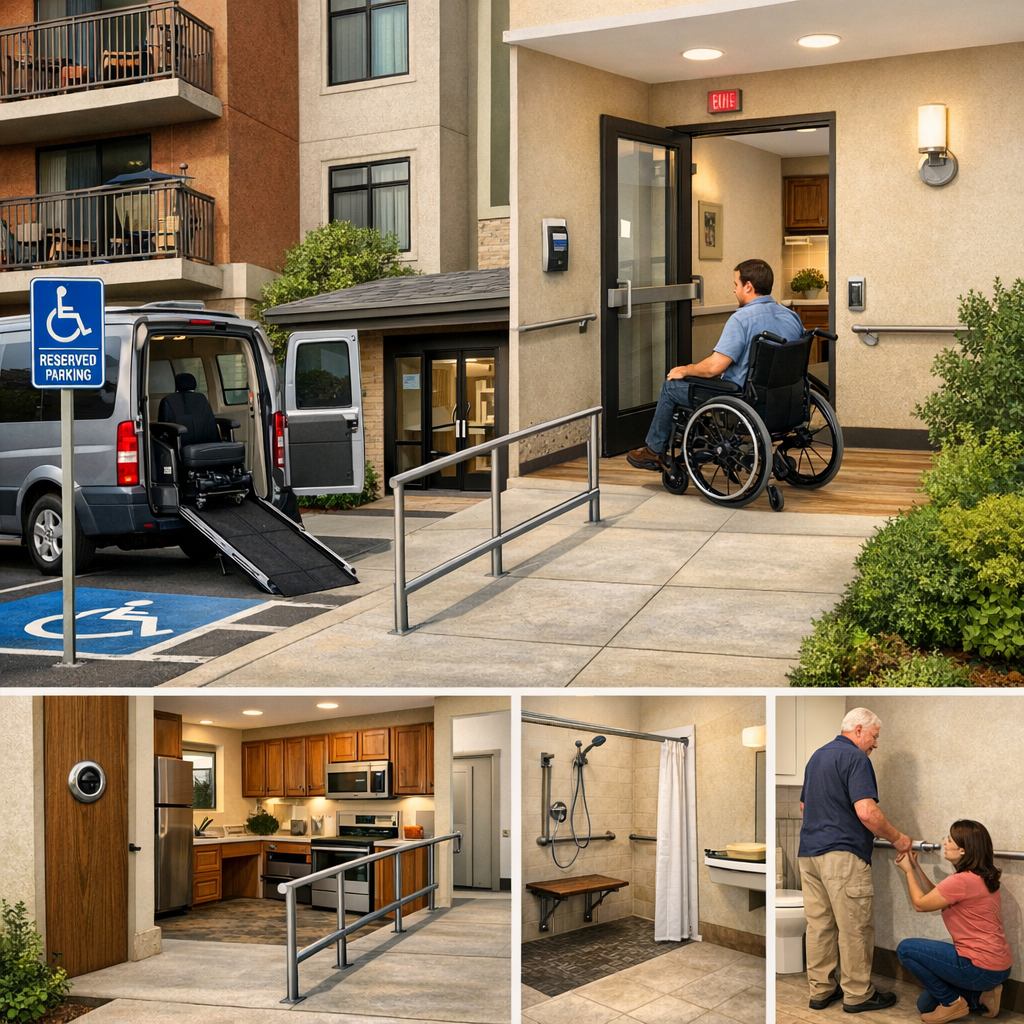
Entrances should be easily accessible to individuals with mobility impairments. This includes providing ramps with appropriate slopes, wide doorways, and level thresholds. Pathways leading to and from the building must be free of obstacles and designed to accommodate wheelchairs and other mobility devices.
2. Parking and Exterior Access
ADA-compliant parking spaces must be provided in sufficient numbers and located close to accessible entrances. Each accessible parking space should have clear signage, proper dimensions, and an adjacent access aisle to allow for safe entry and exit from vehicles.
3. Interior Accessibility
Inside the property, common areas such as lobbies, laundry rooms, and mailrooms must be designed for accessibility. This includes appropriate door widths, maneuvering clearances, and reachable controls for lighting and thermostats. Elevators or lifts may be required in multi-story buildings to ensure full access.
4. Communication Features
For individuals with hearing or vision impairments, communication accessibility is essential. This may involve visual alarms, tactile signage, and assistive listening systems in public areas. Leasing offices should also provide accessible communication methods, such as text telephones (TTY) or video relay services.
Modifications and Reasonable Accommodations
Landlords are required to make reasonable accommodations and allow tenants to make modifications to their units when necessary. For example, a tenant may request the installation of grab bars in the bathroom or a ramp at the entrance. While tenants typically bear the cost of modifications, landlords must permit them as long as they do not fundamentally alter the property’s structure or function.
Benefits of ADA Compliance
Ensuring ADA compliance not only avoids legal penalties but also enhances the property’s marketability. Accessible rentals attract a broader range of tenants, including seniors and individuals with disabilities, fostering a more diverse and inclusive community. Additionally, accessible design often improves safety and convenience for all residents.
Steps Toward Compliance
- Conduct an accessibility audit to identify barriers and areas for improvement.
- Consult with ADA specialists or architects experienced in accessible design.
- Implement necessary modifications to meet ADA standards.
- Train staff and property managers on accessibility policies and tenant rights.
- Regularly review and update accessibility features as regulations evolve.
Conclusion
Compliance with ADA standards is a vital component of responsible property management. By prioritizing accessibility, landlords and property owners not only meet legal obligations but also contribute to a more equitable housing environment. Accessible rentals empower individuals with disabilities to live independently and participate fully in their communities, reflecting a commitment to fairness, inclusion, and social responsibility.
Leave a Reply