
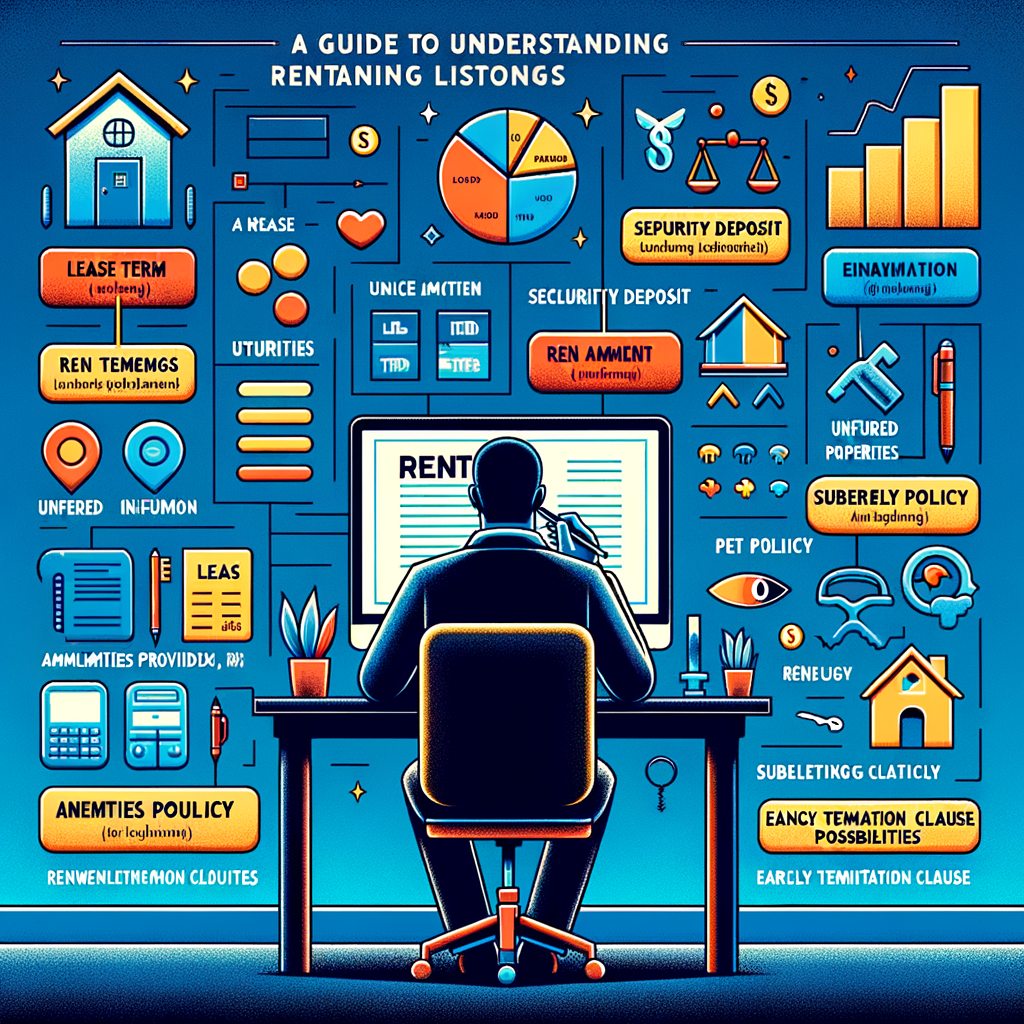
Understanding Rental Listings: Key Terms Explained
When searching for a rental property, you may encounter a variety of terms and phrases that can be confusing. Understanding these terms is crucial to finding the right rental that fits your needs and budget. Here’s a breakdown of some of the most common terms you’ll see in rental listings.
1. Lease Term
The lease term refers to the duration for which the rental agreement is valid. Most leases are for 12 months, but shorter terms like 6 months or month-to-month leases may be available. It’s important to know the lease term to understand your commitment level and the stability of your housing situation.
2. Rent
Rent is the amount of money you pay periodically, usually monthly, to live in the rental property. It’s crucial to know not only how much the rent is but also when it is due, what forms of payment are accepted, and if there are penalties for late payments.
3. Security Deposit
A security deposit is a sum of money held by the landlord as security against damages caused to the property by the tenant. It is typically equal to one month’s rent and is refundable if the property is left in good condition at the end of the lease.
4. Utilities Included
Some rental listings will specify if utilities are included in the rent. Utilities may include water, gas, electricity, internet, and trash collection. Knowing which utilities are included can help you budget more accurately.
5. Furnished vs. Unfurnished
A property can be rented furnished or unfurnished. A furnished apartment typically includes all the necessary furniture and sometimes even linens and kitchenware. An unfurnished apartment does not include these items, which means you will need to provide your own.
6. Amenities
Amenities refer to additional features that enhance the living experience. These can include a gym, pool, parking, security systems, pet-friendly policies, and more. Check which amenities are available and whether there are additional fees associated with them.
7. Pet Policy
If you have pets, understanding the pet policy is essential. Some rentals do not allow pets at all, while others may require a pet deposit or monthly pet rent. The pet policy should also detail any restrictions on the type or size of pets allowed.
8. Subletting
Subletting is the act of renting out your rented space to another person. Not all leases allow subletting, and usually, it requires landlord approval. This is an important term to understand if you may need to move before your lease term ends.
9. Renewal Terms
Renewal terms outline the conditions under which you can renew your lease once it expires. Some leases offer the option to renew, while others may convert to a month-to-month agreement. Understanding the renewal terms can help you plan for the future.
10. Early Termination Clause
An early termination clause allows a tenant to break their lease under specific conditions, which should be clearly outlined in the lease agreement. There may be penalties or fees associated with early termination.
Understanding these key terms in rental listings can help you navigate the complexities of renting a property and ensure that you find a place that meets your needs and budget. Always read the lease agreement carefully and ask questions if anything is unclear.
Leave a Reply