
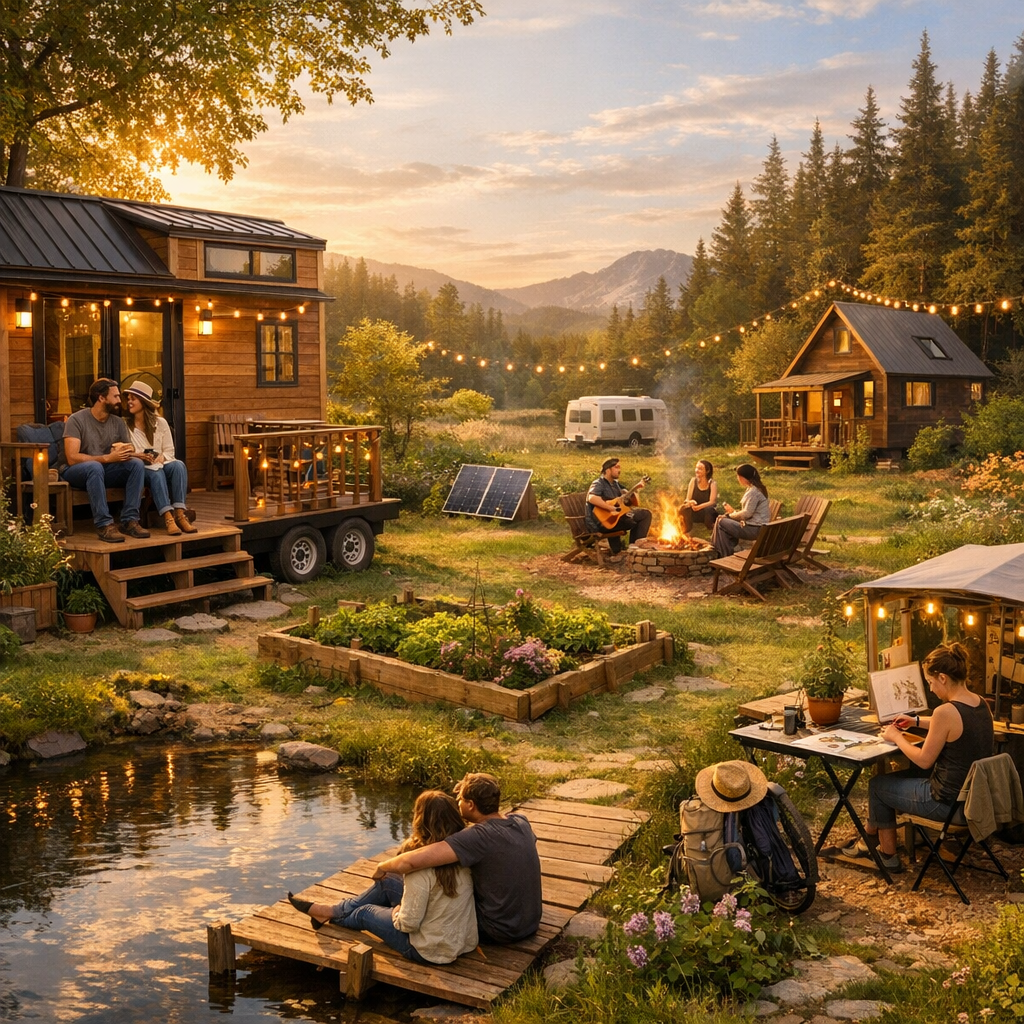
Redefining the Meaning of Home
For many, the decision to transition into a tiny home begins with a desire for freedom—financial, emotional, and geographical. By minimizing living space, homeowners often eliminate the burden of large mortgages and high utility bills. This shift allows them to invest more time and resources into experiences, travel, and personal growth rather than material accumulation.
Take the story of Sarah and Miguel, a couple who traded their suburban house for a 250-square-foot mobile home. Their new lifestyle not only reduced their monthly expenses by half but also gave them the flexibility to explore new cities while maintaining their careers remotely. “We realized that happiness wasn’t tied to square footage,” Sarah explains. “It was about having the freedom to live life on our own terms.”
Designing for Function and Beauty
Tiny homes are a testament to the power of smart design. Every inch counts, and creative solutions are essential. From multi-functional furniture to hidden storage and convertible spaces, these homes demonstrate that small doesn’t mean sacrificing comfort or style.
Architect James Liu designed his 180-square-foot home with sustainability in mind. Solar panels, rainwater collection systems, and reclaimed materials make his home both eco-friendly and self-sufficient. “Designing small forces you to think big,” Liu says. “It’s about maximizing efficiency without compromising aesthetics.”
Community and Connection
Beyond individual success stories, tiny home communities are emerging across the globe. These neighborhoods foster a sense of belonging and shared purpose, often centered around sustainability and collaboration. Residents share gardens, workshops, and communal spaces, creating a supportive environment that encourages connection and mutual growth.
In Oregon, the Evergreen Tiny Village has become a model for cooperative living. Residents contribute to maintaining shared spaces and organizing community events, proving that downsizing doesn’t mean isolation—it can actually lead to deeper, more meaningful relationships.
Challenges and Rewards
While the benefits of tiny living are numerous, the journey is not without challenges. Zoning laws, limited storage, and the adjustment to smaller spaces can test even the most enthusiastic minimalists. However, those who embrace the lifestyle often find that the rewards far outweigh the obstacles.
“It’s not always easy,” admits Renee Thompson, who built her tiny home after retiring. “But every challenge taught me something about resilience and creativity. I’ve learned to live with less and appreciate more.”
A Movement Toward Mindful Living
The tiny home movement is more than a trend—it’s a reflection of a broader cultural shift toward mindfulness, sustainability, and intentional living. As people continue to seek balance in an increasingly fast-paced world, compact living offers a path to greater freedom and fulfillment.
Whether it’s a mobile home on wheels, a cabin in the woods, or a small urban studio, the essence of tiny living lies in the belief that less can truly be more. For those who dare to dream big within small spaces, the possibilities are endless.
Leave a Reply