
Understanding Your Water Heater
Before performing maintenance, it’s important to understand the type of water heater you own. The two most common types are:
- Tank Water Heaters: These store and heat a specific amount of water in a tank, keeping it ready for use.
- Tankless Water Heaters: These heat water on demand, providing continuous hot water without storage.
Each type has unique maintenance needs, but both benefit from regular inspections and cleaning.
Routine Maintenance Tasks
1. Check the Temperature Setting
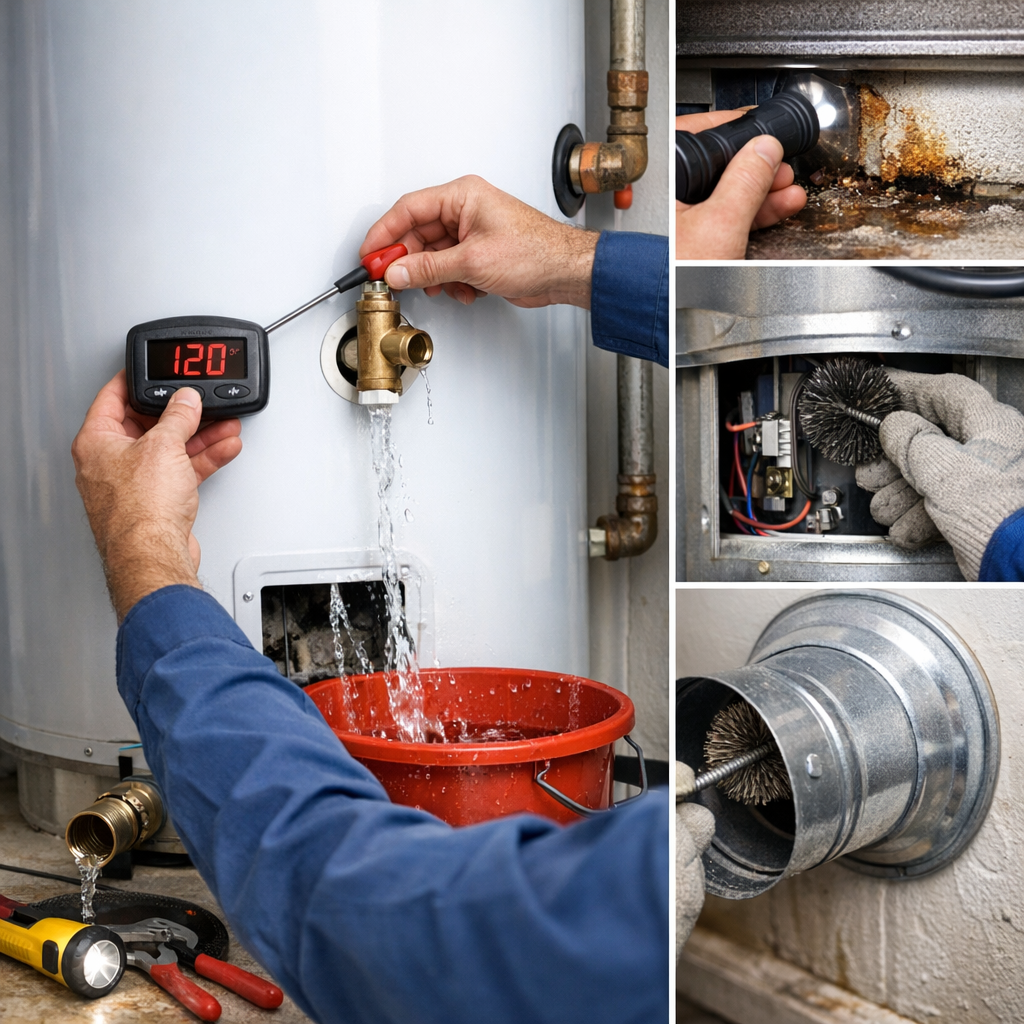
Set your water heater’s thermostat to around 120°F (49°C). This temperature is hot enough for most household needs while reducing the risk of scalding and saving energy.
2. Inspect for Leaks and Corrosion
Regularly inspect the area around your water heater for signs of leaks, rust, or corrosion. Even small leaks can lead to significant water damage or indicate internal issues that require professional attention.
3. Flush the Tank
Over time, sediment builds up inside tank water heaters, reducing efficiency and potentially damaging the tank. Flushing the tank once or twice a year helps remove this buildup. To do this safely:
- Turn off the power or gas supply.
- Attach a hose to the drain valve and direct it to a safe drainage area.
- Open the valve and allow the water to drain completely.
- Close the valve, refill the tank, and restore power.
4. Test the Pressure Relief Valve
The pressure relief valve prevents excessive pressure buildup inside the tank. To test it, lift the valve’s lever slightly and allow some water to discharge. If water doesn’t flow or the valve leaks afterward, it may need replacement.
5. Inspect the Anode Rod
The anode rod helps prevent tank corrosion by attracting minerals that would otherwise damage the tank lining. Check it every two to three years and replace it if it’s significantly corroded or worn down.
6. Clean the Air Intake and Vents (Gas Models)
For gas water heaters, ensure the air intake and exhaust vents are free of dust and debris. Blockages can affect combustion efficiency and pose safety risks.
7. Maintain Tankless Water Heaters
Tankless models require descaling to remove mineral buildup in the heat exchanger. Follow the manufacturer’s instructions for flushing the system with a vinegar solution or a descaling agent.
Energy Efficiency Tips
- Insulate the hot water pipes to reduce heat loss.
- Install a water heater blanket on older tank models to improve insulation.
- Fix leaky faucets to prevent unnecessary water heating.
- Consider upgrading to an energy-efficient model if your current unit is over 10 years old.
When to Call a Professional
While many maintenance tasks are simple, some issues require professional service. Contact a licensed plumber if you notice:
- Persistent leaks or rust-colored water
- Unusual noises such as popping or banging
- Inconsistent water temperature
- Gas odor or pilot light problems
Conclusion
Regular water heater maintenance not only ensures a steady supply of hot water but also saves energy and extends the life of your appliance. By following these steps and scheduling periodic professional inspections, homeowners can enjoy reliable performance and peace of mind for years to come.
Leave a Reply