
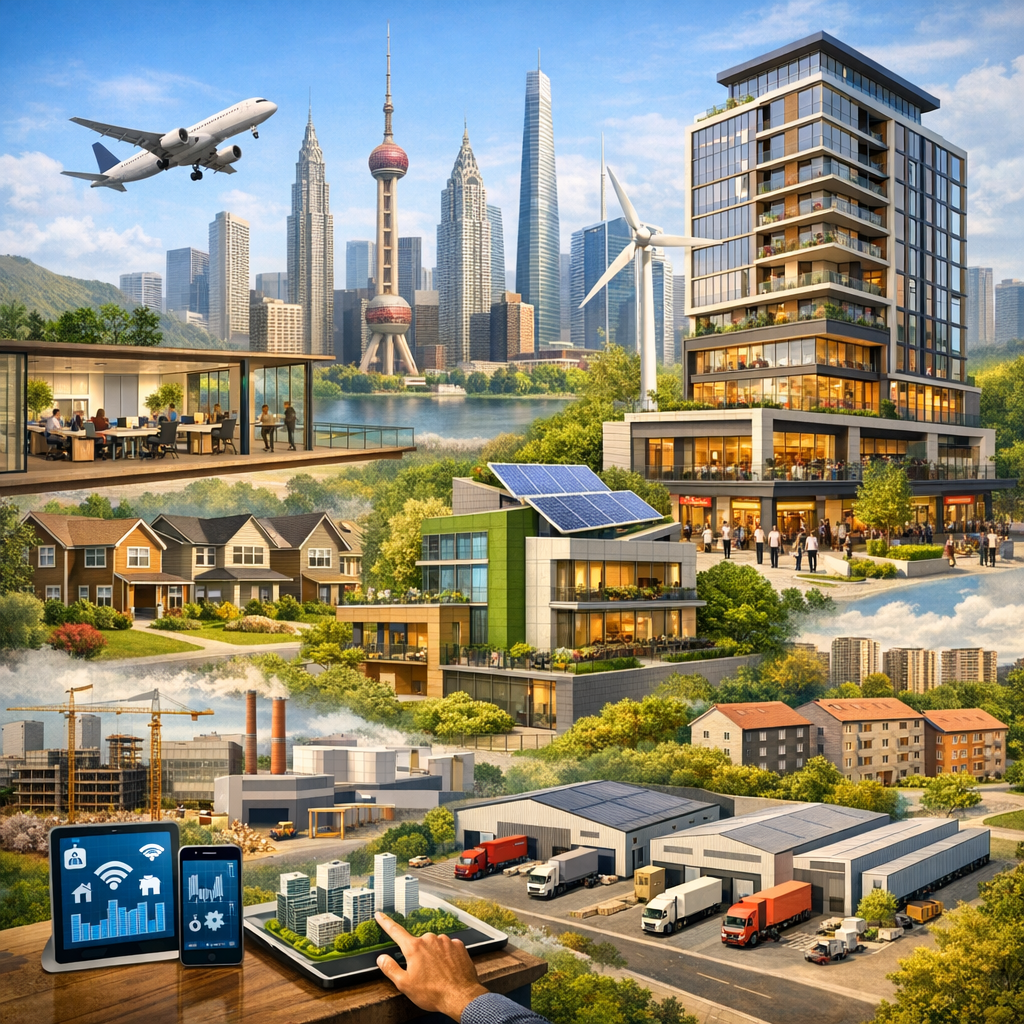
1. The Rise of Secondary and Tertiary Markets
While major metropolitan areas have traditionally dominated real estate investment, secondary and tertiary markets are gaining traction. Cities with lower costs of living, strong job growth, and improved infrastructure are attracting both residents and businesses. Investors are finding better yields and less competition in these emerging markets, making them attractive alternatives to saturated urban centers.
2. Growth of Sustainable and Green Developments
Environmental sustainability has become a key consideration in real estate investment. Developers and investors are prioritizing energy-efficient buildings, renewable energy integration, and eco-friendly materials. Green certifications such as LEED and BREEAM are increasingly influencing property values and tenant demand. As governments introduce stricter environmental regulations, sustainable properties are expected to outperform traditional assets in the long term.
3. Technology and PropTech Innovation
Technology is transforming every aspect of real estate, from property management to investment analysis. PropTech solutions—such as virtual tours, blockchain-based transactions, and AI-driven market analytics—are streamlining operations and improving transparency. Investors who leverage data analytics and digital platforms can make faster, more accurate decisions and gain a competitive edge in identifying undervalued assets.
4. The Shift Toward Mixed-Use Developments
Mixed-use developments that combine residential, commercial, and recreational spaces are becoming increasingly popular. These projects create vibrant communities that cater to modern lifestyles, where people can live, work, and socialize in one location. Investors are drawn to the stability of diversified income streams and the long-term appeal of integrated urban environments.
5. Remote Work and the Changing Office Landscape
The rise of remote and hybrid work models has reshaped demand for office spaces. Traditional office hubs are adapting by offering flexible layouts, co-working options, and enhanced amenities. Suburban office markets are also seeing renewed interest as companies seek cost-effective alternatives. Investors focusing on adaptive reuse and flexible workspace solutions are well-positioned to capitalize on this evolving trend.
6. The Continued Strength of Industrial and Logistics Real Estate
E-commerce growth has fueled unprecedented demand for industrial and logistics properties. Warehouses, distribution centers, and last-mile delivery hubs are essential to modern supply chains. Investors are targeting properties near major transportation routes and urban centers to meet the increasing need for fast, efficient delivery networks. This sector remains one of the most stable and high-performing segments in real estate.
7. Affordable Housing and Social Impact Investing
As housing affordability becomes a global concern, investors are exploring opportunities in affordable and workforce housing. Governments and private developers are collaborating to create projects that address housing shortages while offering steady returns. Social impact investing—where financial performance aligns with positive community outcomes—is gaining momentum as investors seek to make a difference while achieving sustainable growth.
8. Global Diversification and Cross-Border Investments
Investors are increasingly looking beyond their domestic markets to diversify risk and capture growth in emerging economies. Cross-border investments in regions with favorable demographics, economic expansion, and supportive policies are becoming more common. However, understanding local regulations, currency risks, and cultural nuances remains essential for success in international real estate ventures.
Conclusion
The real estate landscape is evolving rapidly, shaped by economic shifts, technological innovation, and changing societal needs. Investors who stay informed and adaptable can uncover opportunities across diverse sectors and geographies. Whether through sustainable developments, technology-driven strategies, or social impact initiatives, the future of real estate investment lies in embracing change and anticipating where the next wave of growth will emerge.
Leave a Reply