
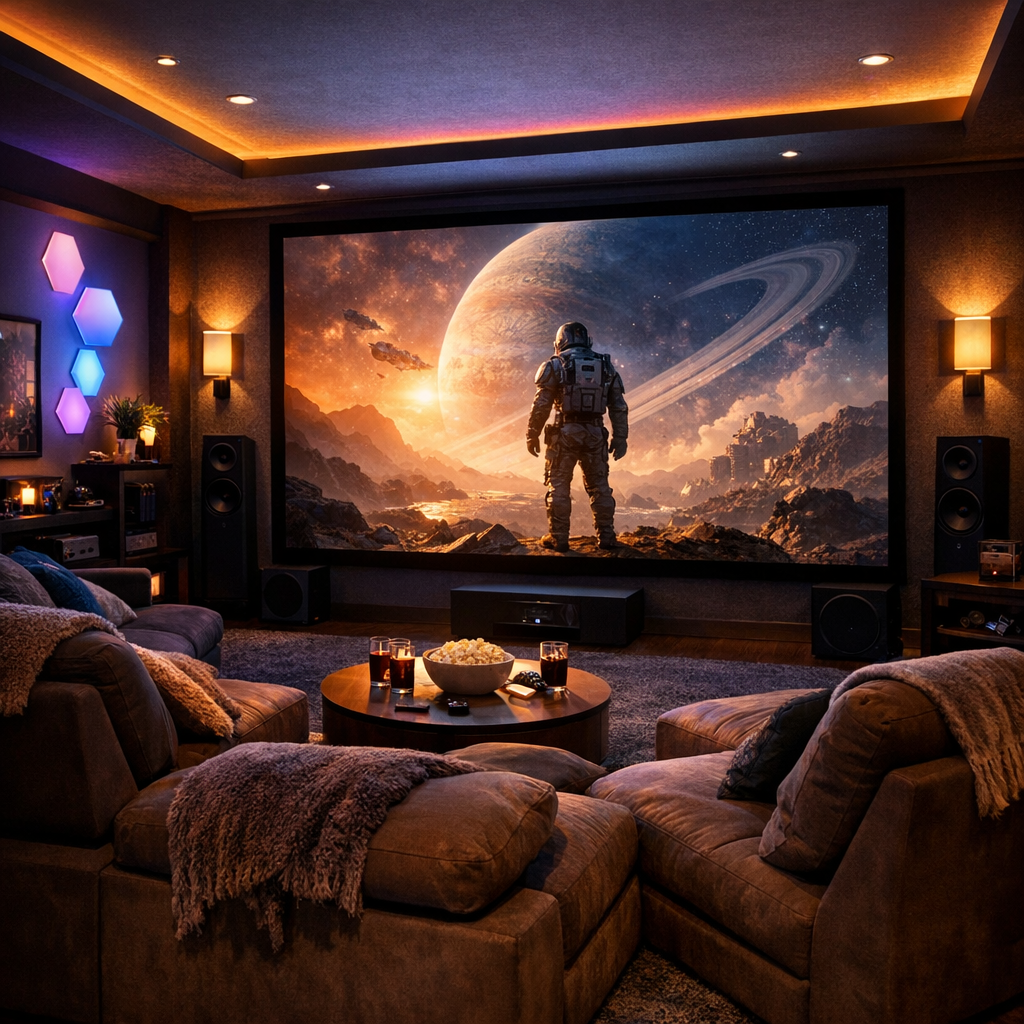
Choosing the Right Room
The first step in setting up a home theater is selecting the ideal location. A dedicated room with minimal natural light and good acoustics is best. Basements, spare bedrooms, or large living rooms often work well. Consider the room’s shape and size—rectangular spaces typically provide better sound distribution than square ones.
Planning the Layout
Once you’ve chosen the room, plan your layout carefully. The placement of the screen, seating, and speakers will determine the overall experience. Ensure that every seat has a clear view of the screen and that sound reaches all areas evenly. Leave enough space for comfortable movement and ventilation for your equipment.
Choosing the Display
Your display is the centerpiece of your home theater. Depending on your budget and room size, you can choose between a large flat-panel TV or a projector and screen setup. Projectors are ideal for larger rooms and provide a true cinematic feel, while high-definition TVs offer convenience and excellent image quality in smaller spaces.
Sound System and Acoustics
Sound quality is just as important as the visuals. A surround sound system with strategically placed speakers can create an immersive experience. Consider a 5.1 or 7.1 channel setup, depending on your room size. To enhance acoustics, use sound-absorbing materials like carpets, curtains, and acoustic panels to minimize echo and improve clarity.
Lighting and Ambiance
Lighting plays a crucial role in setting the mood. Install dimmable lights or smart lighting systems that can be adjusted for different viewing experiences. Wall sconces, LED strips, or recessed lighting can add a professional touch. Avoid direct light on the screen to prevent glare and distractions.
Comfortable Seating
Comfort is key for long movie nights. Choose seating that offers both support and relaxation. Recliners, sectional sofas, or theater-style chairs with cup holders are popular choices. Arrange the seating in rows or a semi-circle to ensure everyone has a great view.
Technology and Connectivity
Modern home theaters benefit from smart technology integration. Use a universal remote or smart home system to control lighting, sound, and video sources seamlessly. Ensure your setup supports streaming devices, gaming consoles, and Blu-ray players for a versatile entertainment experience.
Decor and Personal Touches
Finally, personalize your home theater with decor that reflects your style. Movie posters, themed wall art, and custom lighting can add character. Consider adding a mini snack bar or popcorn machine for that authentic theater feel.
Conclusion
Setting up a home theater is a blend of technology, design, and creativity. By carefully planning your space, investing in quality equipment, and paying attention to details, you can create an entertainment area that brings family and friends together for countless memorable experiences.
Leave a Reply