
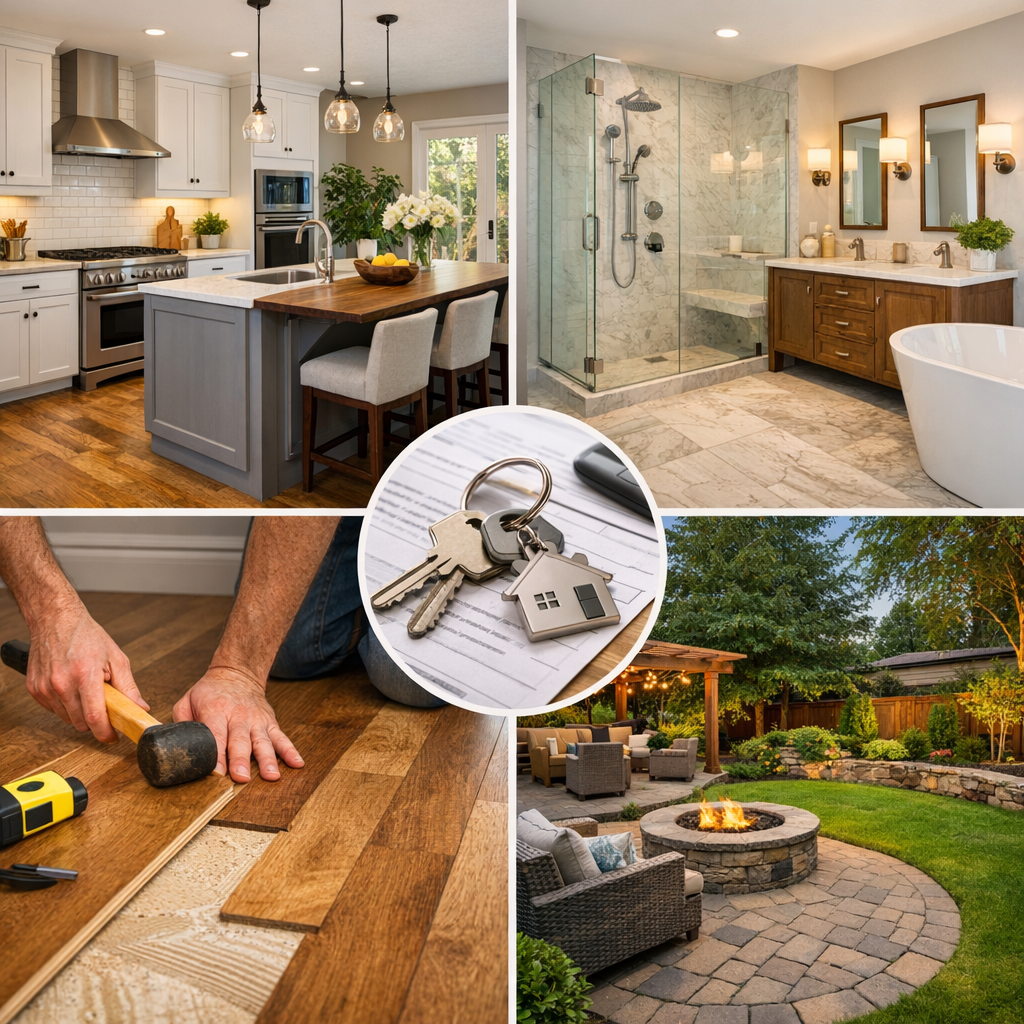
Home improvements can significantly enhance the comfort, functionality, and value of your home. However, financing these projects can often be a challenge. After researching various options, I decided to use a Home Equity Line of Credit (HELOC) to fund my home improvement projects. Here’s how I did it and the benefits I found along the way.
Understanding HELOC
A Home Equity Line of Credit (HELOC) is a revolving line of credit that allows you to borrow against the equity in your home. Unlike a home equity loan, which provides a lump sum, a HELOC offers flexibility, allowing you to draw funds as needed up to a predetermined limit. This was particularly appealing to me as it meant I could finance multiple projects over time without committing to a large loan upfront.
Assessing My Home Improvement Needs
Before applying for a HELOC, I made a list of the home improvements I wanted to undertake. These included:
- Renovating the kitchen
- Updating the bathrooms
- Installing new flooring throughout the house
- Landscaping the backyard
Having a clear plan helped me estimate the total cost and determine how much credit I would need.
Applying for a HELOC
The application process for a HELOC was straightforward. I approached my bank, which already held my mortgage, and submitted an application. The bank assessed my credit score, income, and the amount of equity I had in my home. After a few weeks, I was approved for a line of credit that comfortably covered my estimated costs.
Using the HELOC for Projects
One of the main advantages of a HELOC is its flexibility. I was able to draw funds as needed for each stage of my home improvements. This meant I only paid interest on the amount I actually used, rather than the entire credit limit. Here’s how I utilized the funds:
Kitchen Renovation
The first project was the kitchen. I hired a contractor to update the cabinets, countertops, and appliances. The HELOC allowed me to pay for these expenses incrementally as the work progressed.
Bathroom Updates
Next, I focused on the bathrooms. I used the HELOC to purchase new fixtures, tiles, and vanities. Again, the ability to draw funds as needed was incredibly beneficial.
Flooring Installation
For the flooring, I opted for hardwood throughout the house. The HELOC covered the cost of materials and installation, and I appreciated not having to dip into my savings.
Backyard Landscaping
Finally, I tackled the backyard. The HELOC funded the purchase of plants, patio furniture, and a small water feature, transforming the space into a relaxing oasis.
Benefits of Using a HELOC
Using a HELOC for my home improvements offered several advantages:
- Flexibility: I could access funds as needed and only paid interest on the amount used.
- Lower Interest Rates: Compared to credit cards or personal loans, HELOCs typically offer lower interest rates.
- Potential Tax Benefits: In some cases, the interest paid on a HELOC may be tax-deductible if used for home improvements.
Conclusion
Overall, using a HELOC to finance my home improvements was a smart decision. It provided the financial flexibility I needed to complete multiple projects without the burden of a large, upfront loan. If you’re considering home improvements and have sufficient equity in your home, a HELOC might be a viable option to explore.
Leave a Reply